Fiber Laser Welding Machine: How It Works, Benefits and Industrial Applications
Fiber laser welding machines are transforming modern metal fabrication by providing a fast, precise, and efficient way to join metal components. From stainless steel kitchen equipment to automotive parts and industrial machinery, laser welding technology is widely used in manufacturing applications that require consistent weld quality and controlled heat input.
Compared with conventional welding processes, fiber laser welding can offer higher processing speeds, narrower weld seams, and less thermal distortion in suitable applications.
In this guide, EASTRISE CNC explains how fiber laser welding machines work, their key advantages, common applications, and the important factors to consider when choosing a laser welding system.
What Is a Fiber Laser Welding Machine?
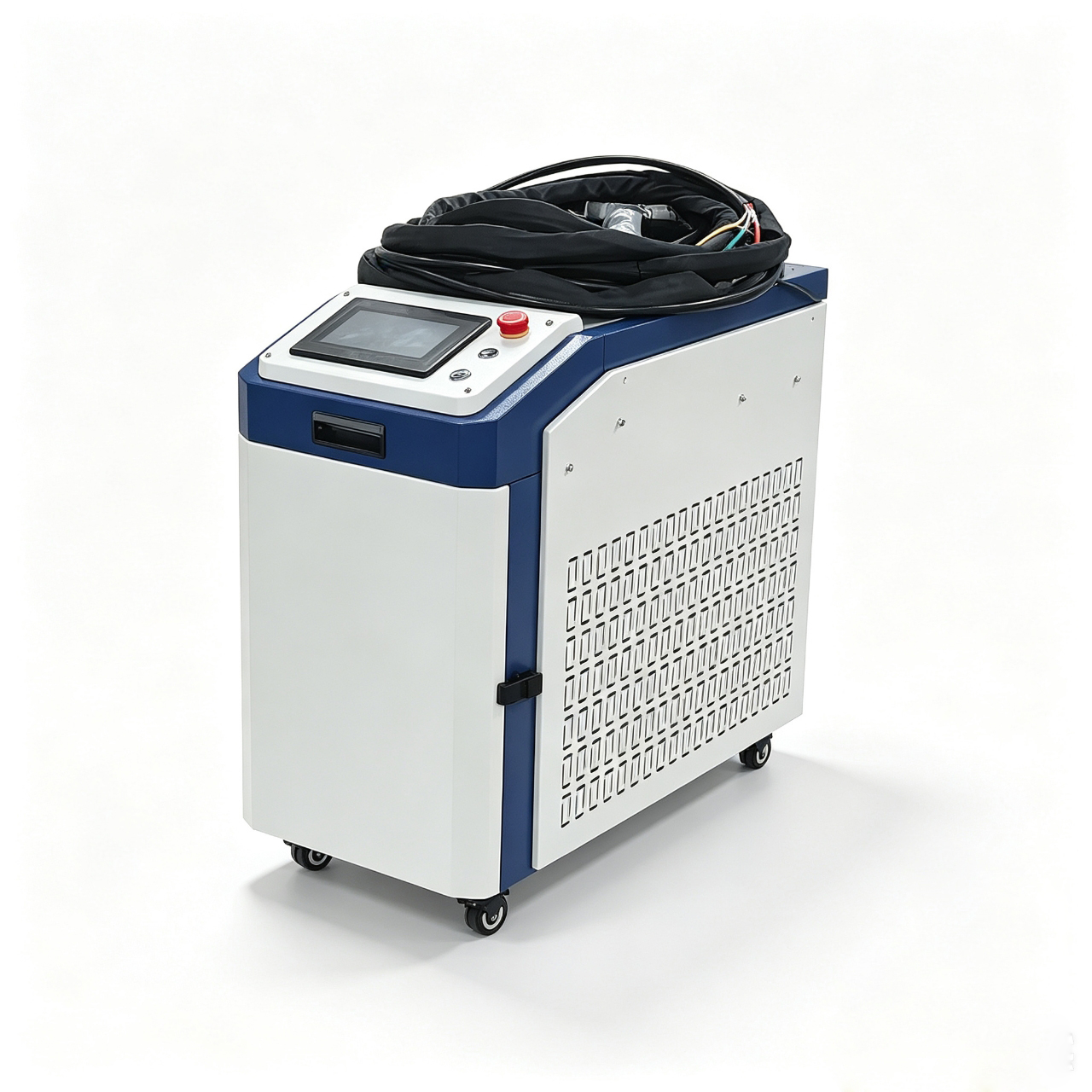
A fiber laser welding machine is industrial equipment that uses a concentrated laser beam to join metal materials. The laser energy heats the metal at the joint, creating a molten weld pool that solidifies to form a strong connection.
Unlike traditional welding methods that use an electric arc, fiber laser welding delivers concentrated energy to a relatively small area.
Depending on the system configuration, fiber laser welding machines can be used for manual welding, automated production, and robotic welding applications.
How Does Fiber Laser Welding Work?
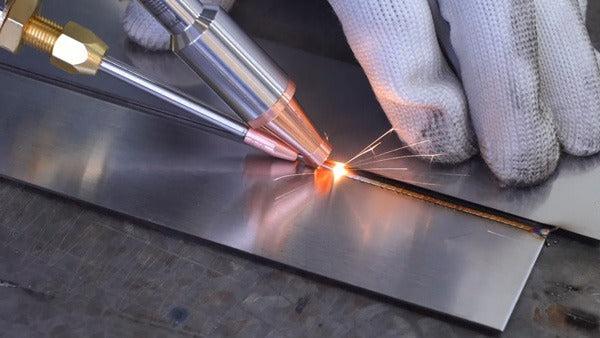
The basic process involves five steps:
Laser generation: A fiber laser source generates a high-energy laser beam.
Beam delivery: The laser beam travels through an optical fiber to the welding head.
Energy focusing: Optical components focus the beam onto the metal joint.
Metal fusion: The focused energy melts the metal, creating a weld pool.
Weld formation: As the molten metal cools, it solidifies into a welded joint.
Depending on the application, shielding gas and filler wire may be used to improve weld quality and accommodate joint requirements.
Modern handheld fiber laser welding machines can also feature adjustable laser power, welding speed, beam oscillation, and preset processing parameters.
Key Benefits of Fiber Laser Welding Machines
1. High Welding Speed
One of the main advantages of fiber laser welding is its potential for high processing speed.
For suitable materials and joint configurations, laser welding can be significantly faster than conventional TIG welding.
This makes laser welding attractive for manufacturers seeking to increase productivity and reduce processing time.
However, actual welding speed depends on material type, thickness, joint design, machine power, and required weld quality.
2. High Precision and Clean Welds
Fiber laser welding machines concentrate energy into a small welding area, enabling precise control of the weld.
This is particularly useful for:
Stainless steel furniture
Metal cabinets and enclosures
Kitchen equipment
Decorative metal products
Precision sheet metal components
With appropriate welding parameters and joint preparation, the process can produce smooth, narrow weld seams with limited spatter.
3. Reduced Heat-Affected Zone
Compared with many conventional welding processes, laser welding can introduce less total heat into the workpiece.
A smaller heat-affected zone can help reduce:
These advantages are especially valuable when working with thin stainless steel and precision metal components.
4. Versatile Metal Welding Applications
Fiber laser welding systems can process various metals, including:
Weldability varies by material composition, surface condition, joint design, and laser system configuration.
Highly reflective materials and dissimilar metal combinations may require specialized equipment, process development, and additional testing.
5. Potential Reduction in Production Costs
Although fiber laser welding machines may require a higher initial investment than some conventional welding equipment, they can offer operational advantages.
Potential savings include faster production, reduced finishing work, and improved consistency.
The actual return on investment depends on production volume, labor costs, consumables, equipment utilization, maintenance, and quality requirements.
Industrial Applications of Fiber Laser Welding Machines
Fiber laser welding technology is used across many metalworking industries.
Stainless Steel Fabrication
Stainless steel is one of the most common materials processed with handheld fiber laser welding machines.
Typical applications include:
Stainless steel sinks
Commercial kitchen equipment
Stainless steel cabinets
Metal furniture
Stainless steel doors and frames
Food processing equipment
Laser welding is especially useful when manufacturers need neat weld seams and controlled heat input.
Carbon Steel Welding
Fiber laser welding machines can also be used for carbon steel fabrication.
Common applications include:
Proper parameter selection and joint preparation are important for achieving the required weld penetration and strength.
Aluminum Welding
Aluminum is widely used in automotive manufacturing, electrical equipment, and lightweight metal structures.
Fiber laser welding can provide an efficient solution for selected aluminum applications.
However, aluminum's reflectivity, thermal conductivity, oxide layer, and susceptibility to porosity require careful process control.
Automotive Manufacturing
In the automotive industry, laser welding technology is used in suitable production systems for joining metal components.
Applications include body components, brackets, battery enclosures, and other manufactured parts.
Automated and robotic laser welding systems are particularly useful for repetitive production tasks.
Sheet Metal Fabrication
Fiber laser welding is an attractive option for workshops manufacturing custom metal products.
Examples include:
For businesses that already use fiber laser cutting machines, adding laser welding equipment can help expand their metal fabrication capabilities.
Fiber Laser Welding vs. TIG and MIG Welding
Choosing the right welding technology depends on production requirements, material thickness, budget, and operator experience.
| Feature | Fiber Laser Welding | TIG Welding | MIG Welding |
| Welding speed | Often high | Generally lower | Often high |
| Heat input | Concentrated | Typically broader | Typically broader |
| Weld appearance | Narrow, clean seams possible | High-quality appearance | Depends on settings |
| Joint gap tolerance | Generally low | Often more adaptable | Often more adaptable |
| Initial investment | Typically higher | Often lower | Often lower |
| Automation potential | Excellent | Available | Excellent |
| Best applications | Precision metal fabrication | Precision and specialized welding | General fabrication and production |
Important: Laser welding is not automatically the best solution for every project. TIG and MIG welding remain valuable for applications involving large joint gaps, certain thick materials, challenging fit-up conditions, or specific welding requirements.
How to Choose the Right Fiber Laser Welding Machine
Before purchasing a laser welding machine, buyers should evaluate the following factors.
1. Material Type
Identify the metals you plan to weld.
For example, stainless steel, carbon steel, and aluminum may require different welding parameters and system capabilities.
2. Material Thickness
The required laser power depends partly on material thickness.
Common handheld laser welding systems are available in power classes such as:
1000W: Suitable for selected thin-sheet metal applications.
1500W: A common option for general thin- to medium-gauge fabrication.
2000W: Offers additional processing capacity for suitable applications.
3000W: May be appropriate for more demanding welding tasks where the machine configuration and process allow.
These descriptions are general guidance, not guaranteed welding thickness ratings. Actual capability must be confirmed through material-specific testing and the manufacturer's technical specifications.
3. Welding Head and Functions
Depending on the model, a laser welding machine may support:
Some multifunctional systems may also support selected cleaning or cutting operations. These functions should be verified for the specific machine model.
4. Cooling System
A reliable cooling system helps maintain stable laser operation.
Buyers should check cooling capacity, ambient operating temperature, maintenance requirements, and compatibility with the laser source.
5. Safety and Operator Training
Industrial fiber laser welding systems typically use high-power Class 4 laser sources.
Proper safety measures are essential, including suitable laser-rated protective eyewear, controlled access, appropriate guarding, fume extraction, fire prevention, and operator training.
Handheld laser welding must be performed in a properly controlled environment with safeguards suitable for the equipment and application.
6. Supplier Support
When evaluating a fiber laser welding machine supplier, consider:
A suitable supplier should help you match the equipment to your actual production requirements.
Frequently Asked Questions About Fiber Laser Welding Machines
What metals can a fiber laser welding machine weld?
Fiber laser welding machines can weld many common industrial metals, including stainless steel, carbon steel, and selected aluminum alloys. Compatibility depends on material grade, thickness, joint preparation, and equipment configuration.
Is laser welding stronger than TIG welding?
Not necessarily. Both laser welding and TIG welding can produce strong, reliable joints when properly designed and performed. Weld strength depends on penetration, material properties, defects, joint geometry, and process control.
Is fiber laser welding suitable for beginners?
Some handheld laser welding systems offer simplified controls and preset parameters, but operators still need proper welding instruction and specialized laser safety training.
Can a fiber laser welding machine weld aluminum?
Yes. Suitable fiber laser systems can weld certain aluminum alloys. However, aluminum welding requires appropriate parameters, surface preparation, and control of potential defects.
What is the difference between a 1500W and a 2000W laser welding machine?
A 2000W machine provides greater nominal laser output power than a 1500W machine. Depending on the application, this may allow higher welding speed or additional penetration capability. Actual results depend on the laser source, welding head, material, and process settings.
How much does a fiber laser welding machine cost?
The price depends on laser power, laser source brand, welding head, cooling system, wire feeder, automation features, and supplier support.
Buyers should compare the complete machine configuration rather than focusing only on the advertised price.
Can laser welding replace MIG and TIG welding?
Laser welding can replace certain conventional welding operations, especially in precision sheet metal production. However, MIG and TIG welding may remain more practical for applications requiring greater gap tolerance, different joint configurations, or lower equipment investment.
Why Choose EASTRISE CNC for Your Metal Fabrication Equipment?
EASTRISE CNC provides industrial machinery solutions for customers involved in metal processing and manufacturing.
Choosing the right equipment begins with understanding the customer's materials, production requirements, and business goals.
Whether you are exploring fiber laser welding technology or expanding your metal fabrication workshop, our team can help discuss suitable machinery solutions and equipment requirements.
Conclusion
Fiber laser welding machines offer important advantages for modern metal fabrication, including high processing speed, precise energy control, and reduced thermal distortion in suitable applications.
From stainless steel products and carbon steel fabrication to automotive components and industrial enclosures, laser welding technology can improve manufacturing efficiency when properly selected and implemented.
Before investing in a fiber laser welding machine, carefully evaluate material compatibility, thickness requirements, production volume, safety, and technical support.
Looking for a fiber laser welding solution for your workshop?
Contact EASTRISE CNC to discuss your material, thickness, welding requirements, and production goals.
Email: info@eastrisecnc.com
Website: www.eastrisecnc.com


 English


