Handheld Fiber Laser Welding Machine for Metal Fabrication
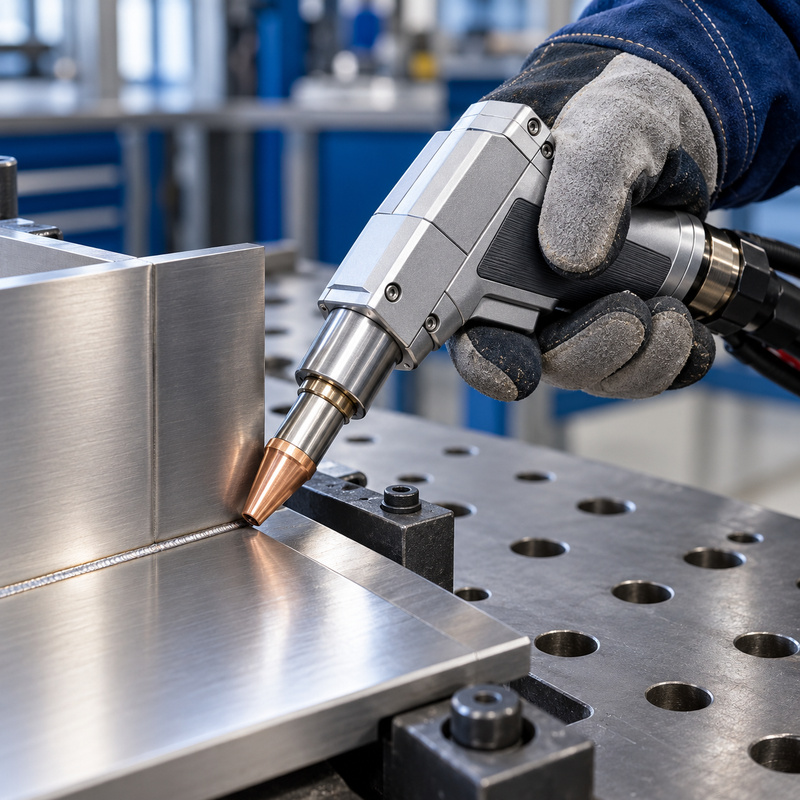
A handheld fiber laser welding machine uses a focused laser beam and a manually guided torch to join metal parts. For fabrication workshops, it offers flexible torch access for stainless steel assemblies, sheet metal enclosures and selected aluminum components.
Choosing the right handheld laser welder starts with the application. Material grade, thickness, joint geometry and weld acceptance requirements all influence whether a system is suitable. A welding trial on your actual parts provides a stronger basis for purchase than laser power alone.
How Does Handheld Fiber Laser Welding Work?
The laser concentrates energy at the joint, melting metal locally while the operator guides the torch along the seam. Depending on the equipment and joint design, welding can take place with or without filler wire. Shielding gas helps protect the weld area.
Some fiber laser welding systems include beam oscillation, also called wobble welding, which adjusts how energy is distributed across the joint. Available functions differ between machines, so buyers should confirm the configuration included in their quotation.
Flexible Access to Different Parts
A manually guided torch can help workshops handle changing part shapes and accessible seams on larger assemblies. This makes handheld laser welding worth evaluating for mixed fabrication work, where products and joint positions vary.
Actual access depends on torch geometry, cable routing and the ability to maintain a suitable welding position. Testing the complete assembly is more useful than testing flat samples alone.
Controlled Heat Input
Concentrated heat input can help limit distortion in suitable applications. Results still depend on material thickness, joint preparation, welding parameters and operator control.
For thin sheet metal, inspect panel flatness and final dimensions during testing. Lower distortion should be demonstrated on representative parts rather than assumed from the welding method.
Potential to Reduce Finishing Work
A consistent weld may reduce subsequent grinding or polishing. However, finishing requirements depend on the product specification.
Appearance, hygiene, coating preparation and dimensional accuracy should all be considered before approving the process. A visually smooth seam does not automatically mean the finished product meets every requirement.
Practical Handheld Laser Welding Applications
Stainless Steel Kitchen Equipment
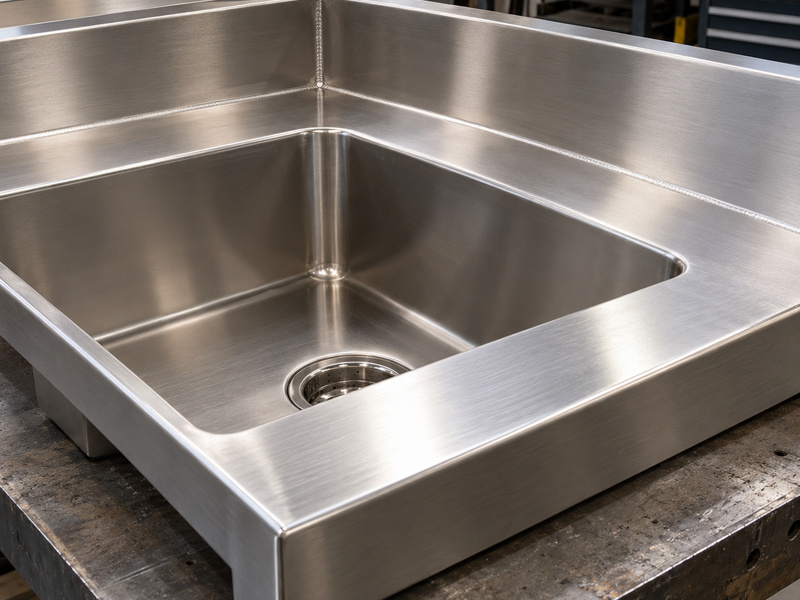
Stainless steel laser welding is worth evaluating for fabricated sink assemblies, countertop corners, kitchen panels and cabinet components.
During sample testing, inspect visible seam quality and the accessibility of internal corners. Where leak tightness or hygienic construction is required, assess the completed assembly against those requirements.
A smooth-looking weld alone does not demonstrate leak tightness or suitability for food contact. The final assembly must meet its intended service requirements.
Sheet Metal Cabinets and Enclosures
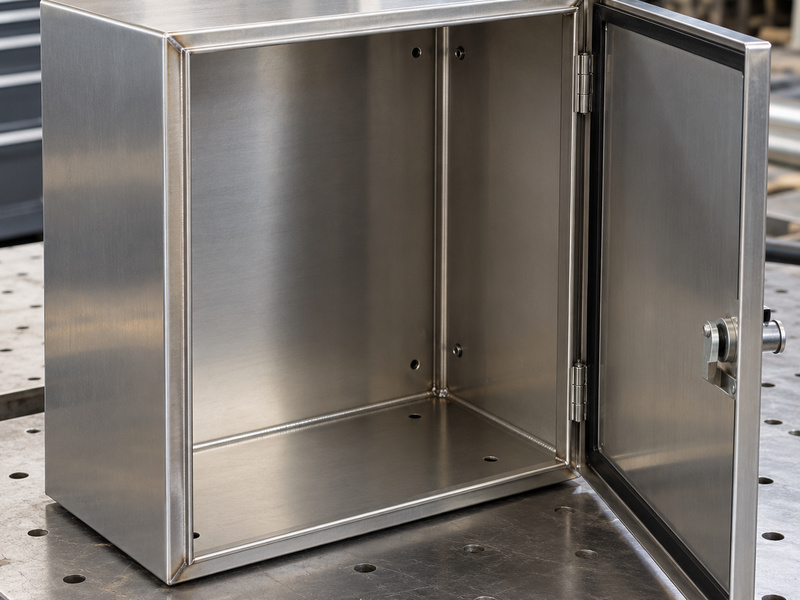
Folded cabinet corners and enclosure panels are practical sample parts for evaluating sheet metal laser welding.
Check panel flatness, corner alignment and door fit after welding. Samples should represent the sheet thickness, joint gaps and surface conditions encountered in normal production.
Testing production-representative parts helps identify problems before installation. Testing only ideal sample pieces can overlook variation found on the workshop floor.
Aluminum Frames and Furniture Components
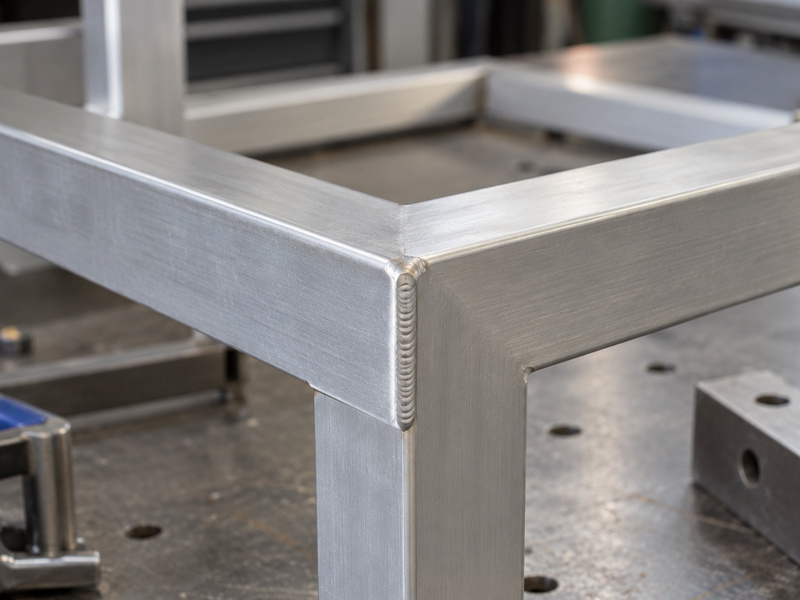
Aluminum laser welding can be considered for selected square tube frames, furniture components and fabricated housings.
Identify the alloy and wall thickness before arranging a trial. Evaluate final dimensions and joint performance against the product drawing.
For load-bearing parts, use the required mechanical assessment. Weld appearance alone is insufficient to approve a structural connection.
Stainless steel, mild steel and aluminum are common materials to discuss with a supplier. Capability varies with the machine, alloy, thickness and joint design.
Do not assume that a successful demonstration on one material proves suitability for every grade or thickness.
Provide representative samples and request results from the specific equipment configuration being quoted. This helps connect the demonstration to the machine you are considering purchasing.
1. Define Your Application First
Prepare a brief that includes material grades, thicknesses, joint drawings, finish requirements and expected production volume. This gives the supplier a clear basis for proposing equipment.
Include photographs or drawings showing difficult corners and restricted torch access.
2. Confirm the Complete Configuration
Ask about laser power, cooling, wire feeding, electrical supply, torch access and service provisions.
Confirm which functions are included and which require optional equipment. Do not assume that features shown in a general demonstration are supplied with every model.
3. Request Representative Sample Welding
Use your production material and actual joint geometry whenever possible. Ask the supplier to document the equipment configuration and test conditions.
A sample welding trial should reflect your normal production conditions, including realistic fit-up and surface preparation.
4. Agree on Acceptance Criteria
Define how the weld will be approved. Depending on the application, this may involve dimensional inspection, sectioning, strength testing or leak testing.
Keep an accepted sample as a commissioning reference. Approve the joint against a clear specification rather than appearance alone.
5. Compare Total Production Cost
Evaluate preparation, positioning, welding, inspection and finishing together.
The useful measure is cost per acceptable finished part, rather than welding speed alone. Include consumables, maintenance, operator training and workspace requirements in the comparison.
6. Plan the Welding Area
Include laser containment, access controls, appropriate eye and face protection, fume extraction and operator training in the installation plan.
Follow the equipment instructions and the requirements applicable to your facility. Workspace preparation should form part of the purchasing decision.
Frequently Asked Questions
Can a handheld fiber laser welder weld aluminum?
Suitable systems can weld aluminum, but results depend on the alloy, thickness and joint. Request a trial using your specified material before purchasing.
Does handheld laser welding always require filler wire?
No. Some applications join closely fitted parts without filler, while others require wire. Determine the appropriate method through representative testing.
Will laser welding eliminate polishing?
Not in every application. Finishing depends on the weld condition and the final product requirements. Inspect the finished part against your specification.
What is the maximum welding thickness?
There is no universal thickness limit for all handheld fiber laser welders. Obtain material-specific capability information and validate it on the proposed machine.
Can handheld laser welding replace TIG or MIG welding?
It can suit selected fabrication tasks. Compare joint acceptance, access, production volume and complete processing cost before choosing a method for each product.
Discuss Your Welding Application with Eastrise CNC
Start with a clear description of the parts you need to manufacture. Share your material grade, thickness, joint drawings, finish requirements and target output with Eastrise CNC.
Request confirmation of a suitable configuration and sample welding availability. Evaluating representative parts helps you make a purchasing decision based on your actual production requirements.


 English



