Handheld Laser Welding Machines for Pipe Welding: Benefits and Applications
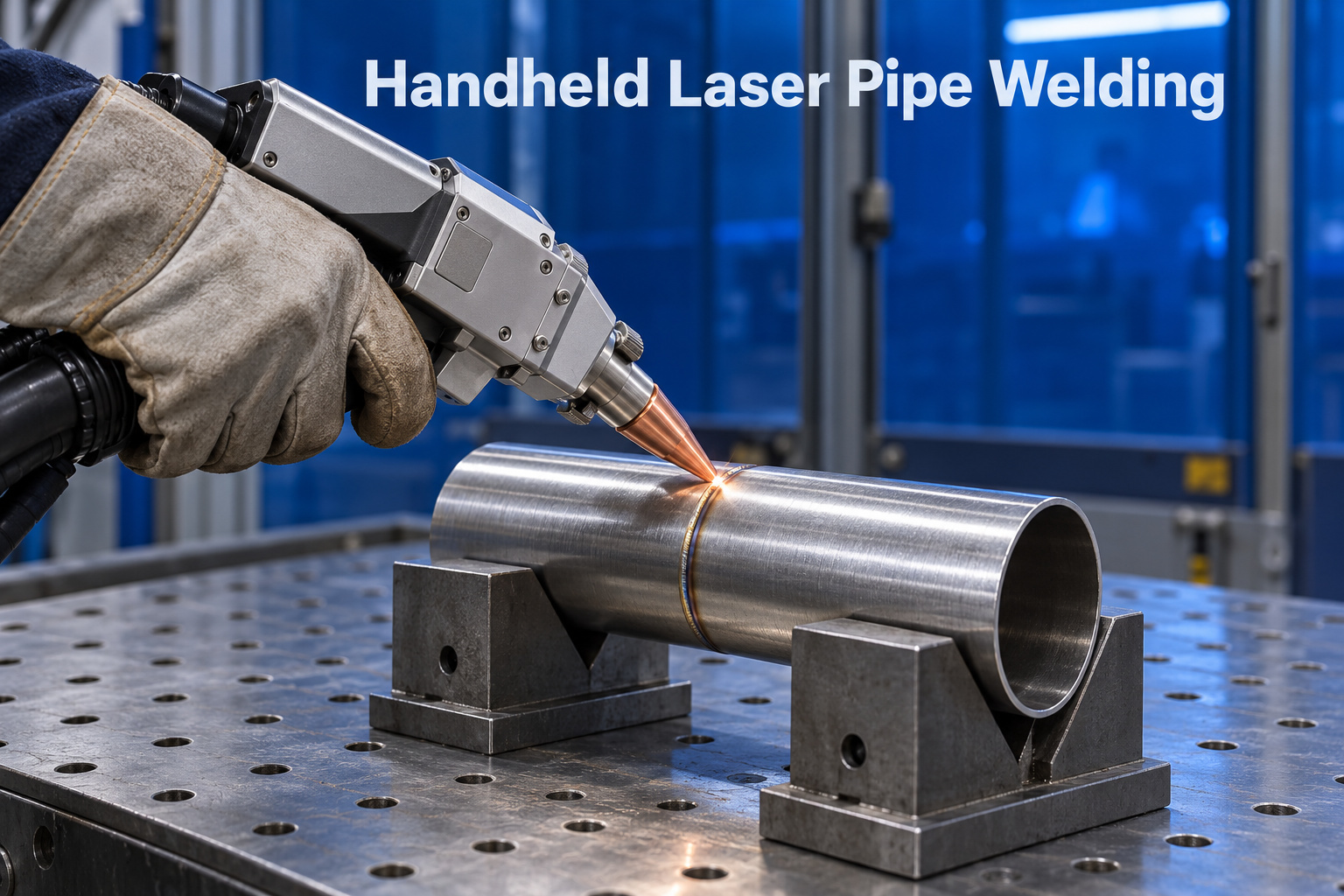
Handheld laser welding machines use a manually guided welding gun to join metal components with a focused laser beam. For accessible pipe and tube joints, this approach combines localized heating with the flexibility of handheld operation.
Manufacturers can consider handheld laser pipe welding for stainless steel fabrication, tubular frames, fittings, and other metal assemblies. Successful results depend on material compatibility, joint preparation, operator technique, and a welding system suited to the workpiece.
What Is Handheld Laser Pipe Welding?
Handheld laser pipe welding is a process in which an operator guides a laser welding gun along a pipe joint. The focused energy melts the mating surfaces, which fuse as the metal cools. Some joints can be welded without filler, while others require a compatible filler wire.
The handheld process relies on the operator to control the gun’s position and movement. Depending on the machine configuration, adjustable welding settings, beam oscillation, and wire feeding may help accommodate specific joint conditions.
For round pipes, the operator needs comfortable access to the weld path. Fixtures should hold the components securely and allow repositioning where necessary.
Benefits of Handheld Laser Welding for Pipes
Flexible Access to Different Components
A handheld welding gun allows an operator to work on accessible joints across different component shapes. This can be useful for workshops producing varied tube assemblies and small batches.
Joint accessibility should be checked before equipment selection. Restricted spaces, awkward angles, and inaccessible pipe interiors can limit where the gun can be used.
Localized Heating
Laser welding concentrates energy near the joint. When the process is properly developed, this can help limit the heat-affected zone and reduce distortion.
The outcome depends on the welding mode, travel speed, material, and component geometry. Lower distortion is a potential benefit rather than a guarantee for every pipe assembly.
Potentially Less Finishing Work
A stable welding process can produce a narrow seam that reduces the amount of grinding or polishing needed on visible components.
Manufacturers should assess the finished part against both appearance and functional requirements. A smooth weld surface alone does not confirm penetration, strength, or leak tightness.
Opportunities to Improve Workflow
For suitable components, handheld laser welding may reduce welding and finishing time. Actual productivity should be measured across the complete job, including preparation, positioning, welding, inspection, and rework.
Sample trials provide a practical way to compare the process with an existing welding method.
Materials for Handheld Laser Pipe Welding
Stainless Steel Pipes and Tubes
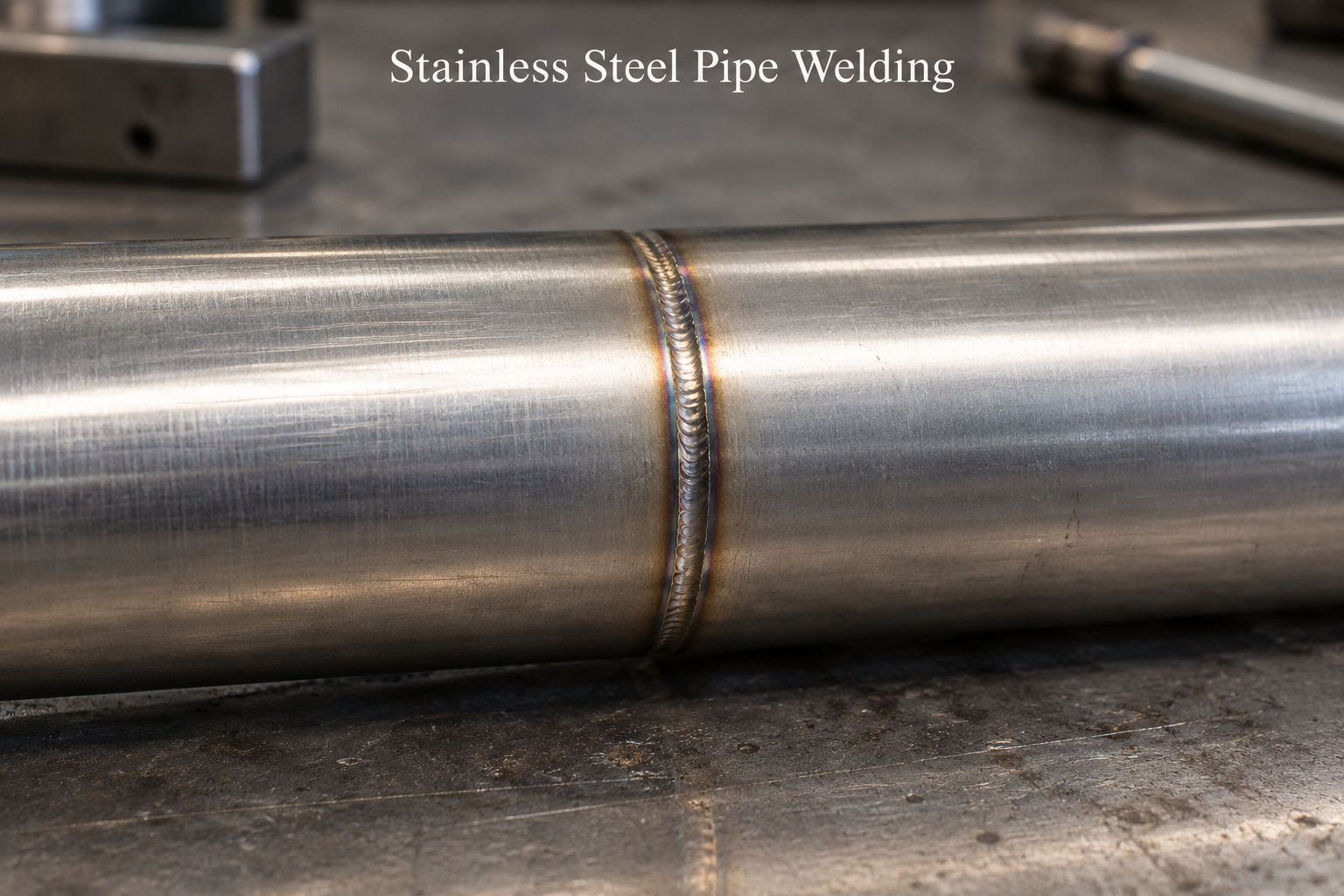
Stainless steel tube assemblies are worth evaluating when weld appearance and dimensional control matter.
Clean surfaces, consistent fit-up, and suitable shielding help establish a stable process. Depending on the application, internal shielding and post-weld surface treatment may also be required.
Carbon Steel Pipes
Carbon steel pipe welding requires attention to the steel grade, surface condition, wall thickness, and required joint properties.
Remove contaminants and assess coatings before welding. Process trials should verify penetration and joint quality on the actual material being used.
Aluminum Tubes
Aluminum welding requires careful evaluation of the alloy, oxide layer, thermal behavior, and joint design.
A suitable machine configuration, surface preparation, shielding, and filler selection may be needed. Confirm results on representative samples rather than assuming that settings developed for stainless steel will also work on aluminum.
Handheld laser welding can be evaluated for a range of pipe and tube fabrication tasks, including:
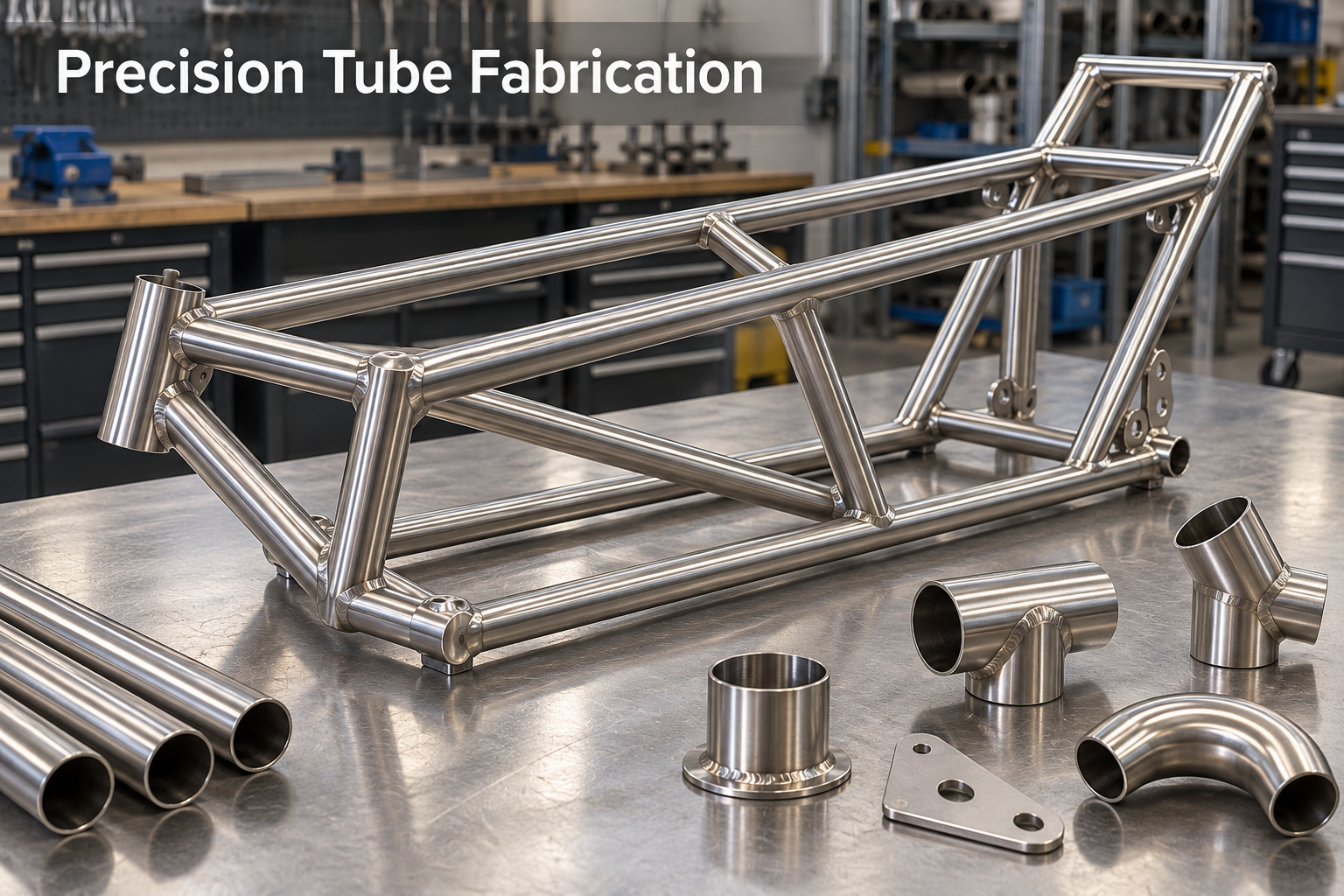
Stainless steel furniture and decorative tube assemblies.
Accessible joints in metal frames and equipment supports.
Selected tube-to-plate and pipe fitting connections.
Custom metal fabrication and small-batch production.
Repair work where the material, access, and acceptance requirements permit it.
Suitability depends on the individual component. Pressure-containing pipes, hygienic equipment, and load-bearing assemblies require application-specific qualification and inspection.
How to Improve Handheld Pipe Weld Quality
Prepare and Align the Joint
Remove oil, moisture, rust, and other contamination from the welding area. Prepare the pipe edges consistently and use suitable fixtures to control alignment and joint gaps.
Handheld operation does not remove the need for accurate preparation.
Maintain Consistent Gun Movement
Changes in travel speed, gun position, or working distance can affect the weld. Operators should follow the equipment manufacturer’s instructions and practice on representative samples.
Position the workpiece so the operator can follow the joint with steady movement. Reposition the assembly when necessary to maintain access.
Match Settings to the Workpiece
Laser power, travel speed, focus, oscillation settings, shielding, and filler delivery interact with one another.
Develop the process using the actual material grade, wall thickness, and joint geometry. Record acceptable settings together with the preparation and inspection conditions.
Verify More Than Appearance
Inspection should match the intended service. Depending on the application, this may include visual examination, weld cross-sections, mechanical tests, or leak testing.
Establish acceptance requirements before production so the process is evaluated against a clear target.
Start by providing the supplier with your material grade, pipe diameter, wall thickness, joint drawing, and production quantity.
Then assess the complete system: gun ergonomics, cable reach, cooling, filler-wire options, shielding requirements, maintenance, and technical support. Confirm which functions are included in the proposed configuration.
A sample welding assessment should demonstrate the results on your parts. Review weld appearance, penetration, distortion, inspection results, and total processing time.
The installation also needs suitable laser containment, access control, fume extraction, and operator training. A handheld gun still requires a properly designed laser welding work area.
Frequently Asked Questions
Yes, when the material, joint, and equipment are compatible and the operator can access the welding path. Secure positioning and consistent movement are important.
Does handheld laser pipe welding require filler wire?
Not always. Some closely fitted joints can be welded without filler. Other joints may require filler to meet fit-up or metallurgical requirements.
Is handheld laser welding better than TIG welding?
The better method depends on the component and production requirements. Compare both processes using representative samples, the same acceptance criteria, and the total cost per finished part.
What pipe wall thickness can the machine weld?
The working range depends on the specific machine, material, joint design, and required penetration. Confirm capability through supplier data and sample testing.
Can handheld laser welding produce leak-tight joints?
It can be considered for suitable joints, but leak tightness must be demonstrated through the required process qualification and testing. Weld appearance alone is insufficient.
Discuss Your Pipe Welding Project with EASTRISE
To discuss a handheld laser welding application with EASTRISE, share your pipe material, dimensions, joint drawings, production target, and inspection requirements.
Request a sample welding assessment to help determine whether the proposed equipment and process meet your manufacturing needs.


 English



