Oscillating Knife Cutting Machine for Leather: Applications and Selection Guide
An oscillating knife cutting machine for leather uses a reciprocating blade and CNC-controlled motion to cut programmed shapes from suitable leather materials. It supports a digital workflow for handbag panels, footwear components, upholstery pieces, and small leather goods.
The main benefit is flexible pattern cutting without a dedicated physical die for every outline. Consistent results still depend on the leather, blade, hold-down system, cutting settings, and layout. Natural hides also require attention to defects, stretch direction, and usable quality zones.
The cutting head moves along a toolpath generated from a digital pattern while the blade reciprocates through the material. A supported cutting surface and suitable hold-down arrangement help keep the leather in position.
The operator prepares the pattern, selects the tool and settings, loads the material, checks the layout, and inspects the cut pieces. Compatible additional tools may provide marking or punching, but these operations require the appropriate installed hardware and software.
Unlike laser cutting, knife cutting separates the material mechanically. It avoids laser-induced scorching, although edge quality still depends on blade condition, material construction, and process setup.
Which Leather Materials Can Be Cut?
A suitably configured digital cutter can process selected genuine leather, suede, synthetic leather, and backed leather-like materials. Soft garment leather and firm bag leather may need different blades, support, and cutting parameters.
Material thickness alone does not determine suitability. Density, stretch, coatings, backing, surface finish, and required detail also matter. Test the actual material rather than assuming every product sold as leather behaves the same way.
Natural hides and synthetic roll materials need different handling strategies. A roll-feeding option may suit synthetic leather, while irregular natural hides benefit from a layout that follows their usable boundaries and quality zones.
How to Prepare a Digital Leather Cutting Job
1. Check the Pattern File
Confirm dimensions, quantities, seam allowances, mirrored parts, notches, and any punching or marking operations. Use a file format supported by the machine’s software and verify scale before cutting.
2. Inspect and Position the Leather
Lay the material flat without stretching it unnecessarily. Identify scars, holes, loose areas, and appearance variations that matter to the product. Keep visible panels within appropriate quality areas.
3. Arrange the Parts
Place patterns within the usable material while respecting stretch direction, grain appearance, matching requirements, and spacing. Camera capture, projection, and automated nesting can support this process when the specific system includes those functions.
4. Test the Blade and Settings
Cut representative curves, corners, and small features. Check complete separation, edge condition, dimensions, and surface marking. Set blade depth only as needed for a complete cut while protecting the cutting surface.
5. Inspect and Sort the Pieces
Group matching pieces by product, size, color, or batch. Check the first assembled sample where possible: a flat piece can meet its outline but still expose a design or material-direction problem during assembly.
Handbags and Leather Bags
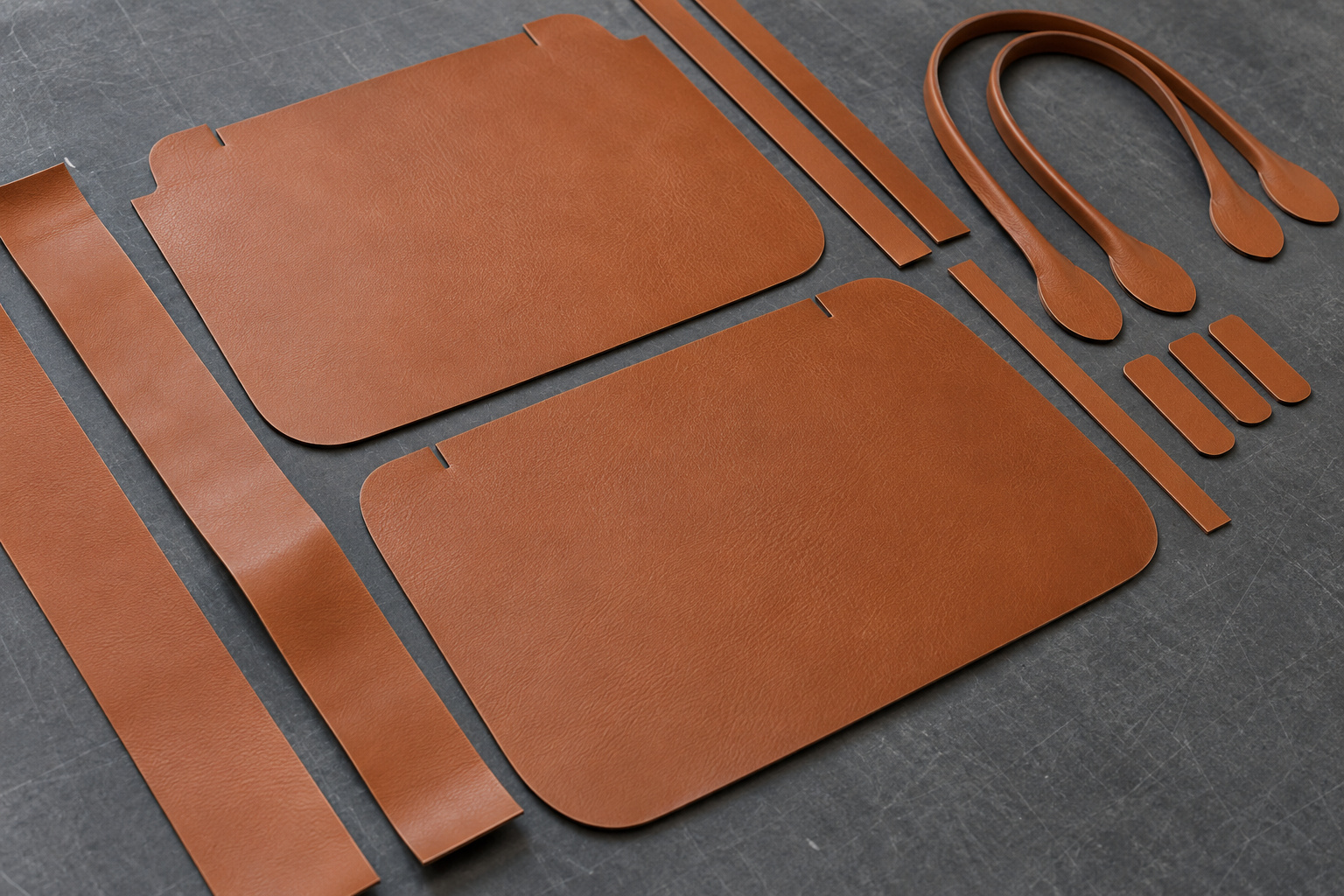
A CNC leather cutting machine can prepare suitable bag body panels, gussets, handle tabs, and strap blanks. Saved patterns make it easier to repeat approved designs or introduce size variations.
Visible panels need consistent grain, finish, and color. Strap strength and stretch direction also matter. Cutting prepares the outline; skiving, edge finishing, stitching, and hardware installation remain separate production steps unless specifically integrated.
Footwear and Shoe Upper Components
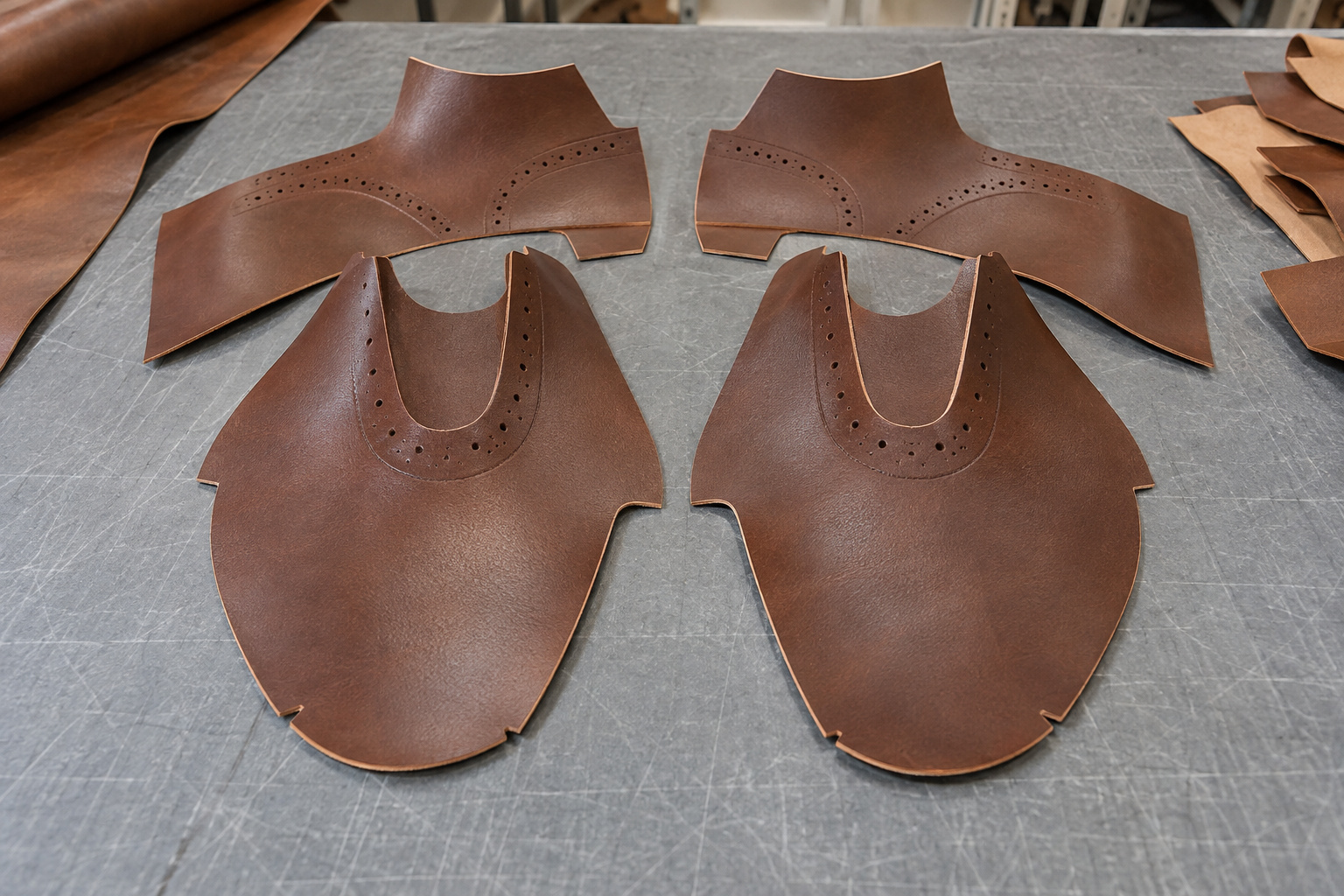
Digital knife cutting can produce suitable leather upper components for sampling and production. Mirrored pairs, matching grain, and accurate pattern placement help organize a repeatable workflow.
Fine details and small radii must suit the blade and material. Decorative perforations or eyelet holes need compatible punching tools where required; an oscillating blade does not automatically replace every footwear operation.
Furniture and Upholstery Panels
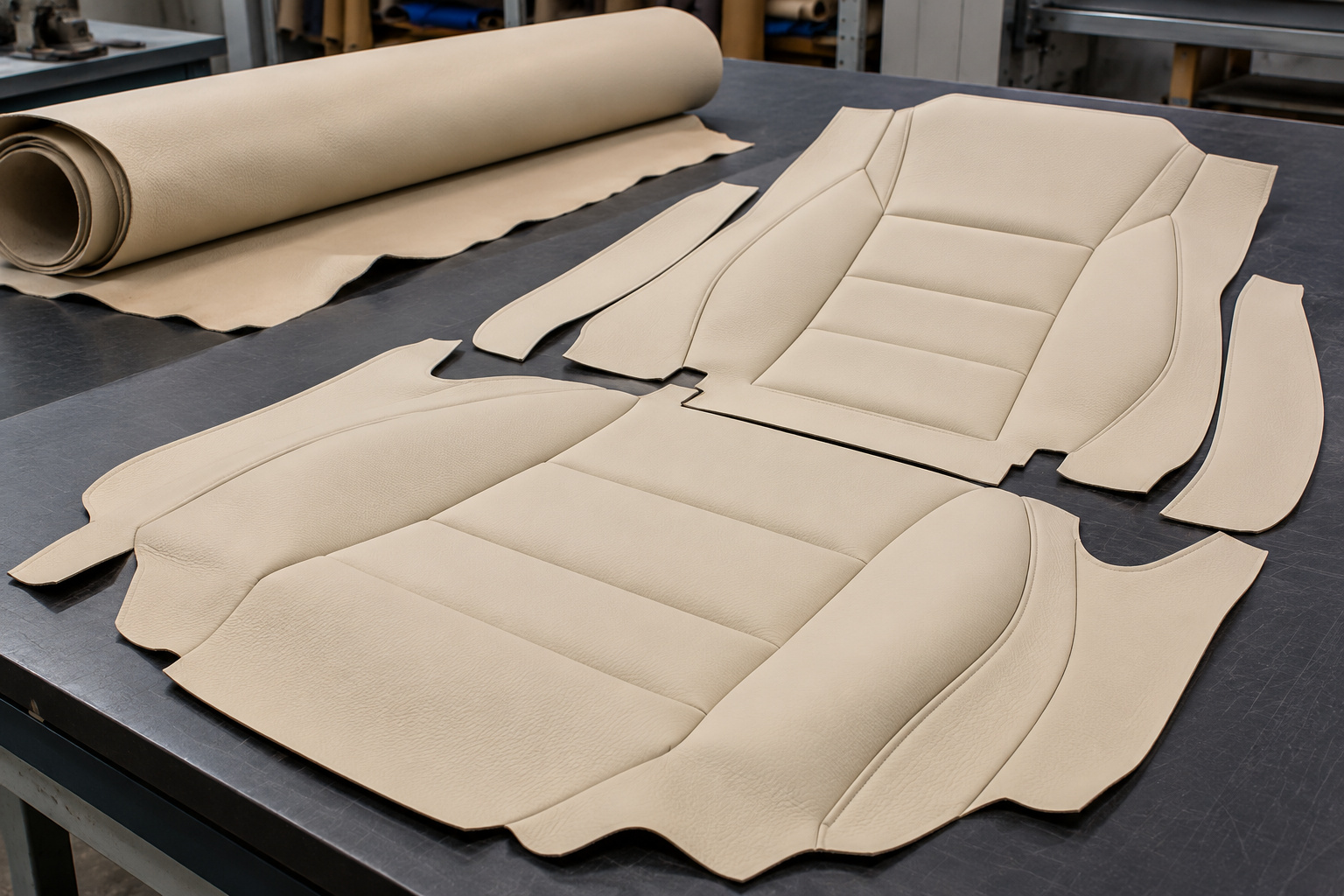
Leather seat-cover sections, backrest panels, and other upholstery pieces can be cut from suitable hides or sheet materials. Larger patterns require adequate working area and careful placement across the hide.
Appearance matching, stretch, and local quality differences affect the finished cover. Check the assembled fit and seam behavior rather than judging the workflow only by cutting speed.
Wallets, Straps, and Small Leather Goods
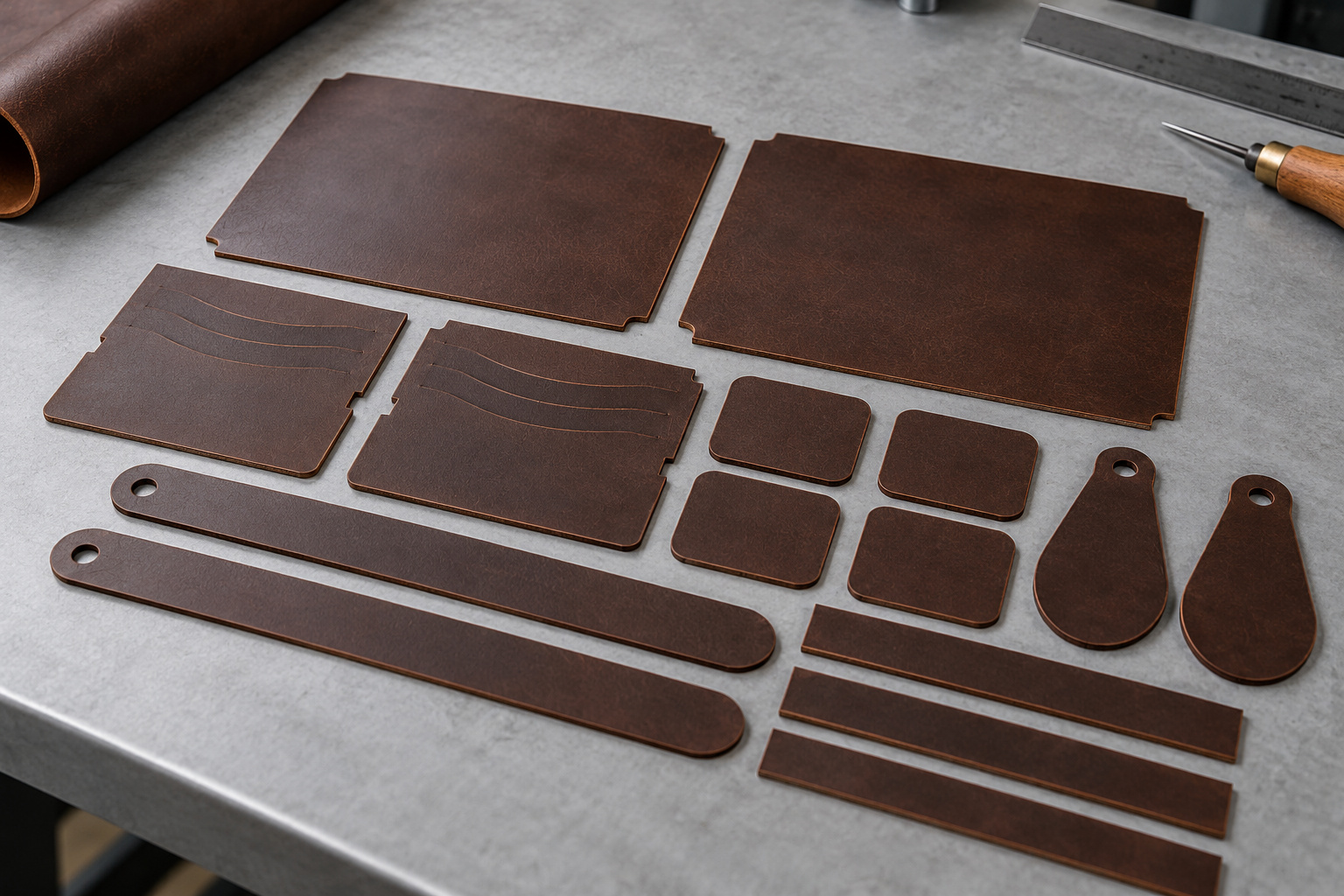
Wallet panels, card-slot pieces, key-fob blanks, and other small components suit a digital pattern workflow when their features are within the cutter’s capability.
Small parts can move as surrounding material is removed. Check hold-down, cut sequence, and blade condition, particularly on narrow straps and closely spaced details. Plan identification and sorting so similar pieces remain easy to distinguish.
How Can Nesting Improve Leather Utilization?
Nesting arranges parts within the available material. For leather, the useful goal is accepted product yield, not simply the smallest gaps between outlines.
An efficient layout considers hide boundaries, defects, quality zones, grain, and stretch direction. Some applications also require matched pairs or consistent appearance across multiple visible panels.
Advanced systems can capture hide contours and use defect information for nesting. These capabilities are configuration-specific. A general positioning camera should not be assumed to provide automatic defect detection. Confirm exactly what the proposed software and hardware can do.
Benefits and Limits of Digital Knife Cutting
Digital cutting makes design changes possible without creating a new cutting die for each outline. Stored files provide a consistent geometric reference for recurring orders, and compatible nesting tools can help plan material use.
Mechanical cutting avoids a laser-generated heat-affected edge. However, no cutter guarantees perfect edges, zero waste, or identical output across all leathers. Material handling, blade replacement, inspection, and operator judgment remain important.
Oscillating knife cutting can be attractive for samples, customized products, and changing patterns. Die cutting may be economical for stable designs and repeated volumes where tooling cost is justified.
Laser cutting offers a different process for suitable materials, but thermal edge effects, coatings, and emissions must be assessed. Compare the actual material and finished edge against your requirements.
Evaluate preparation, cutting, unloading, sorting, finishing, and tooling costs across complete jobs. Maximum travel speed alone does not describe production output.
Start with representative hides or synthetic leather samples, pattern files, material thicknesses, and acceptance criteria. Include the most difficult curves and small parts in the demonstration.
Confirm working area, compatible blades, hold-down, supported file formats, and material handling. Where required, check punching, marking, camera capture, projection, and nesting as separate functions.
Ask about calibration, blade availability, cutting-surface maintenance, training, and technical support. Confirm the supplied guarding, emergency stops, and other protective features rather than assuming all machines have the same arrangement.
Eastrise lists oscillating knife cutting equipment for leather and other flexible materials, with configuration options for different workflows. Ask for a material test and confirm the included tools and software in the quotation.
Frequently Asked Questions
Can an oscillating knife cutter cut genuine leather?
Yes, with suitable tooling and settings. Validate the process for the actual hide type, thickness, finish, and pattern details.
Can the same machine cut synthetic leather?
Some systems can process both natural and synthetic leather, but their settings and handling requirements may differ. Test each material separately.
Does the machine automatically detect leather defects?
Only if the supplied configuration includes suitable inspection or defect-mapping capabilities. Confirm whether defect identification is manual, assisted, or automatic.
Can it cut multiple layers of leather?
Only within a tested machine, tool, and material setup. Layer movement, compressed thickness, hold-down, and required accuracy determine practical suitability.
Will the cut pieces be ready for stitching?
They may still require skiving, punching, edge preparation, marking, or other operations. Define the complete product workflow before selecting equipment.
Final Thoughts
An oscillating knife cutting machine supports flexible leather pattern production when the tool, material handling, and software match the application. Reliable results come from realistic sample testing and attention to leather quality, layout, cutting, and assembly.
Contact Eastrise with your leather samples, pattern files, and production requirements to discuss a suitable CNC leather cutting configuration.


 English


