Oscillating Knife Gasket Cutting: Materials and Applications
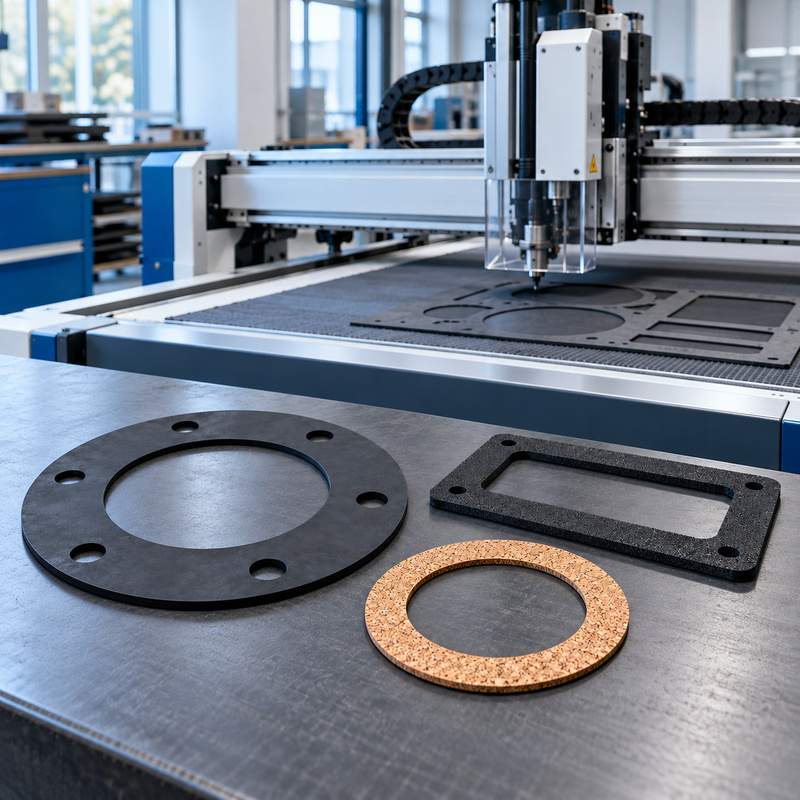
Oscillating knife gasket cutting uses a rapidly reciprocating blade and CNC-controlled motion to cut flat gaskets from compatible sheet materials. Also called vibrating knife cutting, this process allows manufacturers to produce different gasket shapes directly from digital drawings without a dedicated cutting die for every design.
Typical applications include rubber flange gaskets, foam sealing frames, and cork-rubber components. The process is particularly useful for prototypes, replacement parts, customized orders, and production involving frequent design changes.
Reliable results depend on material properties, blade selection, workholding, cutting parameters, and inspection. This guide explains how the process works and what to evaluate when selecting a gasket cutting machine.
How Does an Oscillating Knife Gasket Cutting Machine Work?
The cutting tool moves a blade rapidly up and down while the CNC system guides it along a programmed contour. The blade mechanically separates the material to create the gasket’s outer profile, internal openings, and suitable holes.
The sheet is supported on a cutting surface and held in place using a method appropriate to the material. Vacuum hold-down is common, although porous sheets, small components, and highly flexible materials may require additional attention.
Oscillating knife cutting is a mechanical process rather than a thermal cutting process. It does not rely on melting or burning the material.
Cut quality still depends on the complete setup. An unsuitable blade, insufficient support, or excessive cutting force can cause dragging, distortion, or incomplete separation.
Which Gasket Materials Can Be Processed?
Rubber Sheets
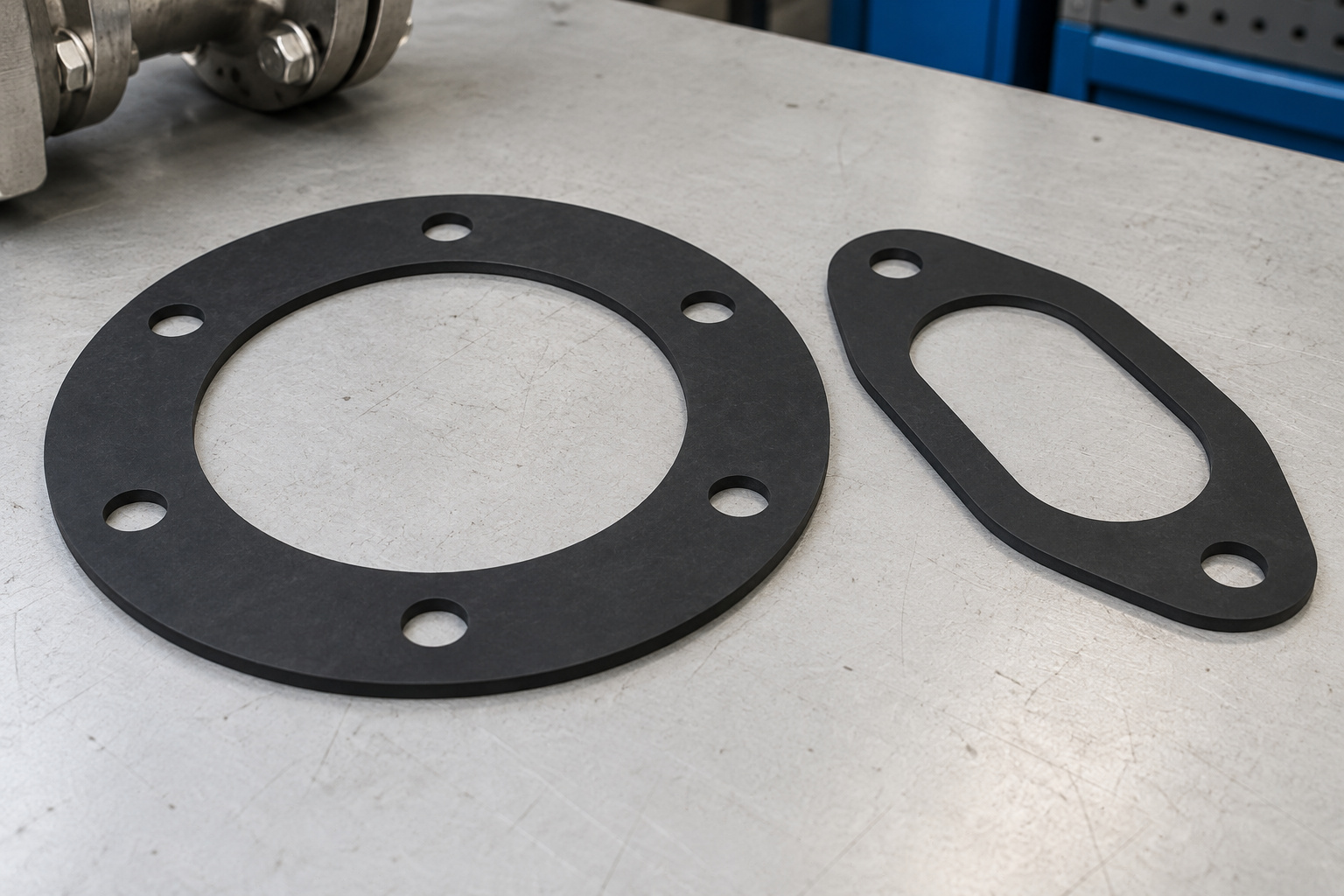
Suitable rubber sheets can be cut into rings, frames, and custom profiles.
Material grade, hardness, thickness, reinforcement, and surface behavior affect processing. EPDM, nitrile rubber, silicone, and neoprene grades should each be evaluated using representative samples rather than treated as interchangeable.
A machine’s capability on one rubber grade does not establish its capability on every rubber sheet.
Foam and Sponge Materials
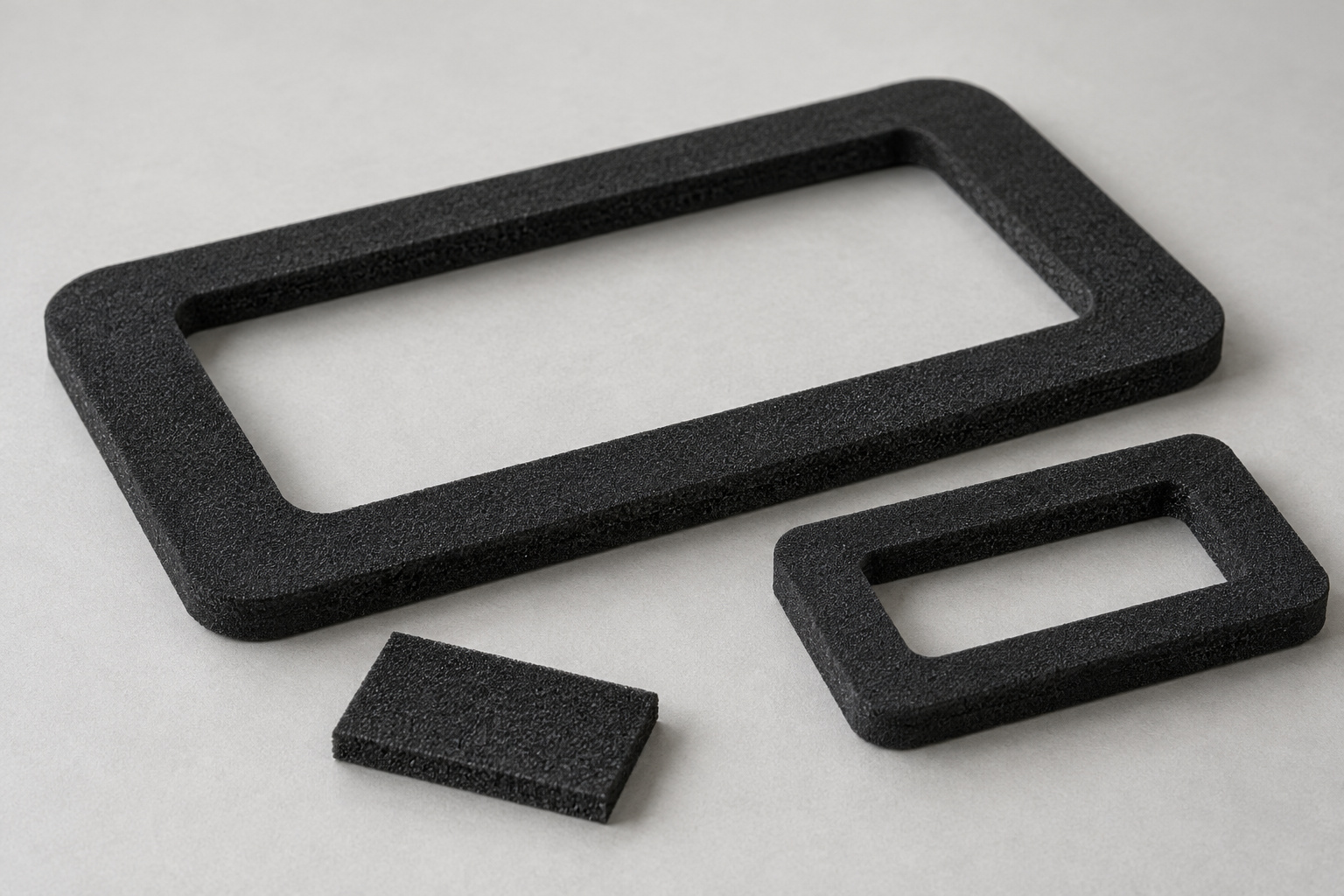
Compatible foam and sponge sheets are used for sealing frames, cushioning components, and enclosure interfaces.
Soft materials can compress under the tool, making support and blade condition especially important. Evaluate the finished part after it has been removed from the table and allowed to relax.
For adhesive-backed materials, include the adhesive and release liner in testing.
Cork-Rubber and Selected Fiber Sheets
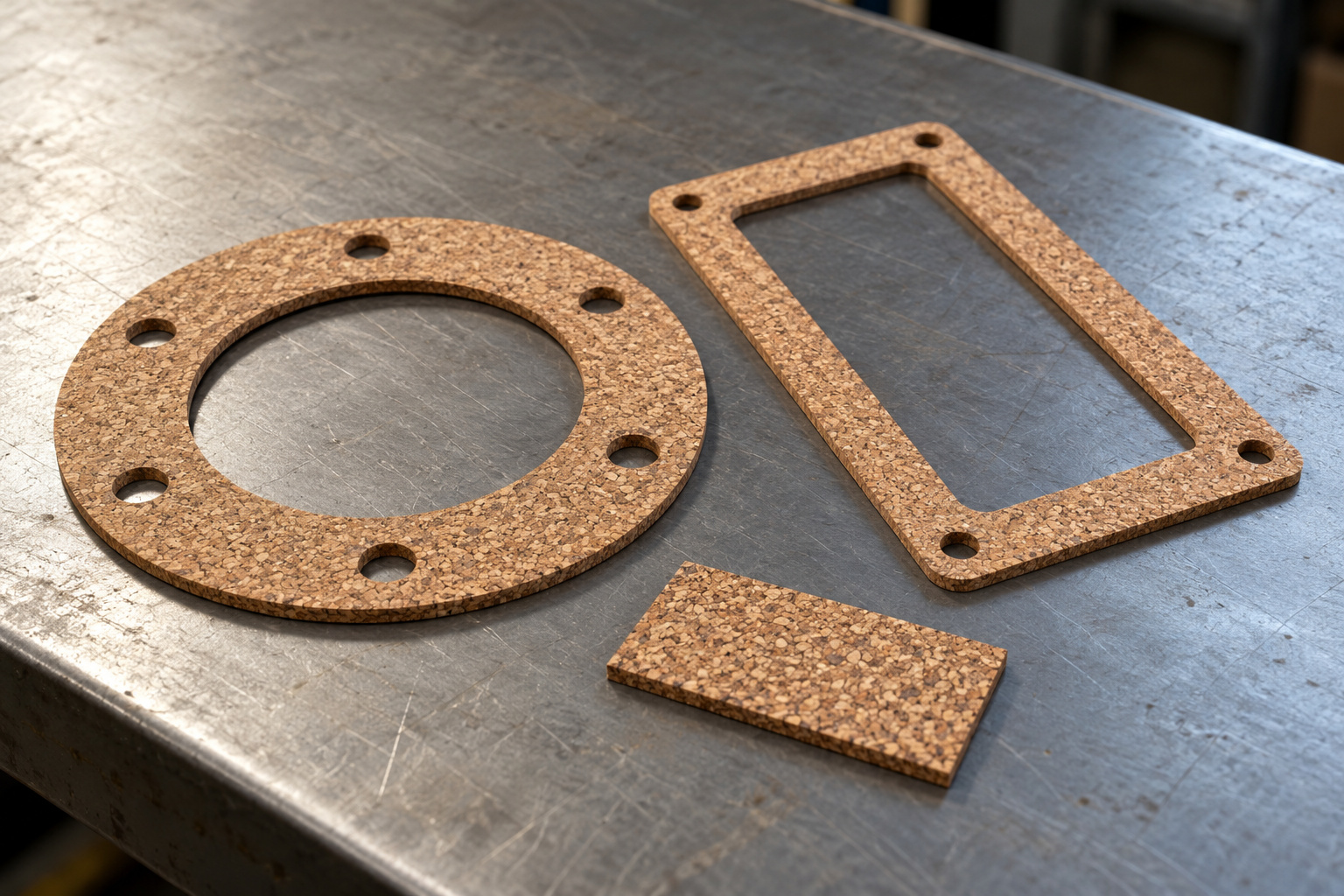
Cork-rubber materials can be used for flat gasket shapes where the specified grade suits the application.
Selected nonmetallic fiber gasket sheets may also be suitable, depending on density, binder, thickness, and tool configuration.
Metal-reinforced sheets and especially hard or abrasive materials require separate evaluation. Do not assume that every gasket material is appropriate for the same knife tool.
Practical Applications of Digital Gasket Cutting
Rubber Flange and Equipment Gaskets
Flat rubber gaskets can include a central opening, bolt holes, and circular or irregular outer profiles.
These parts are useful where the drawing calls for a sheet gasket rather than a molded seal. Digital production allows the geometry to be revised without manufacturing a new cutting die.
Important dimensions include the inner profile, outer profile, hole diameter, and hole spacing.
Small holes and tight internal corners need particular attention. A suitable punching tool or another processing method may be required when the knife cannot produce the feature reliably.
Foam Sealing Frames for Enclosures
Foam frames can be cut to fit covers, access panels, housings, and other mating surfaces.
The design may include rounded corners, narrow sections, and fixing features. These details must remain stable during cutting, removal, and installation.
Inspect the foam for tearing, stretching, and excessive edge compression. Where adhesive backing is required, evaluate handling and liner removal as part of the production workflow.
Water resistance, dust resistance, and other enclosure performance requirements must be validated on the assembled product.
Cork-Rubber Gaskets and Custom Replacement Parts
Cork-rubber sheets can be cut into rings, rectangular frames, and application-specific profiles.
For replacement parts, confirm the original drawing or verified dimensions rather than relying solely on a worn gasket. Used components may have stretched, shrunk, or compressed during service.
Material selection must also match the intended operating conditions.
Producing the correct outline does not by itself confirm that the material is suitable for the sealing application.
Flexible Production Without Dedicated Dies
Digital cutting makes it possible to start a new shape from an approved drawing.
This supports development work, short runs, and mixed orders where investing in a separate die for every design may be impractical.
Straightforward Design Changes
Hole positions, dimensions, and outlines can be revised in the digital file.
Control the drawing revision carefully so production uses the approved version.
Repeatable Job Preparation
Saved files, material settings, and positioning methods provide a reference for repeat orders.
Consistent output still requires appropriate calibration, material control, blade maintenance, and inspection.
Opportunities to Improve Material Utilization
Nesting software can arrange multiple parts within a sheet.
Actual utilization depends on part geometry, spacing, sheet dimensions, material restrictions, and production quantities. Evaluate nesting with your own product mix instead of assuming a fixed savings percentage.
What Affects Gasket Cutting Accuracy?
Material Hardness and Compressibility
Flexible sheets can move or deform during processing. Compressible materials may change shape when held down or contacted by the blade.
Specify how the finished component will be measured and avoid excessive measurement pressure on soft materials.
Blade Geometry and Condition
Blade shape, length, stiffness, and sharpness influence the ability to follow a contour.
A worn or unsuitable blade can increase drag and affect edge quality. Choose the tool for the actual material and feature requirements.
Workholding and Cutting Support
Insufficient hold-down can allow sheets or small parts to shift.
Evaluate the support surface, vacuum arrangement, cutting sequence, and part spacing together.
Tool Settings and Path Strategy
Cutting speed, oscillation settings, cutting depth, and corner handling should match the material and tool.
Higher cutting speed does not automatically produce a lower cost per acceptable part. Rework and rejected components must also be considered.
How to Choose an Oscillating Knife Gasket Cutting Machine
Define Your Production Requirements
Prepare a list of material grades, thicknesses, sheet sizes, part dimensions, order quantities, and required tolerances.
Include drawings containing the smallest holes, narrowest sections, and most demanding contours.
Confirm the Tool Configuration
Electric and pneumatic oscillating tools have different operating characteristics. The appropriate choice depends on the application.
Ask the supplier to explain the proposed blade and tool configuration. If punching, marking, or kiss-cutting is needed, confirm those functions separately.
Request Representative Sample Cutting
Use your own material and approved drawings.
Inspect dimensions, hole quality, edge condition, complete cut-through, and distortion after release. Include assembly or application testing where required.
Compare the Complete Workflow
Consider file preparation, nesting, loading, cutting, part removal, inspection, and blade changes.
For stable, high-volume production of one design, compare digital cutting with die cutting rather than assuming one method is always more economical.
Review Support and Operating Costs
Evaluate consumables, cutting surfaces, maintenance, software, training, and technical support.
Base the comparison on the cost per acceptable finished gasket across your normal workload.
Frequently Asked Questions
Are Vibrating Knife and Oscillating Knife Cutting the Same Process?
In this context, both terms describe cutting with a rapidly reciprocating blade. The exact tool design and capabilities vary between machines.
Can One Machine Cut Every Gasket Material?
No. Suitability depends on material grade, hardness, thickness, reinforcement, tool configuration, and part geometry.
Can the Machine Produce Small Bolt Holes?
Some holes can be knife cut, while others may require punching or another method. Confirm the minimum reliable feature size through sample testing.
Does Accurate Cutting Guarantee Sealing Performance?
No. Sealing performance also depends on material selection, thickness, compression, mating surfaces, fasteners, and operating conditions.
Discuss Your Gasket Cutting Requirements with Eastrise
Share your drawings, material specifications, sheet dimensions, and production targets with Eastrise to discuss a suitable oscillating knife cutting configuration.
Request representative samples, a detailed tool specification, and clear acceptance criteria before selecting equipment for production.


 English



