CO2 Laser Cutter for Wood: Applications and Buying Guide
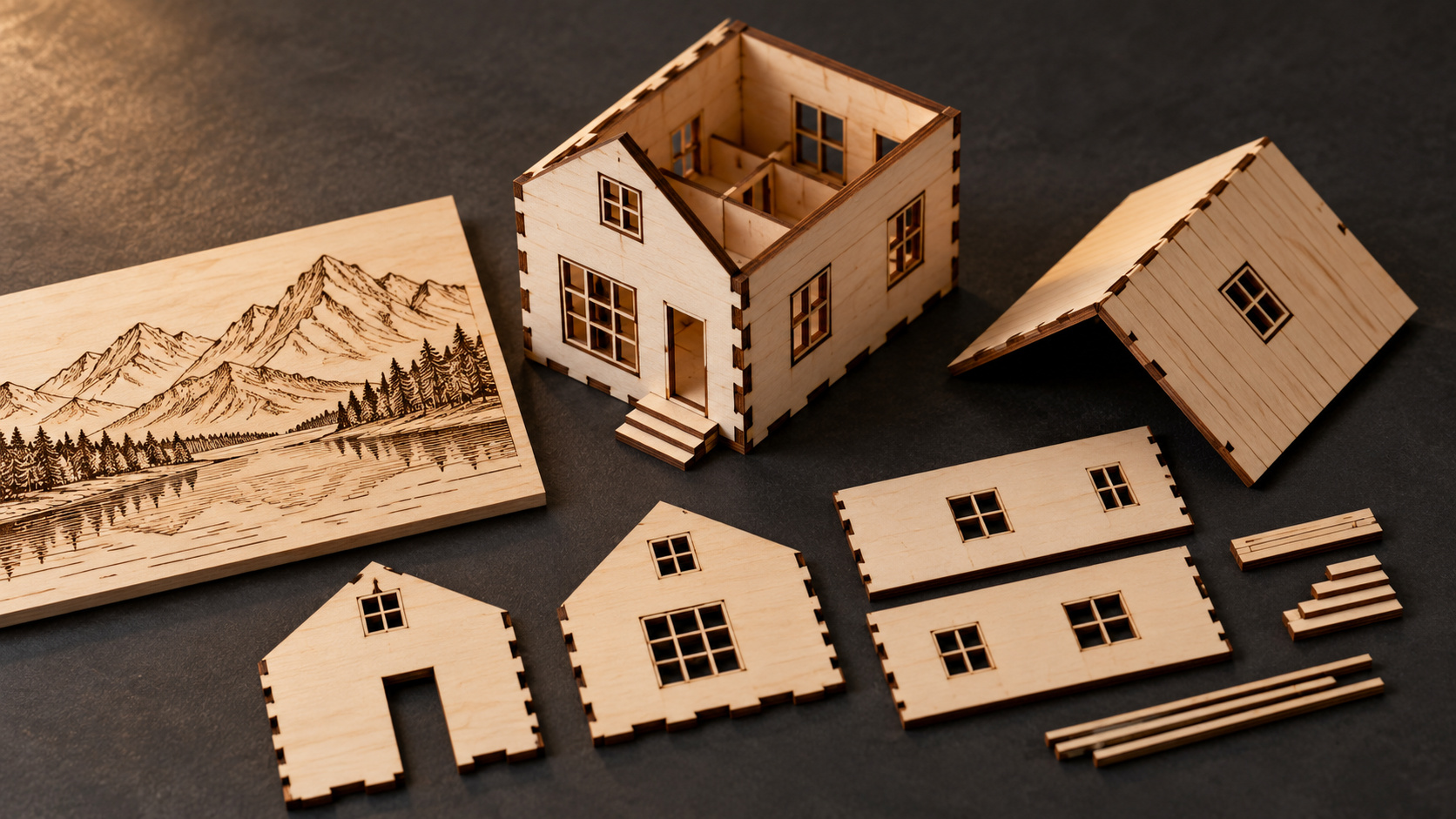
A CO2 laser cutter for wood uses a focused laser beam to cut shapes and engrave designs into compatible wood materials. It is commonly used for wooden gifts, decorative panels, small boxes, signs, and model components.
For craft workshops and manufacturers, the main advantage is design flexibility. Digital files can be adjusted for different patterns, dimensions, and personalized details without making a dedicated cutting die for every design.
However, reliable results depend on wood selection, artwork preparation, machine configuration, and sample testing. This guide explains practical applications and what to evaluate before choosing a wood laser cutting machine.
A CO2 laser system directs a focused beam onto the wood surface. Controlled thermal energy removes material along a programmed path or across a selected area.
Laser cutting passes through the material to create an outline or opening. Laser engraving removes surface material to form a design.
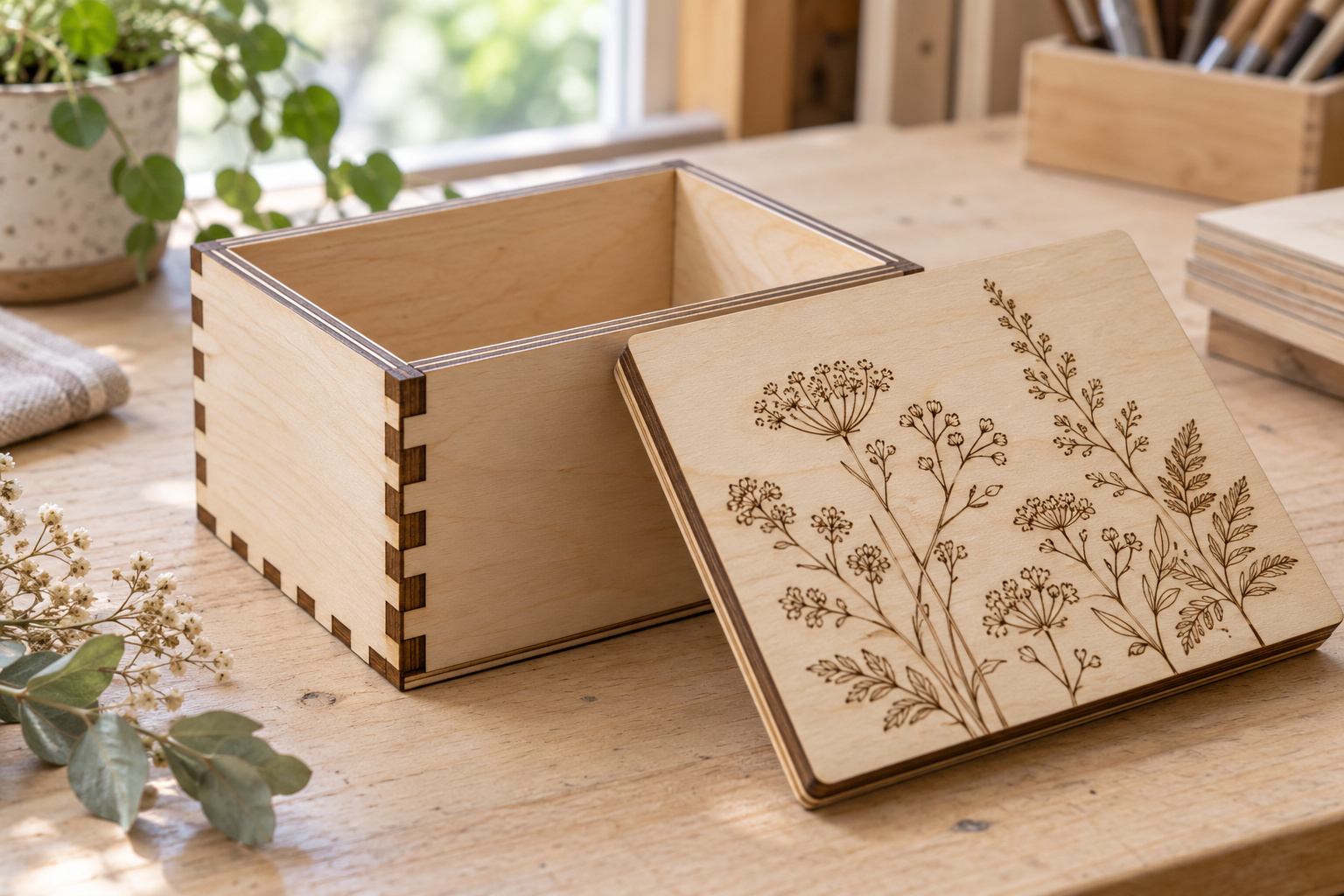
A suitable flatbed CO2 laser engraving and cutting machine can combine these operations within one project. For example, it can engrave a decorative box lid and cut the panels used to assemble the box.
The finished result depends on the material and processing conditions. Cut edges often have a brown or dark appearance, and some products require cleaning, sanding, assembly, or protective finishing.
Which Wood Materials Are Suitable?
Plywood
Plywood is widely used for craft boxes, decorations, models, and small assembled products.
Its performance depends on the wood layers, adhesive, thickness consistency, and internal quality. Voids or uneven glue distribution can cause inconsistent cuts.
Choose plywood intended for laser processing and test the actual production batch. A sheet that looks suitable on the surface may behave differently during cutting.
Solid Wood
Suitable solid wood can be engraved for coasters, plaques, signs, and personalized gifts.
Species, grain, density, resin content, and moisture influence the appearance and processing behavior. A design may show different contrast across the natural grain.
For repeat orders, select material with consistent surface quality and assess the acceptable variation before production.
MDF and Veneered Boards
Laser-compatible MDF can be used for decorative shapes, prototypes, and painted craft components. Its cut edges commonly become dark and may need additional finishing.
For veneered boards, evaluate the complete construction, including the veneer, adhesive, and core material.
Confirm that adhesives, coatings, and surface treatments are suitable for laser processing before placing any engineered wood product in the machine.
Practical Wood Crafting Applications
Laser-Cut Wooden Boxes
Small gift boxes and keepsake boxes combine panel cutting, joint design, and surface engraving.
Finger joints or tabs allow individual panels to fit together, while engraved lids provide decorative or personalized details.
The drawing must account for actual sheet thickness and laser kerf—the width of material removed during cutting. Without adjustment, joints may be too tight or too loose.
Cut a small joint sample before producing a full batch. Then inspect the assembled box for fit, alignment, and finishing requirements.
Decorative Wood Panels and Ornaments
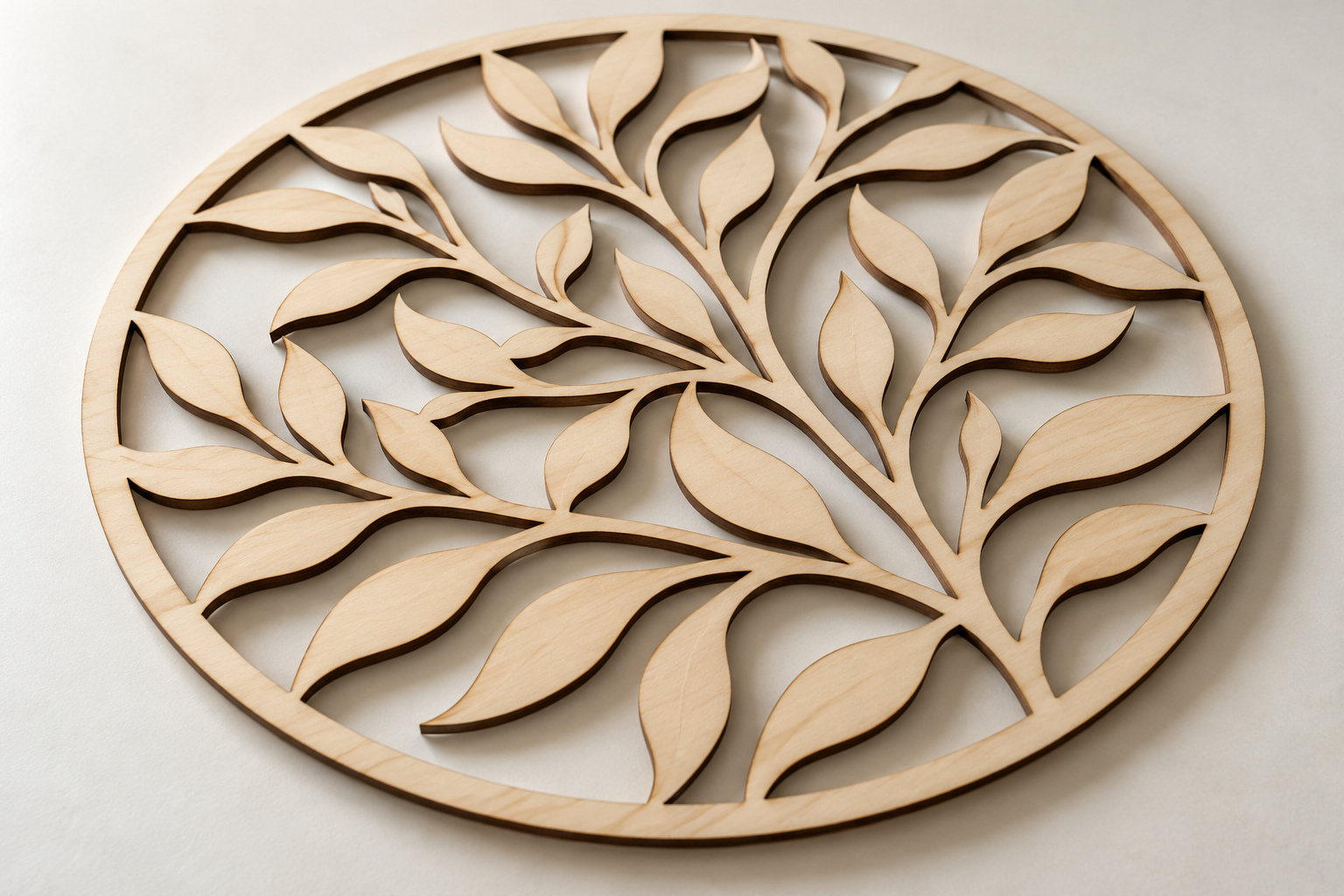
CO2 laser cutting can produce botanical patterns, geometric openings, hanging ornaments, and lightweight wall decorations.
A successful design needs enough material between openings to remain stable during cutting, handling, and installation.
Very narrow connections can break even when the outline cuts successfully. Evaluate the complete design at its intended size rather than judging it only on a screen.
Material thickness, grain direction, mounting points, and the planned finish should all be considered.
Engraved Coasters and Personalized Gifts
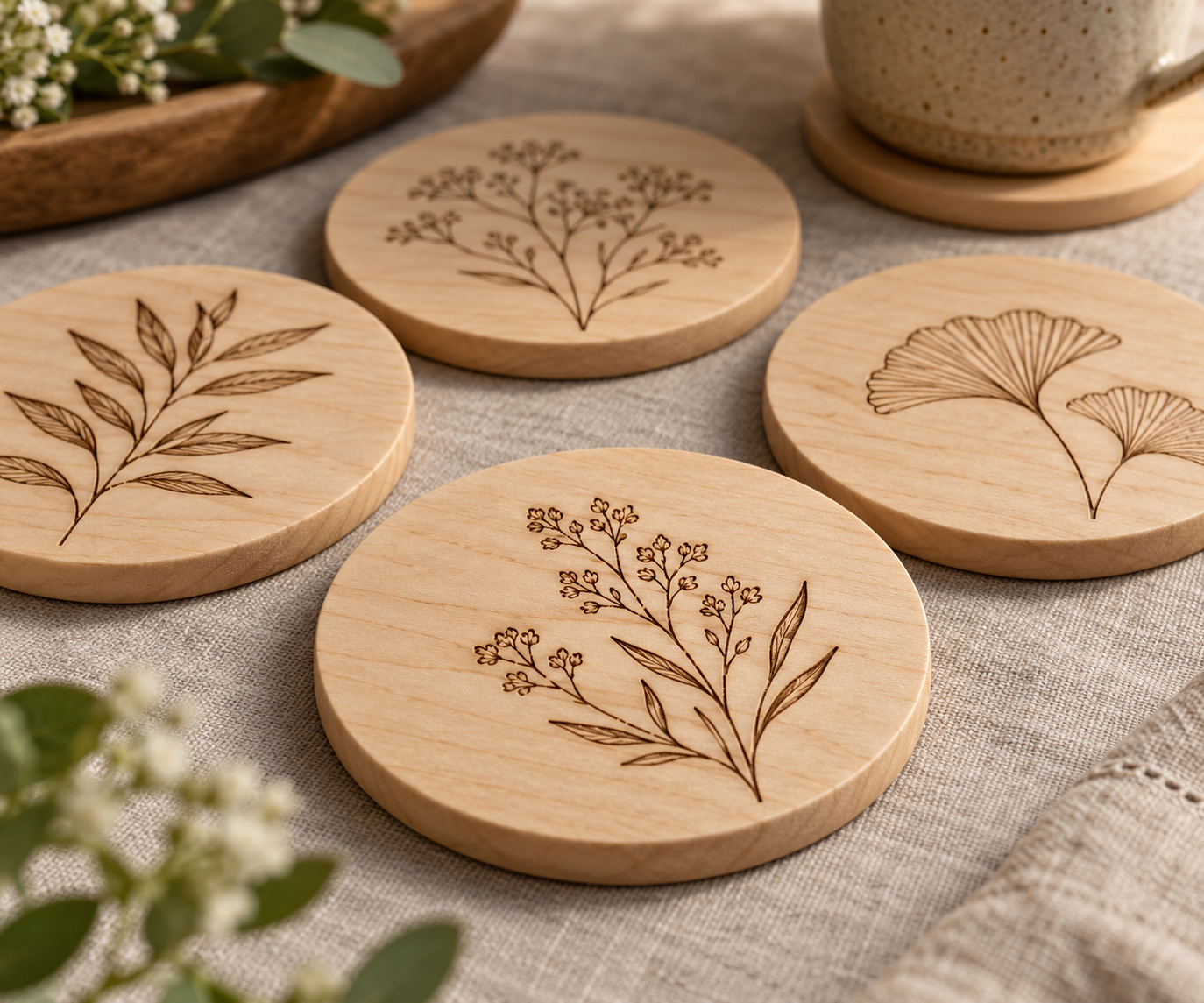
Wood engraving adds line art, names, logos, and decorative motifs to suitable blanks.
Coasters and gift items benefit from artwork that remains readable within the natural grain. Fine details and dense shading should be tested at the final product size.
After engraving, remove loose residue using an appropriate cleaning method. If a finish is required, confirm that it suits the product’s intended use and does not obscure the design.
Approve the appearance after cleaning and finishing, rather than relying only on the result directly from the laser.
Benefits for Craft Workshops and Manufacturers
Flexible Customization
Digital artwork makes it possible to change designs between orders. This supports personalized gifts, seasonal collections, and product development.
Repeatable Part Production
Saved files and controlled positioning can help reproduce parts across a batch.
Consistency still depends on material quality, machine condition, focus, and workholding. Digital control does not eliminate the need for inspection.
Combined Cutting and Engraving
One suitable machine can prepare decorative surfaces and cut component outlines.
This can simplify project preparation, although assembly and finishing remain separate steps where required.
Opportunities to Improve Sheet Utilization
Nesting software can arrange parts within a sheet. The achievable material utilization depends on geometry, spacing, grain direction, and production quantities.
Evaluate nesting with your own products instead of assuming a fixed savings percentage.
How to Improve Wood Cutting and Engraving Results
Keep Material Flat
Warped sheets change the distance between the wood and the focusing optics.
Use a suitable support and holding method to keep the working surface consistent. Confirm that fixtures will not obstruct the moving head.
Test Cutting and Engraving Separately
An engraving setting is not a cutting setting.
Prepare a small test that compares surface detail, contrast, cut-through quality, and edge condition. Follow the machine manufacturer’s guidance when developing settings.
Control Heat Exposure
Excessive exposure can increase scorching and reduce fine detail.
More power or slower movement does not automatically produce a better result. Find a workable balance for the exact wood, thickness, and design.
Account for Kerf and Assembly Fit
Measure sample cuts and adjust mating features where necessary.
For boxes and models, test the joint system using the same material and settings planned for production.
Maintain Extraction and Optics
Wood processing generates smoke and residue. Suitable extraction and routine cleaning support consistent operation.
Follow the manufacturer’s operating and maintenance instructions, keep the work area free of accumulated debris, and monitor processing throughout the job.
Start with your normal products: material type, thickness, sheet size, engraving area, batch quantity, and quality requirements.
Compare working area, laser configuration, material support, extraction, cooling requirements, software, and service support.
Request samples made from your own wood and artwork. Inspect small openings, detailed engraving, cut edges, and assembled joints.
Also compare the complete production cycle, including loading, positioning, processing, cleaning, assembly, and finishing.
The best configuration is the one that produces acceptable finished products economically across your typical workload.
Frequently Asked Questions
Yes, a suitable CO2 laser engraving and cutting machine can perform both tasks. Confirm its capabilities for your material, thickness, and required output.
How Thick Can a CO2 Laser Cutter Cut Wood?
There is no universal thickness limit. Capability depends on the laser system, wood species, adhesive, material condition, and acceptable edge quality. Request representative sample cuts.
Will Laser-Cut Wood Need Sanding or Cleaning?
It may. Some products require residue removal, edge preparation, sanding, or finishing. Requirements depend on the material and intended appearance.
Can a Laser Cutter Replace a CNC Router?
The two processes suit different tasks. CO2 laser cutting is useful for detailed outlines and surface engraving in compatible materials. CNC routing is often more suitable for pockets, deep relief, and substantial material removal.
Discuss Your Wood Crafting Project with Eastrise
Share your drawings, wood specifications, sheet dimensions, and production targets with Eastrise to discuss a suitable CO2 laser engraving and cutting configuration.
Request sample processing, a detailed equipment specification, and clear support arrangements before selecting a machine for production.


 English



