Fiber Laser Cutting Machines for Metal: Applications and Selection Guide
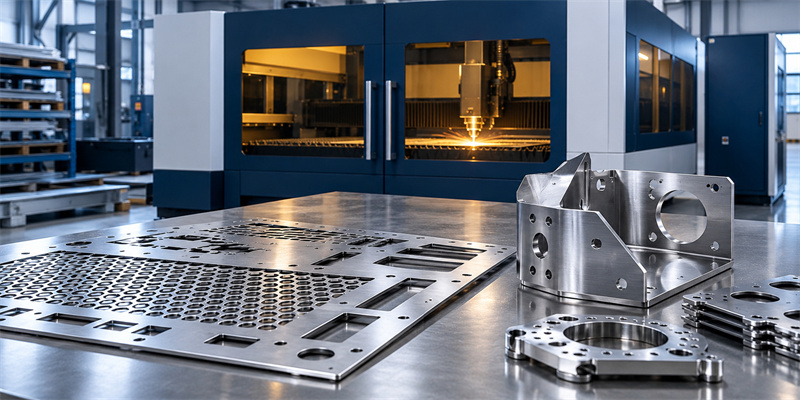
A fiber laser cutting machine for metal uses a focused laser beam and CNC-controlled motion to cut programmed shapes in metal sheets or tubes. Manufacturers use this technology to produce machinery components, decorative panels, equipment housings, and furniture parts.
Choosing suitable equipment requires matching the machine to your production needs. Material grade, thickness, workpiece dimensions, part geometry, and required output should guide the selection process.
This guide explains how fiber laser cutting works, where it is used, and what to evaluate before purchasing a machine.
A fiber laser source generates a beam that is delivered to a cutting head through an optical fiber. The cutting head focuses the beam onto the metal surface, where concentrated energy heats and melts the material.
An assist gas helps remove molten material from the cutting path. The CNC system controls the relative movement between the cutting head and the workpiece according to a digital drawing.
The resulting cut depends on several factors, including laser power, focus position, cutting speed, assist gas, nozzle condition, and material quality.
Laser cutting produces the initial component or blank. Depending on the application, additional operations may include deburring, bending, tapping, welding, or surface finishing.
Main Types of Metal Fiber Laser Cutting Machines
Sheet cutting machines process flat metal sheets into parts with external contours, holes, slots, and internal openings.
Common products include mounting plates, enclosure panels, equipment covers, ventilation panels, and decorative screens.
When evaluating a sheet cutting machine, consider the working area, material handling arrangements, and the thicknesses processed most frequently.
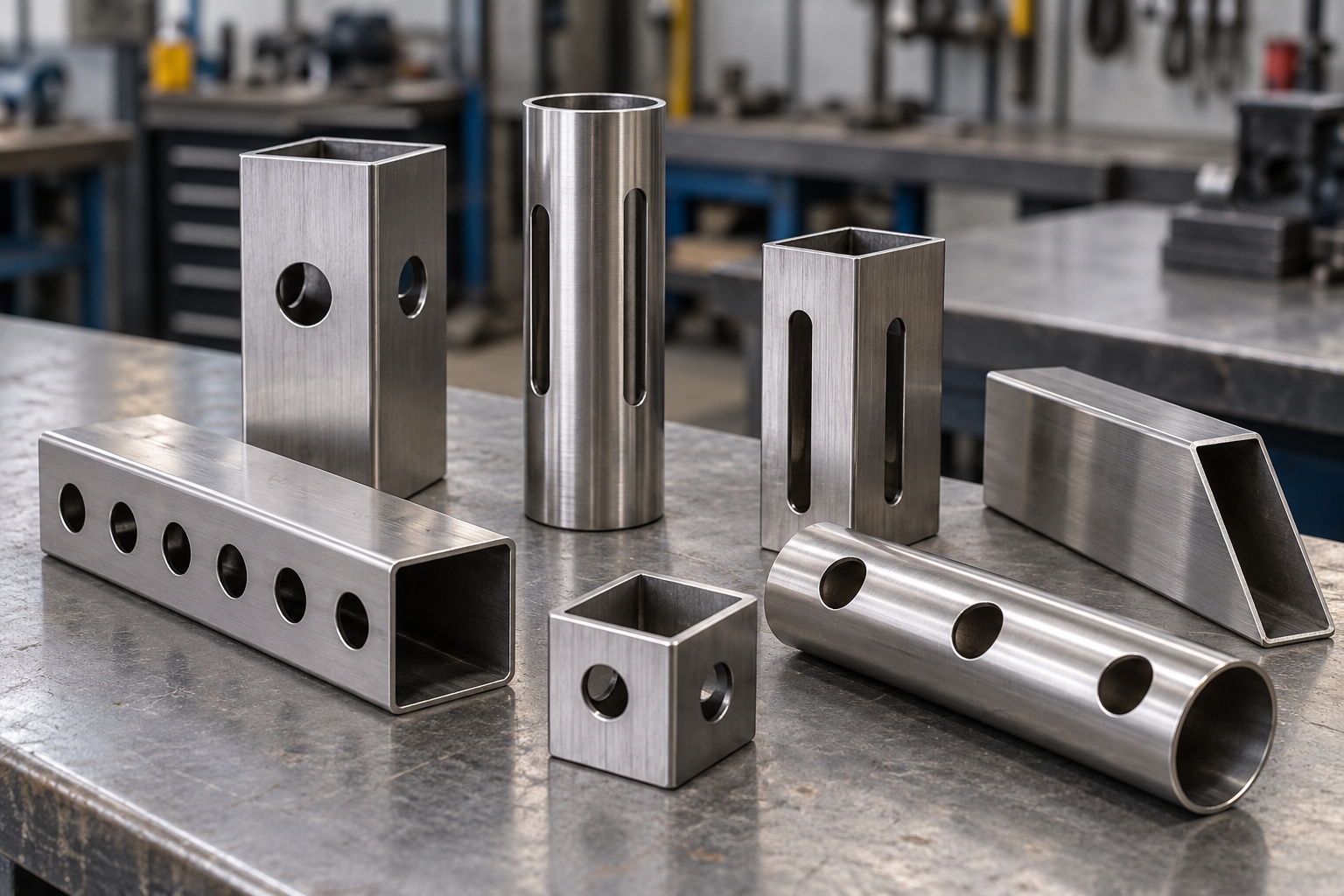
Tube cutting machines use controlled feeding and rotation to process compatible tubes and profiles.
They can produce holes, slots, end contours, and connection features in supported round, square, and rectangular tubes.
Important selection factors include profile compatibility, chuck capacity, loading length, workpiece weight, and remaining unusable tube length.
Combined Sheet and Tube Fiber Laser Cutting Machines
Combined machines provide sheet and tube processing within one equipment configuration.
They may suit workshops with a varied production mix. However, buyers should confirm that both functions meet their actual capacity and workpiece requirements, particularly when sheet and tube orders compete for machine time.
Practical Applications of Fiber Laser Cutting
Precision Sheet Metal Components
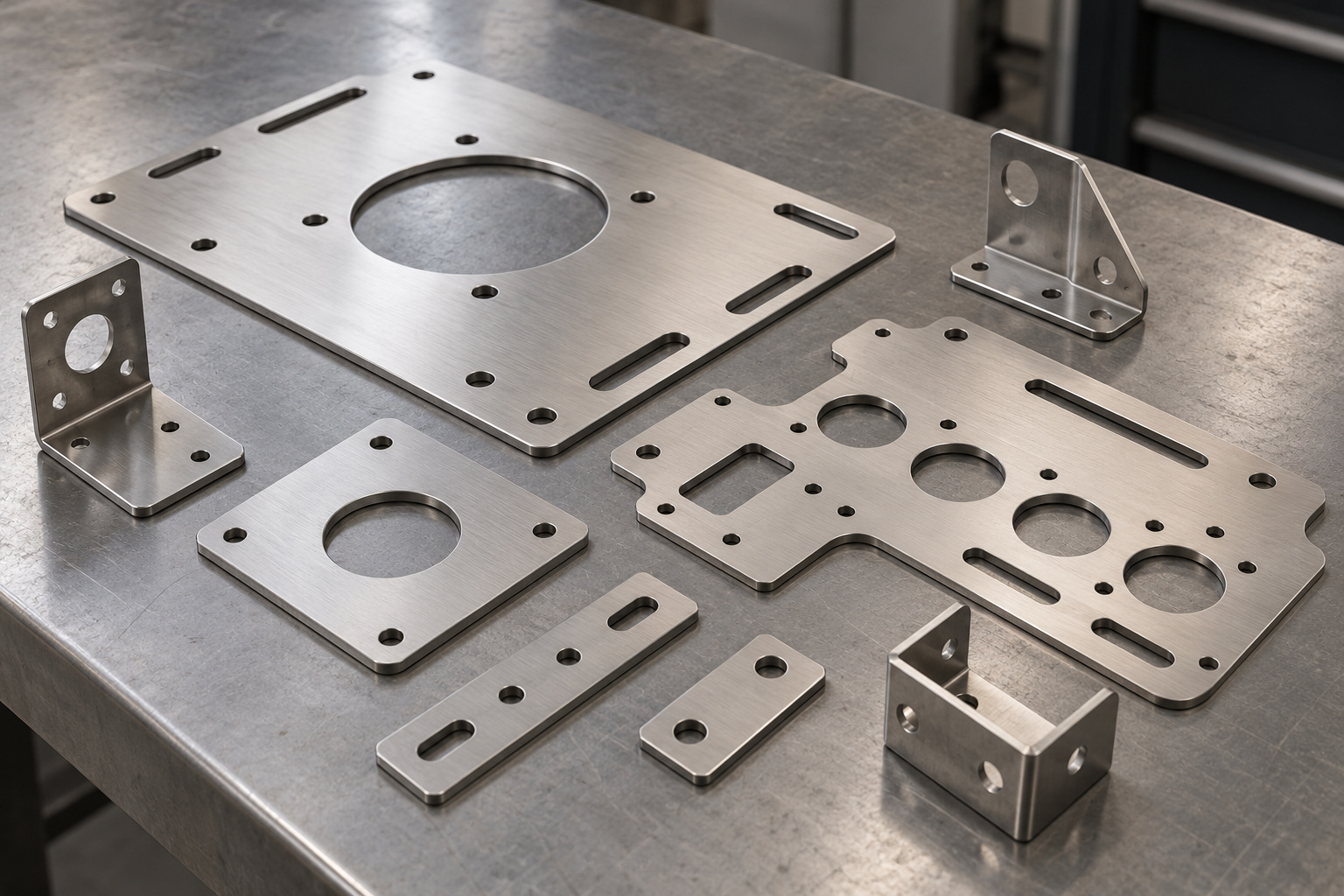
Fiber laser cutting is used to manufacture mounting plates, machine guards, enclosure blanks, ventilation panels, and equipment covers.
External contours and internal openings can be cut from the same digital drawing. This flexibility supports customized components, prototypes, and repeat orders without requiring a dedicated cutting die for each design.
Drawings should specify material grade, thickness, critical dimensions, and acceptable edge condition. Features intended for later assembly should be evaluated against the finished component’s requirements.
For brackets and other formed parts, laser cutting creates the flat blank, while a separate bending operation produces the final shape.
Architectural Screens and Decorative Panels
Decorative metal cutting allows designers to create geometric patterns, privacy screens, room dividers, and wall features.
A practical design must balance appearance with strength. Narrow connecting sections, dense patterns, and large unsupported areas can affect panel rigidity and handling.
Material thickness, panel dimensions, fixing points, and surface finishing should be considered before cutting. Outdoor installations also require appropriate material selection and corrosion protection.
Fiber laser cutting provides design flexibility, but the completed panel must still meet the structural and installation requirements of the project.

Metal Tubes and Furniture Components
Fiber laser tube cutting supports the production of furniture frames, display structures, equipment supports, and fabricated assemblies.
Holes, slots, and connection profiles can help position components during assembly. Final fit also depends on tube dimensional consistency, cutting compensation, fixtures, and welding procedures.
Before purchasing a tube cutting machine, test representative parts that include your normal profile sizes and connection details.
Carbon Steel
Carbon steel is commonly used for machinery parts, equipment panels, brackets, and general fabrication.
Cutting parameters and assist gas should match the material thickness and required edge condition. If parts will be painted or welded, include any necessary edge preparation when evaluating the production process.
Stainless Steel
Stainless steel is widely used for decorative panels, equipment housings, and components requiring corrosion resistance.
Assist gas selection and process settings influence edge appearance and oxidation. Nitrogen is commonly used when an oxide-free cut edge is required, although gas purity, pressure, and the machine configuration must suit the application.
Aluminum
Aluminum is used for lightweight panels, equipment covers, and fabricated components.
Alloy, thickness, surface condition, and heat dissipation affect cutting behavior. Confirm processing capability with sample cuts using the aluminum grades your business normally purchases.
Copper and Brass
Copper and brass can be cut with appropriately specified fiber laser equipment.
Their reflective and thermal properties make laser source compatibility and suitable process settings especially important. Obtain confirmation from the equipment supplier and request representative sample testing.
For every material, distinguish between the machine’s maximum cutting capability and its practical production range. A maximum thickness rating alone does not establish cutting speed, edge quality, or cost per part.
Benefits of Fiber Laser Cutting for Metal Fabrication
Flexible Part Designs
Digital programming allows manufacturers to change contours, openings, and patterns without producing a new cutting die for every design.
This is useful for businesses handling customized orders, product development, and varied batch sizes.
Repeatable Production
A controlled CNC process can support consistent part production when the machine is maintained and the cutting conditions remain stable.
Actual results still depend on material consistency, calibration, workholding, and process control.
Opportunities to Improve Material Utilization
Nesting software helps arrange parts within a sheet.
The achievable utilization depends on part geometry, cutting spacing, sheet dimensions, grain direction requirements, and production planning. Compare nesting results using your own part mix rather than assuming a fixed savings percentage.
Integration with Later Operations
Laser-cut blanks can be prepared for bending, welding, fastening, or finishing.
Considering these later operations during part design helps ensure that cutting decisions support the complete manufacturing process.
1. Define Your Typical Materials and Parts
List your most frequently processed materials, thicknesses, workpiece sizes, and batch quantities.
Include drawings showing small holes, narrow slots, detailed contours, or other features that are important to production.
Select equipment around normal orders as well as occasional demanding jobs.
2. Match Laser Power to Production Needs
Laser power influences cutting capability, but it does not determine overall performance by itself.
The cutting head, motion system, assist gas supply, software, material condition, and operating parameters also affect results.
Compare actual sample parts and processing times rather than selecting equipment solely by power rating.
3. Confirm Working Area and Handling Capacity
For sheet cutting, check that the working area accommodates your normal sheet dimensions and that loading arrangements suit the workshop.
For tube cutting, confirm supported profiles, lengths, weights, and unloading requirements.
Efficient handling matters because cutting time is only one part of the production cycle.
4. Evaluate Cut Quality
Inspect samples for dimensional accuracy, edge condition, dross, small-feature quality, and heat-related distortion.
Where possible, test the cut parts through their intended bending, assembly, or finishing operations. This provides a more useful assessment than inspecting the cut edge alone.
5. Compare Total Operating Costs
Consider electricity, assist gas, consumables, maintenance, software, training, and service support.
The most useful comparison is the cost per acceptable finished part, including handling and any secondary processing.
6. Review Training and After-Sales Support
Confirm the scope of installation, operator training, maintenance guidance, and technical support.
A clearly defined service arrangement helps the workshop plan routine maintenance and respond to production interruptions.
Frequently Asked Questions
Some configurations support both sheet and tube cutting. Confirm that each function meets your workpiece dimensions, profile requirements, and production volumes.
Does Fiber Laser Cutting Eliminate Deburring?
Not always. Some parts require little edge preparation, while others need deburring or additional finishing. Results depend on material, thickness, geometry, and cutting conditions.
Is Higher Laser Power Always the Better Choice?
No. The appropriate power level depends on your material mix, thickness range, required output, and operating budget.
A suitable configuration should deliver acceptable parts economically across your normal workload.
What Should I Prepare Before Requesting a Quotation?
Provide part drawings, material grades, thicknesses, sheet or tube dimensions, production quantities, and quality requirements.
Also explain any later bending, welding, assembly, or finishing operations that could affect the cutting requirements.
Discuss Your Fiber Laser Cutting Requirements with Eastrise
Choosing a fiber laser cutting machine starts with understanding the parts you need to produce.
Share your drawings, material specifications, and production targets with Eastrise to discuss suitable sheet or tube cutting configurations.
Request representative sample cuts, a detailed equipment configuration, and clearly defined support arrangements to evaluate the machine against your production needs.


 English



