Fiber Laser Cutting for Stainless Steel and Carbon Steel
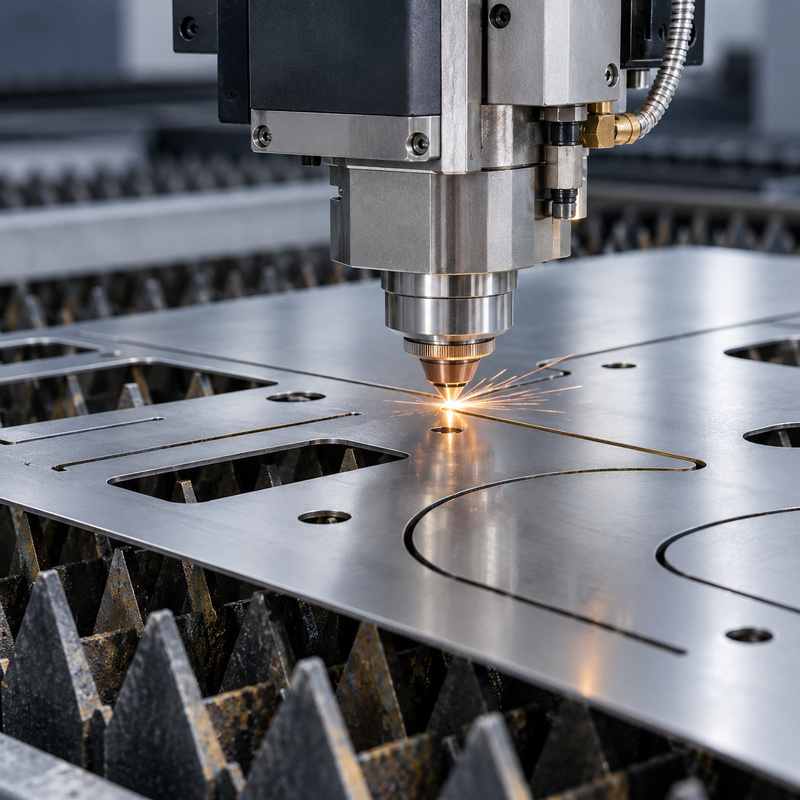
A fiber laser cutting machine uses a focused laser beam, CNC motion control and assist gas to cut programmed shapes from metal sheets. Stainless steel and carbon steel are two important materials for this process, supporting applications from cabinet panels and ventilation guards to machinery connection plates.
For fabrication businesses, the value comes from producing the required geometry consistently and preparing parts for subsequent manufacturing operations. A suitable cutting process can simplify the production of external profiles, mounting holes, slots and internal openings.
The right machine configuration depends on the material, sheet thickness, part design and required edge quality.
The laser beam is focused onto the metal surface, delivering concentrated energy along a programmed cutting path. Assist gas helps remove molten material from the cut.
The CNC system coordinates the cutting head with the part geometry. A cutting program defines the contours, while process settings determine how the machine pierces and cuts the sheet.
Laser power, cutting speed, focus, nozzle condition and assist gas all influence the result. These settings need to match the material and thickness rather than remain identical for every job.
Stainless Steel Laser Cutting
Stainless steel laser cutting is useful for parts that combine functional openings with visible metal surfaces.
Typical examples include equipment faceplates, cabinet panels, ventilation covers and flat blanks for further fabrication. The process can produce external contours and internal features from the same digital drawing.
Surface appearance and edge condition are particularly important for visible stainless steel parts. Handling methods should also protect the sheet finish during loading, part removal and subsequent processing.
Nitrogen is commonly used when an oxide-free cut edge is required. However, gas selection must account for the equipment, material thickness, operating cost and final product requirements.
An oxide-free cut does not automatically mean that a part needs no finishing. Deburring, cleaning or other treatment may still be required by the product specification.
Carbon Steel Laser Cutting
Carbon steel laser cutting supports the production of machinery plates, connection plates, mounting blanks and other general fabrication components.
These parts often require a combination of straight edges, curves, bolt holes and adjustment slots. Cutting these features from a digital program gives workshops flexibility when producing different designs.
Oxygen-assisted laser cutting is widely used for mild steel. The reaction between oxygen and the metal contributes energy to the cutting process. Depending on the system and application, nitrogen or other qualified gas strategies may also be used.
Oxygen-cut edges may need oxide removal before certain coating or joining operations. The required treatment should be determined by the downstream process.
Carbon steel covers a range of grades. Confirm the actual steel grade instead of treating every carbon steel sheet as identical.
Practical Applications in Metal Fabrication
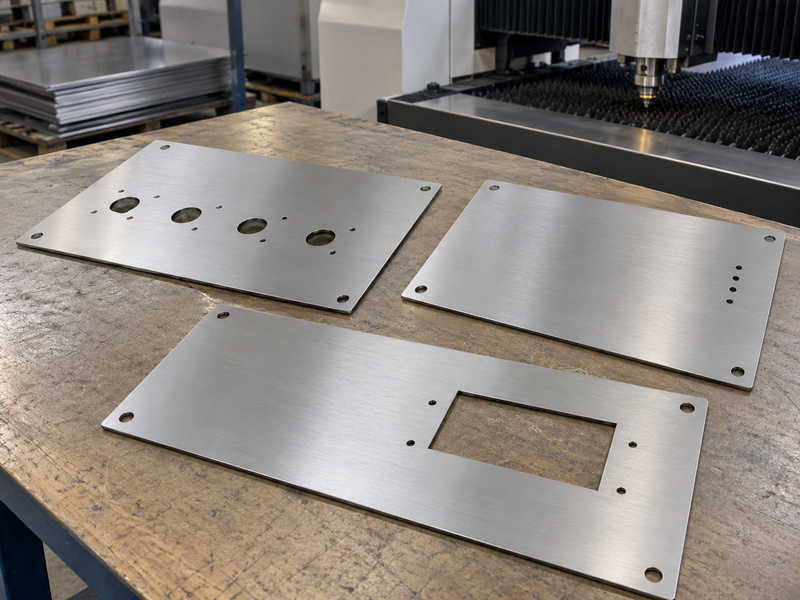
Stainless Steel Cabinet and Control Panels
Cabinet faceplates and control panels often need mounting holes, instrument openings and external profiles.
Fiber laser cutting can prepare these features before assembly. Where a panel forms part of a folded enclosure, bending is a separate operation that follows cutting.
Check opening dimensions and hole positions against the components that will be installed. This helps avoid assembly problems later.
Carbon Steel Machinery Connection Plates
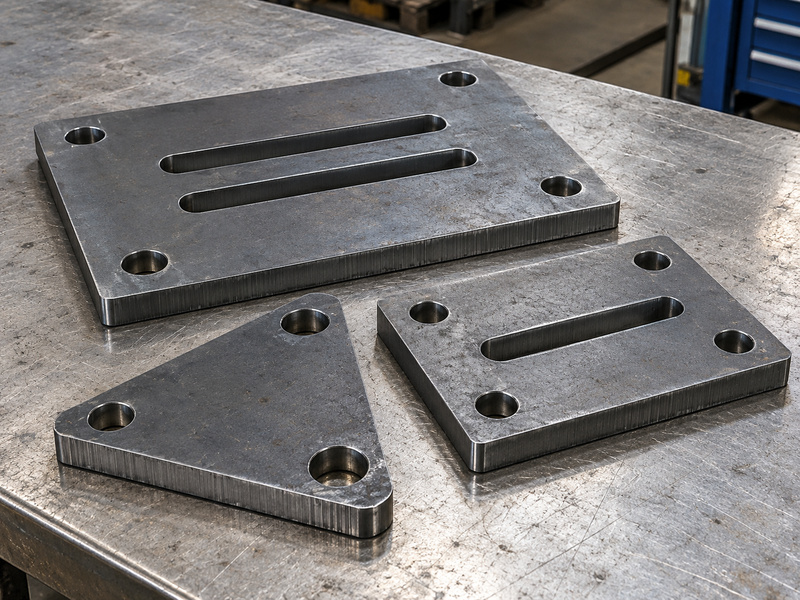
Connection plates and mounting plates are practical applications for carbon steel laser cutting.
Their geometry may include bolt holes, rounded corners and adjustment slots. Depending on the design, the cut blanks may then undergo drilling, tapping, machining, welding or coating.
A laser-cut hole should not automatically be assumed to meet every precision-fit requirement. Use the drawing tolerance to determine whether a secondary operation is necessary.
Stainless Steel Ventilation Guards and Covers
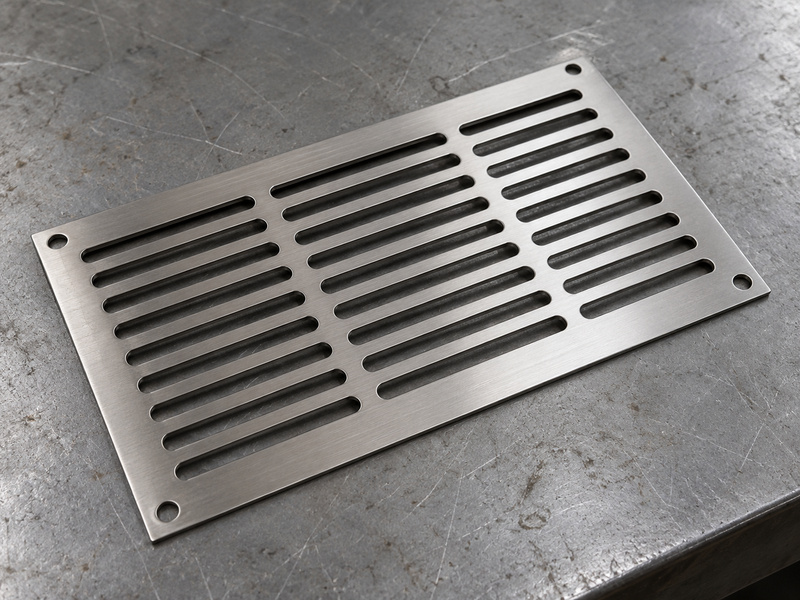
Ventilation panels can combine repeated slots with a defined outside shape and mounting holes.
The layout must balance airflow, appearance and the strength of the remaining material. Narrow webs and closely spaced openings also require attention during cutting.
Validate the slot pattern and panel flatness on a representative sample, especially when a large proportion of the sheet is removed.
Custom Sheet Metal Parts
Workshops handling varied orders can use digital cutting programs to produce different flat components without creating a dedicated cutting die for each outline.
This flexibility can support prototype development and changing product designs. Production suitability still depends on the part quantity, geometry and complete manufacturing cost.
Benefits to Evaluate in Your Workshop
Flexible Part Geometry
Programmed cutting paths allow different contours and internal features to be produced from sheet material.
Design flexibility is useful when customers require frequent drawing changes or multiple part variations.
Consistent Production from Approved Programs
A verified program and stable cutting conditions provide a basis for repeat production.
Consistency also depends on sheet quality, machine condition and process monitoring. First-piece approval and periodic inspection remain important.
Opportunities to Improve Sheet Utilization
Nesting software can arrange multiple parts within a sheet to improve material use.
The best layout balances material utilization with reliable cutting and part removal. Extremely close spacing is not always suitable for every material or geometry.
Preparation for Downstream Fabrication
Accurately cut blanks can help organize later bending, welding and assembly operations.
The overall benefit should be measured across the finished component, including any necessary edge treatment and secondary machining.
What Affects Laser Cutting Quality?
Material grade and surface condition: Rust, scale, coatings and inconsistent sheet quality can affect processing.
Material thickness: Different thicknesses require suitable cutting parameters and machine capability.
Focus and nozzle condition: Correct setup helps deliver the beam and gas as intended.
Assist gas: Gas type, purity, pressure and supply stability can influence the cut edge.
Part geometry: Small holes, narrow sections and closely spaced contours may need special attention.
Machine maintenance: Follow the manufacturer's procedures for optics, cooling, motion components and other service items.
A useful sample inspection checks dimensions, burrs, edge roughness, flatness and suitability for the next manufacturing step.
Start with the stainless steel and carbon steel grades you actually process. List your normal thicknesses, sheet sizes, typical drawings and expected production volume.
Request trials on representative parts. Ask the supplier to identify the machine configuration, assist gas and processing conditions used.
Compare cost per acceptable part rather than laser power or advertised speed alone. Include material use, gas, electricity, handling, maintenance and finishing.
Confirm the installation requirements, operator training and service support included in the proposal.
Frequently Asked Questions
Yes. A suitable configuration can process both materials using appropriate settings and assist gas. Confirm the required grades and thicknesses with the supplier.
What thickness can the machine cut?
The practical range depends on the model, laser power, material and required quality. Request verified cutting information for the exact configuration.
Will every part have a burr-free edge?
No. Burr formation depends on the material, geometry, machine setup and processing conditions. Inspect samples against an agreed standard.
Does laser cutting complete a finished cabinet or bracket?
Laser cutting produces the flat blanks and openings. Bending, welding, threading, coating or assembly may be needed afterward.
Which gas should be used for stainless steel and carbon steel?
Nitrogen is commonly used for oxide-free stainless steel edges, while oxygen is widely used for mild steel. The appropriate choice depends on the machine and application.
Discuss Your Metal Cutting Requirements with Eastrise CNC
For a suitable equipment proposal, share your material grades, thickness range, sheet dimensions, part drawings and production targets with Eastrise CNC.
Request sample cutting and configuration details that reflect your actual work. Evaluating stainless steel and carbon steel parts against clear requirements helps you select a machine for your production needs.


 English



