Fiber Laser Solutions for Metal Cutting: Benefits, Applications and Selection Guide
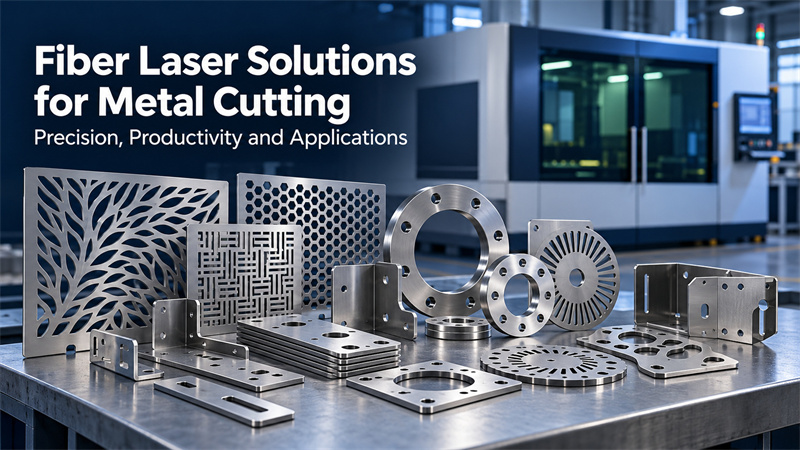
Fiber laser cutting solutions combine a focused laser beam, CNC motion, assist gas, and material handling to produce metal components from digital drawings. For manufacturers, their value lies in producing acceptable parts efficiently while accommodating different designs and production quantities.
Applications range from machinery components and electrical enclosure panels to architectural screens and custom metal products. Choosing the right system requires an assessment of materials, part geometry, edge requirements, and the complete production workflow.
A fiber laser source generates the beam, which is delivered to a cutting head and focused onto the workpiece. The concentrated energy heats the material locally, while assist gas helps remove molten material from the cutting path.
The CNC system follows programmed contours to create the required shapes. Cutting software manages features such as nesting, entry points, cutting order, and process settings.
Laser cutting is a thermal process. It can produce a localized heat-affected zone, and the resulting edge condition depends on the material and cutting parameters.
Benefits of Fiber Laser Cutting Solutions
Flexible Production from Digital Drawings
Manufacturers can update cutting files when component dimensions or designs change. This can support prototypes, customized orders, and batches containing several different parts.
Digital flexibility still requires careful file control. Check drawing scale, duplicate contours, hole dimensions, and revision status before production.
Detailed Profiles and Consistent Geometry
A suitable fiber laser system can cut slots, holes, curves, and external profiles in compatible metals.
Actual dimensional results depend on calibration, motion control, material condition, and process settings. Small features and closely spaced contours should be evaluated using representative samples.
Potential for Improved Material Utilization
Nesting software arranges parts within the available stock. Effective layouts can help reduce unused material and organize production batches.
The layout should also account for part spacing, heat distribution, sheet stability, unloading, and reusable remnants. Maximum nesting density does not always provide the best production result.
Opportunities to Reduce Finishing Work
Appropriate cutting conditions can produce edges that require less corrective work.
However, fiber laser cutting does not guarantee burr-free parts or eliminate every secondary operation. Deburring, cleaning, machining, and coating preparation may still be necessary.
Support for Automated Workflows
Depending on the configuration, a system may include exchange tables, automatic loading, unloading, or other handling functions.
These features can help reduce interruptions, but their value depends on production volume and part mix. Assess the complete workflow, including sorting and downstream processing.
Materials to Evaluate
Carbon Steel
Carbon steel is used for machinery plates, mounting brackets, supports, and general fabrication.
Thickness, surface condition, assist gas, and required edge quality influence cutting performance. If the process leaves an oxide layer, determine whether it must be removed before welding, painting, or other operations.
Stainless Steel
Stainless steel applications include enclosure panels, food-equipment components, decorative products, and fabricated assemblies.
Edge oxidation, burr formation, and surface protection should be included in the cutting assessment. Nitrogen is commonly considered when limiting cut-edge oxidation is important.
Aluminum
Suitable systems can process aluminum, but the alloy, thickness, reflectivity, and thermal behavior affect the result.
Test the actual material for edge quality, dimensional accuracy, and distortion. Confirm the machine’s approved processing range.
Brass and Copper
These materials require particular attention to reflected energy and laser-source compatibility.
Not every fiber laser cutting machine is approved for brass or copper. Ask the supplier to confirm capability and demonstrate the proposed process on representative stock.
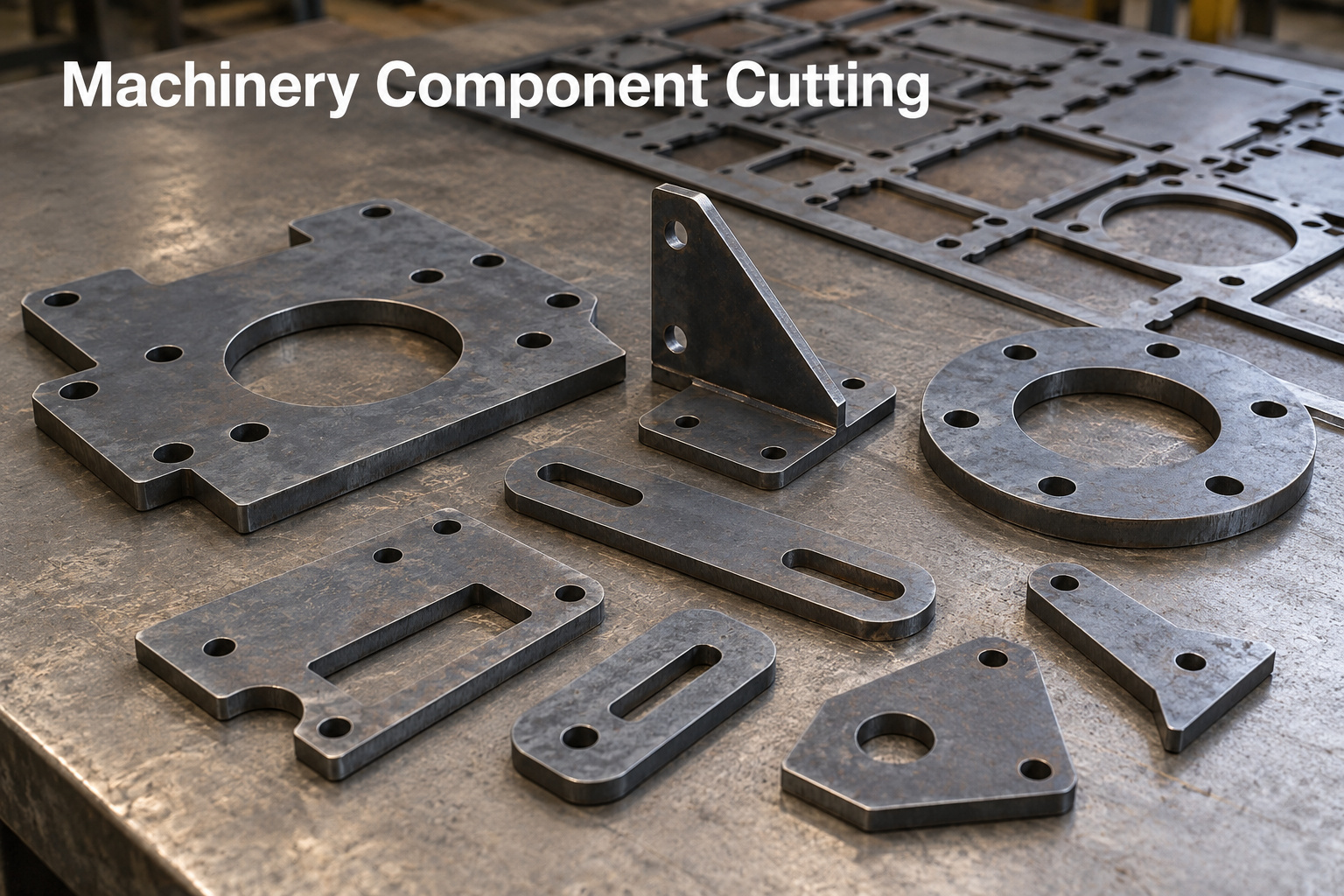
Machinery Component Cutting
Fiber laser cutting can produce mounting plates, gussets, flanges, guards, and other component blanks.
Functional requirements determine whether the cut features are sufficient. Precision bores, threads, and critical mating surfaces may require additional machining.
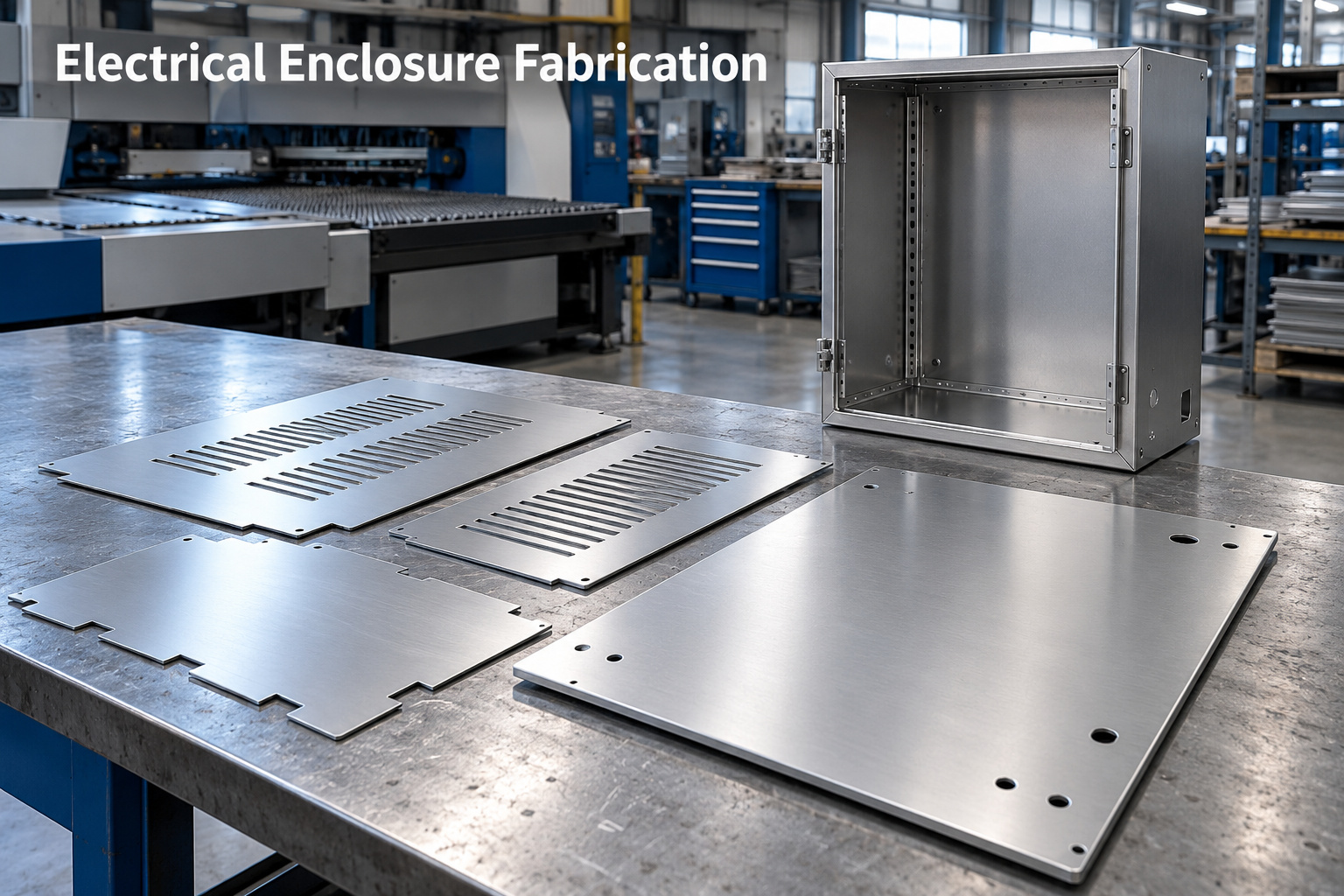
Electrical Enclosure Fabrication
Sheet metal blanks for cabinet doors, mounting panels, and ventilation panels can be produced from approved drawings.
Design the cutting files around subsequent operations, including bending, fastening, welding, and finishing. A cut blank and a completed electrical enclosure represent different stages of fabrication.
Architectural Metal Panels
Decorative screens, partitions, sign panels, and architectural inserts can incorporate customized cut patterns.
Evaluate narrow bridges, unsupported areas, panel flatness, mounting details, and the intended finish. Cutting capability alone does not establish the installed panel’s structural performance.

Transportation and Equipment Parts
Selected brackets, panels, and supports for transportation equipment can be evaluated for fiber laser cutting.
Material traceability, cut-edge condition, dimensional tolerances, and inspection requirements should match the component’s intended service.
Define Your Routine Production Requirements
List your material grades, thickness range, stock dimensions, common part features, and expected quantities.
Separate frequent production work from occasional jobs. The highest advertised cutting thickness is not a complete basis for selecting a machine.
Match the Configuration to the Workpiece
Flat-sheet systems, dedicated tube cutters, and combined machines have different handling arrangements.
For sheet production, assess working area, loading access, and unloading. For tube production, check chuck capacity, support, tube shape, length, and remaining material.
Compare Edge Quality and Total Job Time
Request sample cutting using your actual drawings and materials.
Inspect dimensions, burrs, edge appearance, and distortion. Record loading, cutting, unloading, sorting, and finishing time.
A faster cutting pass may offer limited benefit if it creates more downstream work.
Evaluate Assist Gas and Operating Requirements
Gas choice affects cutting behavior, edge condition, and operating cost. Oxygen, nitrogen, and compressed air have different uses and requirements.
Include gas supply, electricity, cooling, extraction, consumables, maintenance, and labor when comparing systems.
Plan Support and Maintenance
Ask about operator training, parameter development, spare parts, and technical support.
Routine attention to nozzles, protective optics, cooling, extraction, and work supports helps maintain a stable process. Follow the equipment manufacturer’s maintenance instructions.
Cutting, Marking and Welding: Different System Requirements
Fiber laser technology is also used in marking and welding, but a fiber laser cutting machine should not be assumed to perform all three processes.
Marking, welding, and cutting may require different laser characteristics, optics, motion systems, controls, and protective arrangements.
Confirm the functions of the specific equipment being proposed. If a production line needs several laser processes, evaluate each application separately.
Frequently Asked Questions
No. Compatibility depends on the material, thickness, laser source, cutting head, and process configuration. Reflective metals require particular verification.
Does higher laser power always mean better productivity?
No. Higher power can support certain jobs, but productivity also depends on geometry, handling, gas supply, process settings, and secondary work.
Can fiber laser cutting replace machining?
It can produce suitable profiles and blanks, but some tolerances, threads, surface finishes, and three-dimensional features require machining or another process.
Is fiber laser cutting always better than plasma or waterjet cutting?
No. The appropriate process depends on material, thickness, tolerances, edge requirements, heat sensitivity, and production economics. Compare representative parts against the same acceptance criteria.
What information is needed for a cutting assessment?
Provide material grades, thicknesses, stock sizes, drawings, production quantities, and inspection requirements. Include difficult features and explain any planned bending, welding, machining, or coating.
Discuss Your Metal Cutting Application with EASTRISE
To evaluate fiber laser solutions for metal cutting, share your production requirements and representative drawings with EASTRISE.
Request a sample cutting assessment to compare dimensional results, edge quality, complete processing time, and operating requirements before selecting equipment.


 English



