Iron Letter Bending Machine for Channel Letter Sign Production
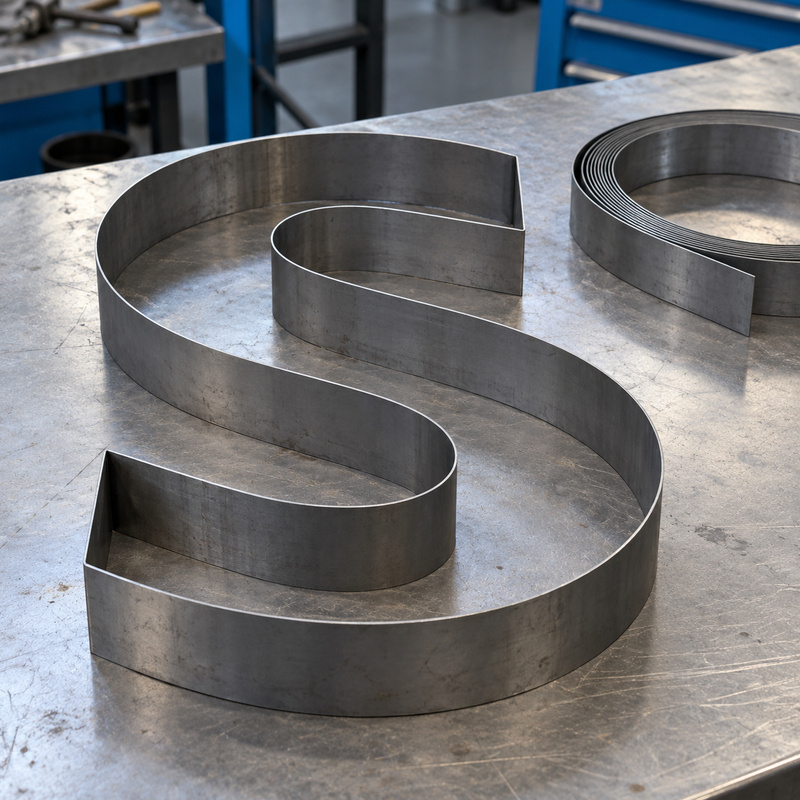
An iron letter bending machine forms metal strip into the sidewalls of dimensional letters, commonly called channel letter returns. These returns give a letter its depth and follow the outline of its face or back.
For sign manufacturers, automated bending offers a practical way to produce curves, corners and repeated shapes from digital designs. It can support the fabrication of storefront lettering, interior signs and dimensional logos.
Bending is one stage of sign production. Joining, face and back fabrication, surface finishing and lighting installation remain separate operations.
What Does “Iron” Mean in Letter Bending?
In sign-making descriptions, “iron sheet” often refers to thin mild steel material rather than pure iron.
Before selecting equipment, identify the actual material grade, thickness, strip width and surface condition. Bare mild steel and galvanized steel should also be distinguished because their surfaces and finishing requirements differ.
Machine compatibility must be confirmed for the material you intend to use. A machine configured for aluminum profiles should not automatically be assumed suitable for flat steel strip.
A CNC channel letter bending machine uses a digital contour to guide material feeding and bending.
Depending on the model, the system may combine feeding, slotting or grooving, bending and cutting functions. The available operations and tooling vary between machines.
The strip is formed into the required outline, then checked against the corresponding letter face, back or production template.
The machine forms the metal return; it does not automatically manufacture the entire finished sign.
A Practical Workflow for Steel Channel Letters
1. Prepare the Letter Outline
Convert the approved lettering or logo into a suitable vector contour. Check the scale, closed outlines, duplicate lines and small details.
The return must fit the intended assembly method. Account for material thickness and the required relationship between the sidewall, face and back.
2. Select and Load the Metal Strip
Choose a strip with the required material, thickness and width. Strip width generally establishes the nominal depth of the letter.
Confirm that the coil or strip is compatible with the feeding system and bending tools.
3. Set Up and Form a Trial Return
Apply suitable feeding and bending settings for the material. Where grooving is used, its depth must support the intended bend without excessively weakening the strip.
Check a representative letter before starting a batch, especially after changing material or tooling.
4. Inspect the Formed Shape
Compare the return with the production template or matching component. Inspect corner positions, curves, closure alignment and overall dimensions.
Make any necessary corrections before joining and finishing.
5. Complete Assembly and Finishing
Join the return and attach the other components using the specified fabrication method.
Mild steel signs need suitable corrosion protection for their intended environment. Surface preparation and coating should cover vulnerable edges and joints as well as visible faces.
Benefits of Automated Letter Bending
More Consistent Production
An approved file and a calibrated process provide a basis for making repeated shapes.
Consistency still depends on material variation, tooling condition and setup. Automation reduces reliance on manual layout, while inspection confirms that the result fits the assembly.
Support for Curves and Corners
Lettering combines straight sections, broad curves and tighter transitions. A suitable bending system can help reproduce these features from the digital outline.
Minimum bend radius and tool clearance limit which details can be formed. Small lettering should be tested rather than assumed possible.
Less Repetitive Manual Forming
Automated feeding and bending can reduce repeated measuring and hand forming.
The production benefit should be assessed across the complete job, including setup, adjustment, joining and finishing.
Flexible Sign Designs
Digital files make it easier to move between different letter shapes and customer designs.
This flexibility is useful for sign shops handling varied orders, provided each design stays within the machine’s material and geometry limits.
Steel Channel Letter Returns
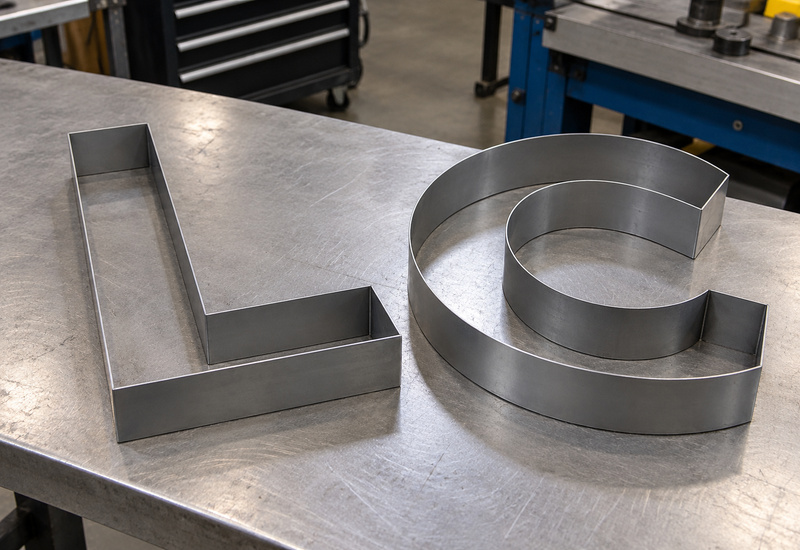
Open metal returns are the immediate output of the bending stage. They can form the sidewalls of letters with straight sections, curves and internal openings.
Fit between the return and the matching face or back is a key quality check. Poor alignment at this stage can create extra work during assembly.
Painted Storefront Letters
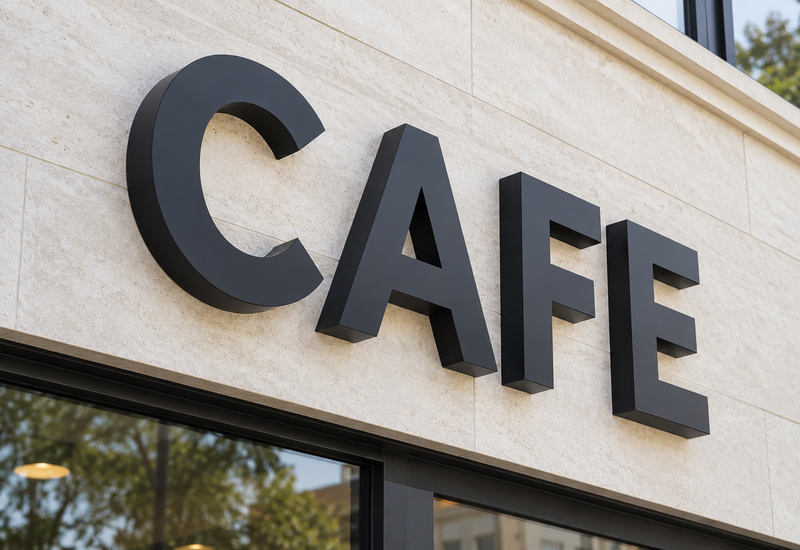
Steel returns can be incorporated into dimensional storefront lettering after joining and finishing.
Painted metal letters suit a range of visual styles, from simple block lettering to custom typography. Outdoor suitability depends on the complete construction, protective finish and installation details.
The bending machine establishes the sidewall geometry; coating and assembly establish other important aspects of the finished sign.
Dimensional Metal Logos
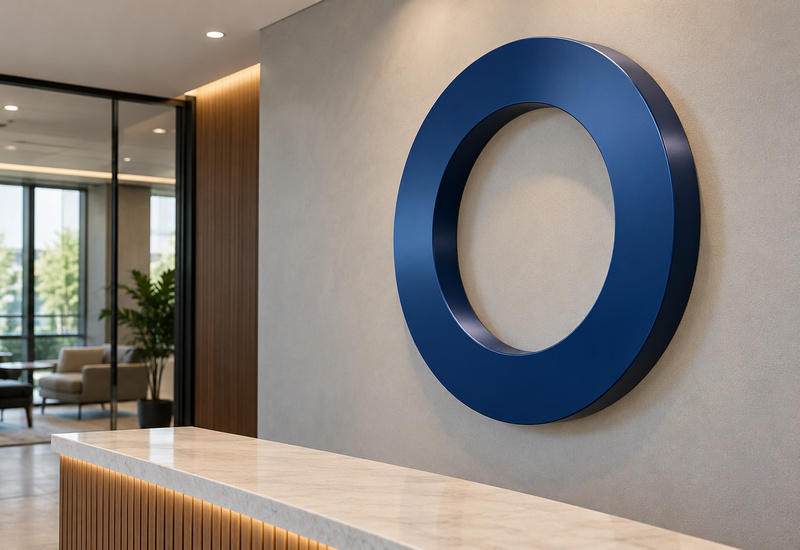
Curved returns can also form the sides of circular symbols and selected custom logos.
Evaluate narrow sections, internal contours and transitions before production. Some designs may require multiple formed pieces or manual assembly adjustments.
Confirm the proposed logo on a sample rather than assuming every vector shape can be bent in one piece.
Confirm Material Capacity
Ask for the supported steel types, thicknesses, strip widths and coil formats for the specific model.
Request trials on your usual material rather than relying only on demonstrations using a different metal.
Test Your Smallest and Most Complex Letters
Provide samples with tight curves, sharp transitions and internal contours.
A large, simple letter does not demonstrate the ability to produce your smallest lettering.
Check Software and File Preparation
Confirm supported file formats and the preparation needed before import. Ask how the software handles contour direction, compensation and separate inner outlines.
Inspect Assembly Fit
Judge sample returns against matching faces, backs or templates.
Check shape accuracy, surface marks, closure position and the amount of manual correction required.
Review Training and Support
Confirm installation requirements, operator training, maintenance procedures, replacement tooling and technical support.
Compare the cost per acceptable return, including setup and correction time, rather than advertised forming speed alone.
Frequently Asked Questions
Suitable machines can process mild steel strip, often described as iron strip. Confirm the material specification and capacity of the exact model.
Can the same machine bend stainless steel and aluminum?
Some machines support several metals, but tooling and setup requirements vary. Verify compatibility for each material and profile.
Does a channel letter bender cut acrylic faces?
No. A metal letter bending machine forms the return. Acrylic faces are produced with separate suitable cutting equipment.
Can every font be produced automatically?
No. Bend radius, material thickness, tool clearance and letter size affect feasibility. Test difficult characters before approving a design.
Does bending produce a finished illuminated letter?
No. Faces, backs, joining, lighting components and electrical assembly require additional production steps.
Discuss Your Letter Bending Requirements with Eastrise CNC
Prepare your material type, strip thickness, return depth, typical letter sizes and sample design files before requesting a machine proposal.
Ask Eastrise CNC to confirm a suitable configuration and arrange representative sample bending. Evaluating actual returns against your assembly requirements helps you choose equipment for your sign-making workflow.


 English



