What Is a Fiber Laser Cutting Machine? Working Principle, Materials and Applications
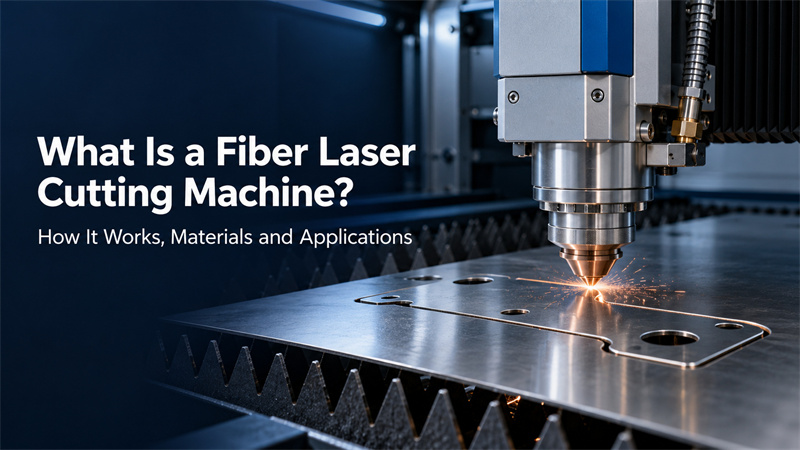
A fiber laser cutting machine is a CNC-controlled system that uses a focused laser beam to cut suitable materials, most commonly metal sheets and tubes. The beam heats the material along a programmed path, while an assist gas helps remove molten material from the cut.
Manufacturers use fiber laser cutting to produce components such as brackets, enclosure panels, metal signs, decorative screens, and tube parts. Its suitability depends on the material, thickness, required edge quality, and machine configuration.
How Does a Fiber Laser Cutting Machine Work?
A fiber laser cutting system combines a laser source, beam delivery, focusing optics, CNC motion, and assist gas. These elements work together to convert a digital drawing into a cut component.
1. Generate the Laser Beam
Industrial fiber cutting lasers commonly use an optical fiber containing a suitable active material, typically ytterbium. Pump diodes supply energy to generate the laser output.
The beam is delivered to the cutting head through an optical delivery fiber.
2. Focus the Beam onto the Workpiece
Optics inside the cutting head concentrate the beam onto a small area. This creates sufficient energy density to heat and melt the material locally.
Focus position, nozzle condition, and the distance between the nozzle and workpiece influence cutting performance.
3. Remove Material with Assist Gas
Assist gas flows through the nozzle toward the cutting area, helping eject molten material from the narrow opening known as the kerf.
Nitrogen, oxygen, and compressed air are possible choices, depending on the material, equipment, and required result.
4. Follow the Programmed Cutting Path
The CNC system controls relative movement between the cutting head and workpiece. Cutting software defines contours, entry points, cutting order, and other process details.
A typical workflow includes drawing preparation, nesting, parameter selection, cutting, unloading, and inspection.
The complete system matters as much as the laser source.
Fiber laser source: Supplies the laser energy.
Cutting head: Directs and focuses the beam onto the material.
CNC and motion system: Controls the cutting path and positioning.
Work support or tube-handling system: Supports and positions the material.
Assist gas system: Delivers gas at the required pressure and quality.
Cooling system: Maintains suitable operating temperatures.
Extraction and protective enclosure: Help manage emissions and laser exposure.
Features such as automatic focusing, exchange tables, loading systems, and tube chucks vary by model.
Carbon Steel
Carbon steel is a common material for brackets, machinery parts, structural components, and general fabrication.
Cutting performance depends on thickness, surface condition, laser power, gas selection, and the desired edge quality. Oxygen-assisted cutting can leave an oxide layer that may require removal before subsequent processing.
Stainless Steel
Fiber laser cutting is used for stainless steel enclosures, decorative panels, kitchen equipment components, and other fabricated parts.
Nitrogen is commonly selected when limiting oxidation on the cut edge is important. Gas quality and process settings still need to match the application.
Aluminum
Suitable fiber laser systems can process aluminum, but alloy, thickness, reflectivity, and thermal behavior influence the result.
Confirm the proposed machine’s material capability and evaluate samples for burrs, edge condition, dimensional accuracy, and distortion.
Brass and Copper
Some systems are configured to cut brass and copper. These materials require particular attention to reflected energy, laser-source compatibility, and process development.
Do not assume every fiber laser cutting machine is suitable for highly reflective metals. Confirm the approved material range with the supplier.
Material Limits
A conventional metal-cutting fiber laser is not a universal cutter for wood, fabric, acrylic, or other nonmetal materials.
Choose the process around the material and intended result rather than assuming one laser type can handle every application.
Benefits of Fiber Laser Cutting
Flexible Digital Production
Manufacturers can change component shapes by updating cutting files rather than making a dedicated cutting die for each design.
This flexibility can support prototypes, customized parts, and mixed production batches.
Detailed Contours and Repeatable Parts
A properly configured system can produce holes, slots, curves, and other profiles from approved drawings.
Actual accuracy depends on the machine, calibration, workpiece condition, geometry, and cutting parameters. Small holes and narrow features should be verified through sample testing.
Potential for Efficient Material Use
Nesting software arranges parts within available stock. Effective layouts may improve material utilization while accounting for spacing, grain direction, heat distribution, and unloading requirements.
Potential to Reduce Secondary Work
Suitable cutting conditions can reduce the amount of edge finishing required.
However, laser-cut parts are not automatically burr-free or ready for every downstream process. Deburring, cleaning, machining, or coating preparation may still be necessary.
Applications of Fiber Laser Cutting Machines
Sheet Metal Fabrication
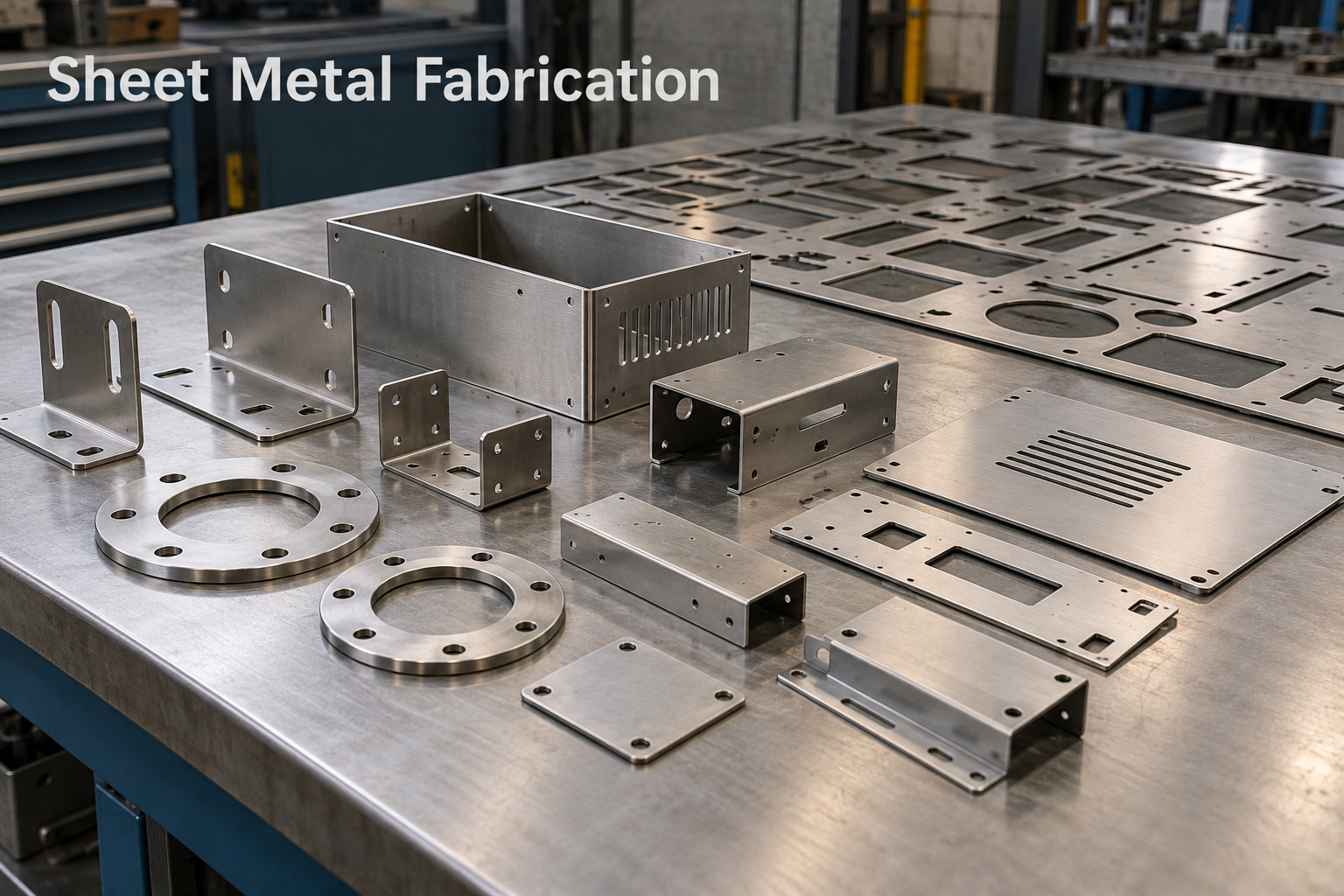
Fiber laser cutting can produce flat blanks for brackets, electrical enclosures, machine guards, mounting plates, and cabinet panels.
Components with formed or assembled features require additional operations such as bending, threading, or welding.
Metal Signs and Decorative Panels
Cutting systems can create metal letters, sign faces, patterned screens, and architectural inserts.
The design must account for narrow sections, unsupported areas, and the material thickness. Surface finishing and mounting details should also be planned.

Metal Tube Cutting
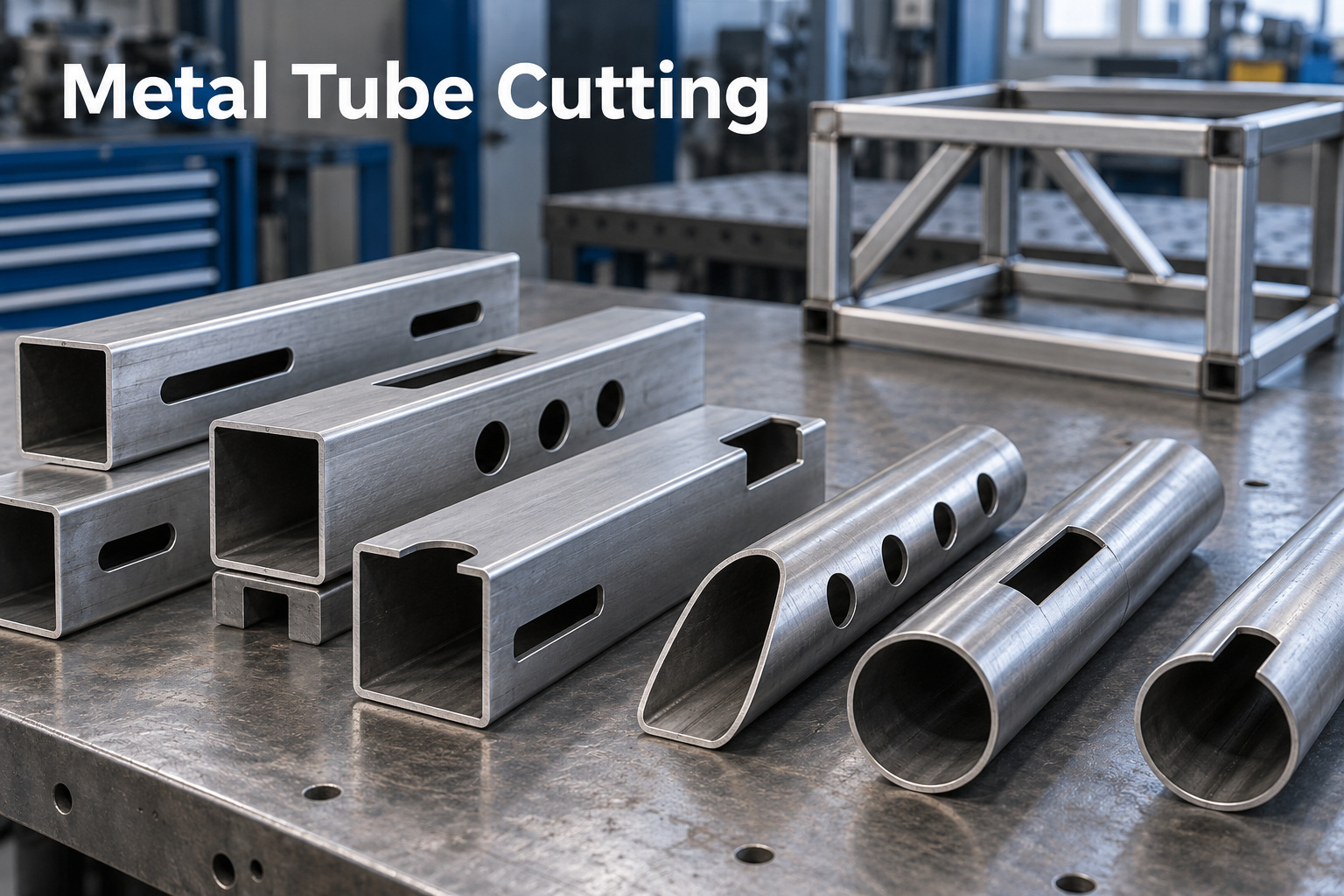
A machine equipped with suitable tube-handling hardware can cut profiles, holes, slots, and connection features in compatible tubes.
A standard flat-sheet machine does not automatically provide tube-cutting capability. Tube size, shape, length, weight, chuck capacity, and support arrangements must be checked.
Machinery and Transportation Components
Fiber laser cutting can support production of selected machinery and transportation parts.
For demanding applications, the material, cut-edge condition, dimensional requirements, and inspection process must meet the component’s acceptance criteria.
Define Your Materials and Thickness Range
List the material grades and thicknesses you process most frequently. Separate routine production requirements from occasional jobs.
Select power and configuration around representative work, rather than choosing solely by the highest advertised cutting thickness.
Match the Machine to Your Stock Format
For sheet production, check working area, loading access, unloading, and floor-space requirements.
For tube production, assess chuck capacity, support, usable cutting length, and remaining material. A combined sheet-and-tube system should be evaluated for both workflows.
Compare Assist Gas Requirements
Gas choice influences edge condition, cutting performance, and operating cost.
Oxygen supports a reactive cutting process, while nitrogen is commonly used to limit edge oxidation. Compressed air may be suitable for selected jobs when the equipment and air quality meet the requirements.
Compare samples and total gas costs for your actual parts.
Review Complete Operating Costs
Include electricity, assist gas, consumables, extraction, cooling, maintenance, labor, and secondary processing.
A useful comparison is cost per acceptable finished component, rather than machine price or cutting speed alone.
Request a Representative Cutting Test
Provide actual drawings and material specifications. Include challenging features such as small holes, close spacing, tight corners, and long narrow parts.
Check dimensions, edge quality, distortion, cutting time, and any finishing needed.
Frequently Asked Questions
What is the difference between fiber laser cutting and CO2 laser cutting?
They use different laser-generation technologies and wavelengths. Industrial fiber systems are commonly selected for metal cutting, while CO2 systems are widely used for many nonmetal applications. Suitability depends on the specific machine and material.
There is no single thickness limit. Capability depends on material, laser power, optics, assist gas, and the required production quality. Confirm a practical production range through sample cutting.
Does higher laser power always produce better parts?
No. Higher power can support certain thicknesses and production targets, but good results also require appropriate settings, motion control, material support, and maintenance.
Can one machine cut both sheets and tubes?
Yes, if it is specifically equipped for both tasks. Confirm the capacities and workflow limitations of the proposed configuration.
Does a fiber laser cutting machine need maintenance?
Yes. Nozzles, protective optics, cooling, extraction, material supports, and motion components require attention according to the manufacturer’s instructions.
Discuss Your Metal Cutting Requirements with EASTRISE
To discuss a fiber laser cutting project with EASTRISE, provide your material grades, thickness range, sheet or tube dimensions, drawings, and production targets.
Request a sample cutting assessment to compare edge quality, dimensional results, processing time, and operating requirements before selecting a machine configuration.


 English



