CO2 Laser Cutting Plywood: A Guide to Precision Engraving and Cutting
Introduction
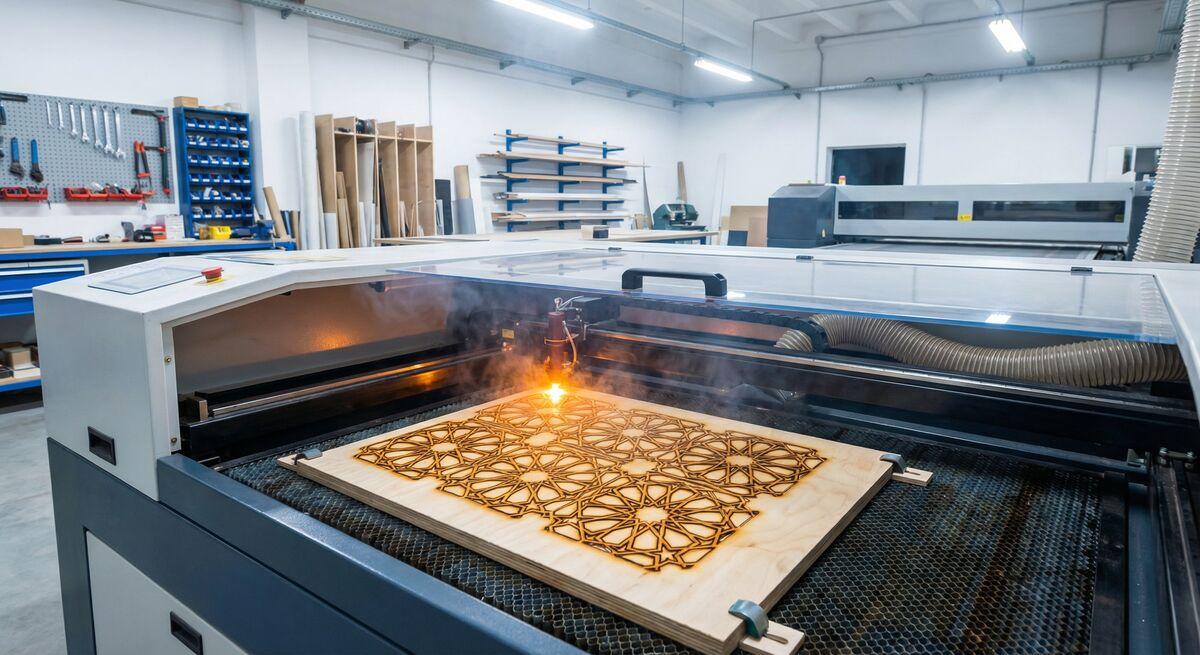
CO2 laser cutting machines provide an efficient solution for cutting and engraving plywood into precise shapes, intricate patterns, and customized products. Using a focused laser beam, manufacturers and woodworking professionals can create detailed designs for decorative panels, signage, furniture components, craft products, and architectural models.
For businesses looking to improve production flexibility and product quality, choosing the right CO2 laser engraving and cutting machine is essential. The best solution depends on plywood thickness, material composition, required cutting quality, working area, production volume, and design complexity.
In this guide, we explain how CO2 laser machines process plywood, explore common applications, and outline the key factors to consider when selecting equipment for your woodworking business.
Why Use a CO2 Laser Cutting Machine for Plywood?
Plywood is widely used in furniture manufacturing, interior decoration, packaging, signage, and craft production. Its layered structure and variety of thicknesses make it suitable for many applications, but traditional cutting methods may require additional tooling or finishing when producing intricate shapes.
A CO2 laser cutting machine offers several advantages for suitable plywood materials.
High-Precision Cutting and Detailed Engraving
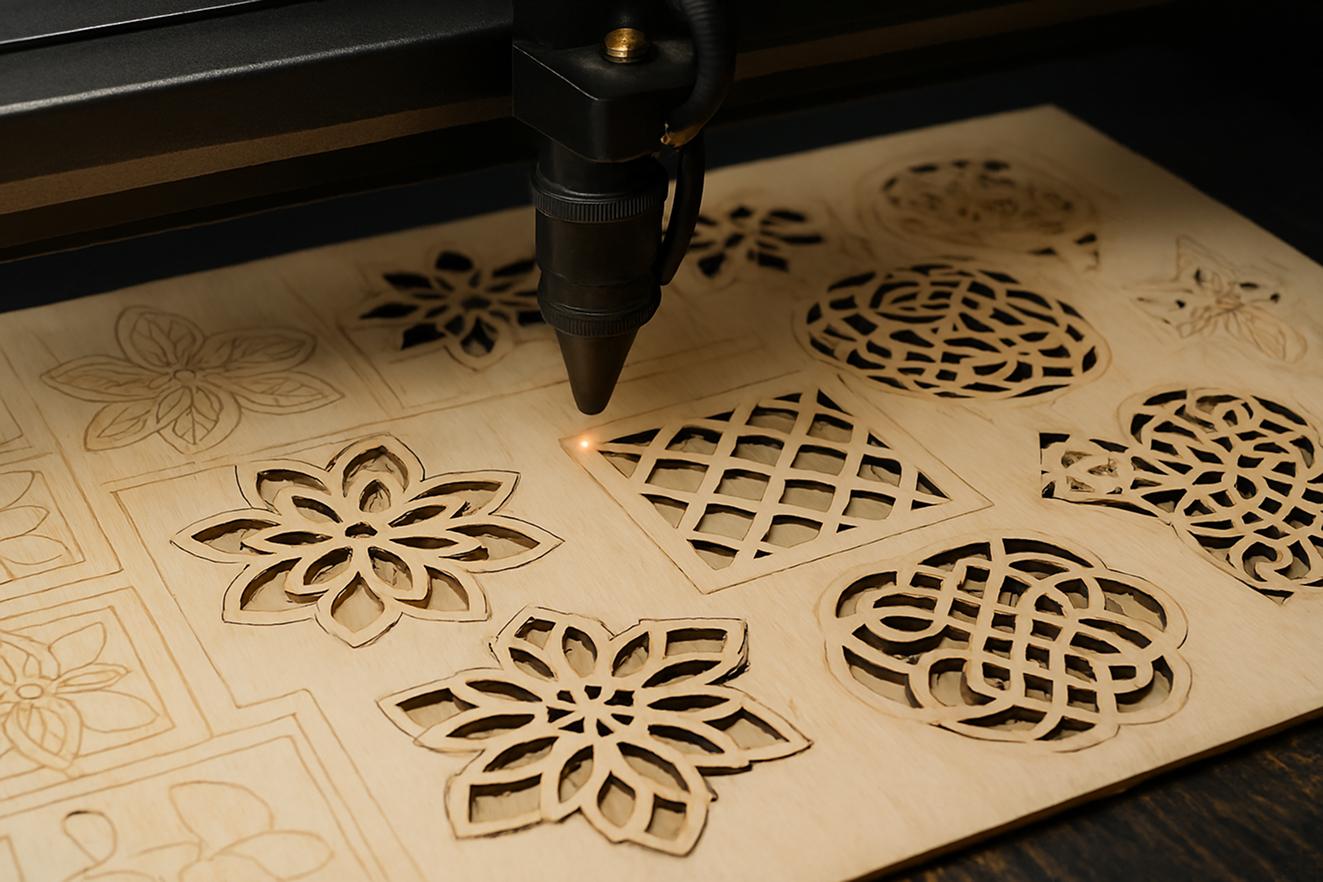
A focused laser beam follows a programmed cutting path to produce detailed shapes, narrow contours, and intricate patterns. This makes CO2 laser technology suitable for decorative screens, personalized wooden products, lettering, and small components.
Actual precision depends on the machine configuration, focusing accuracy, material quality, and processing settings.
Flexible Design Customization
Laser cutting software allows operators to process digital designs and adjust cutting paths for different products. Businesses can switch between customized designs, prototypes, and production batches without manufacturing a dedicated cutting die for every design.
This flexibility is particularly useful for custom woodworking, promotional products, and short-run manufacturing.
Efficient Material Processing
Once the design and processing parameters are established, a laser machine can automate repeated cutting and engraving operations. This can reduce manual cutting work and help improve workflow consistency.
Overall production efficiency depends on material thickness, cutting speed, part layout, loading and unloading, and finishing requirements.
Multiple Product Applications
CO2 laser machines are commonly used to process suitable nonmetallic materials, including wood, plywood, MDF, acrylic, paper, and selected fabrics. Material compatibility should be verified before processing, especially when plywood contains adhesives, coatings, or other additives.
2. What Can You Make with a Plywood Laser Cutting Machine?
A plywood laser cutting machine supports a wide range of commercial and creative applications.
Decorative Panels and Interior Design
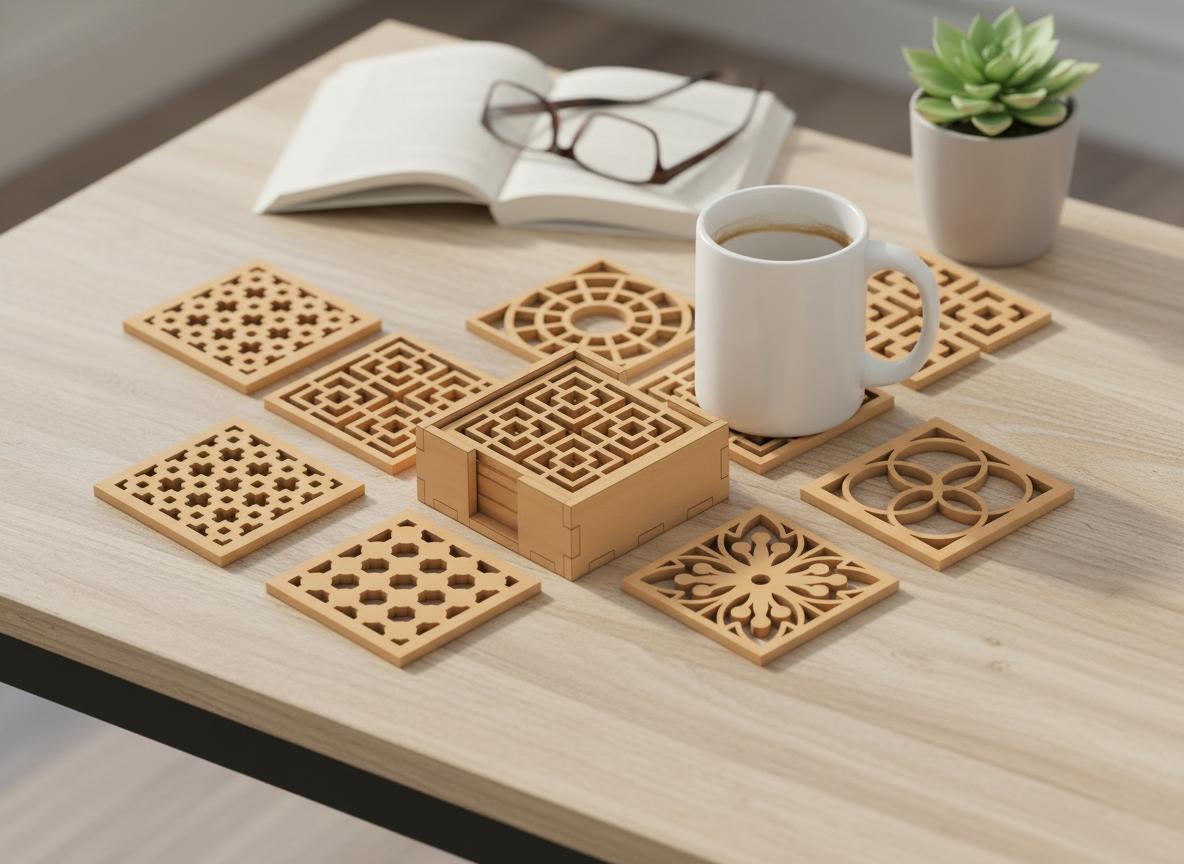
Laser-cut plywood panels can feature geometric patterns, floral designs, and customized decorative elements. These panels can be used for interior partitions, wall decoration, lampshades, and other architectural features.
For manufacturers, laser cutting makes it easier to produce complex decorative patterns and customize designs for different projects.
Custom Wooden Signs and Branding
Businesses can use laser engraving to add logos, lettering, serial numbers, and personalized messages to suitable plywood products. This makes the technology useful for retail signage, promotional displays, nameplates, and branded packaging.
A plywood laser engraving machine can also help businesses produce personalized products in small batches.
Furniture Components and Assembly Parts
Laser cutting can produce selected plywood components for organizers, storage boxes, furniture prototypes, drawer dividers, and model assemblies.
Before production, manufacturers should verify dimensional tolerances, joint fit, and the suitability of laser-cut edges for the intended application.
Crafts, Gifts, and Personalized Products
Small businesses and craft manufacturers can produce wooden ornaments, coasters, puzzles, keepsake boxes, miniature buildings, and personalized gifts.
Digital design workflows make it easier to develop product variations for different customers and seasonal markets.
Architectural Models and Prototypes
Laser cutting is useful for producing small-scale buildings, structural layouts, product mockups, and other model components. Accurate cutting paths can help parts fit together consistently when material thickness and kerf are properly accounted for.
3. How to Choose the Right CO2 Laser Machine for Plywood
Selecting a laser machine requires more than comparing laser power. Buyers should evaluate the material, finished product, production requirements, and machine specifications together.
Laser Power and Plywood Thickness
Laser power influences cutting capability and processing speed, but it does not determine performance on its own. Plywood species, adhesive composition, moisture content, thickness consistency, focus, and air assistance also affect cutting quality.
Before purchasing, identify the plywood thicknesses you expect to process most frequently. Ask the manufacturer to demonstrate cutting performance on the actual material and thickness you intend to use.
Working Area and Sheet Size
The working area should accommodate the dimensions of your plywood sheets and finished components. A larger working area may be beneficial for furniture parts, decorative panels, and batch production, while a compact machine may be sufficient for small crafts and personalized products.
Also consider material handling, table design, loading access, and available workshop space.
Engraving Detail and Cutting Quality
If your products include fine lettering, detailed artwork, or intricate patterns, evaluate engraving clarity, corner quality, repeatability, and laser kerf width.
For cut-through applications, inspect edge quality and the amount of discoloration or charring. Request sample processing before making a final equipment decision.
Software and Workflow Compatibility
Check whether the machine supports your design workflow and required file formats. Consider software usability, job setup, design import, parameter adjustment, and the ability to repeat production jobs reliably.
A straightforward workflow can reduce setup time and make it easier to train operators.
Ventilation, Safety, and After-Sales Support
Laser processing plywood can produce smoke, fine particles, and potentially hazardous emissions. A suitable exhaust and filtration arrangement, fire prevention measures, and appropriate operator training are essential.
Buyers should also evaluate machine maintenance requirements, spare-parts availability, technical support, warranty terms, and installation guidance.
4. Tips for Better Plywood Laser Cutting Results
Good results depend on both machine setup and material preparation. The following practices can help improve consistency.
1. Select Suitable Plywood
Use plywood with consistent thickness and a surface finish appropriate for the intended product. Internal voids, uneven layers, and adhesive variations can affect cutting quality.
2. Test the Material First
Different plywood grades and adhesive systems respond differently to laser processing. Test a representative sample before starting a production batch.
3. Adjust Power, Speed, and Focus
Establish suitable settings through controlled test cuts. Avoid assuming that one parameter combination will work for every plywood thickness or supplier.
4. Use Appropriate Air Assistance and Extraction
Proper airflow can help manage smoke and residue around the cutting area. Effective extraction is important for operator safety and maintaining a cleaner working environment.
5. Optimize the Cutting Layout
Arrange parts efficiently on the sheet while maintaining appropriate spacing. Account for kerf width and part tolerances when designing interlocking components.
6. Inspect Finished Edges
Check for incomplete cuts, excessive charring, delamination, and dimensional variation. Fine-tune the process before scaling up production.
7. Follow Laser Safety Procedures
Operate the machine with appropriate guarding, exhaust ventilation, fire precautions, and supervision. Never leave active laser processing unattended.
5. CO2 Laser Cutting vs. CNC Routing for Plywood
CO2 laser cutting and CNC routing are both useful technologies for plywood, but they serve different manufacturing needs.
A CO2 laser machine is often suitable for intricate two-dimensional profiles, fine engraving, thin-sheet processing, and decorative cutouts. It does not use a rotating cutting tool, although laser processing can create charred edges that may require finishing.
A CNC router is often preferable for thicker panels, deeper grooves, pockets, larger furniture components, and three-dimensional machining. It uses physical cutting tools and may require tool changes, toolpath adjustments, and additional edge finishing.
The right choice depends on plywood thickness, edge appearance, cutting geometry, dimensional requirements, and the type of products being manufactured.
For some production environments, laser cutting and CNC routing can complement each other.
6. Why Choose Eastrise CNC for Laser Processing Solutions?
When choosing a plywood laser cutting solution, buyers should consider not only machine specifications but also the manufacturer's ability to support the intended application.
Eastrise CNC provides CNC and laser processing equipment for different manufacturing needs. Businesses evaluating a CO2 laser engraving and cutting machine should discuss their material specifications, product dimensions, required working area, expected production volume, and quality standards with the technical team.
Before ordering, request information about suitable machine configurations, supported materials, sample processing, installation, operator training, and after-sales service.
These details can help determine whether a proposed solution meets your actual production requirements.
To explore available equipment, visit the Eastrise CNC official website.
7. Frequently Asked Questions About CO2 Laser Cutting Plywood
Can a CO2 laser cut plywood?
Yes. CO2 laser machines can cut and engrave many suitable plywood materials. The achievable thickness and cutting quality depend on laser power, plywood composition, material condition, machine configuration, and processing parameters.
What thickness of plywood can a CO2 laser cut?
There is no universal maximum thickness for every CO2 laser machine. Cutting capability varies by model and plywood type. Ask the manufacturer to test your actual material and confirm the achievable edge quality and processing speed.
Is CO2 laser cutting suitable for plywood engraving?
Yes. CO2 lasers can engrave text, logos, decorative patterns, and other graphics on suitable plywood surfaces. The final appearance depends on the surface veneer, focus, power, speed, and material composition.
How can I reduce burn marks when laser cutting plywood?
Use consistent material, establish suitable power and speed settings, maintain correct focus, and optimize air assistance and exhaust extraction. Masking may help with some surface marks, but its effectiveness depends on the material and process. Test the complete setup before production.
Is a CO2 laser better than a CNC router for plywood?
Neither technology is universally better. CO2 lasers are often well suited to intricate two-dimensional cutting and engraving, while CNC routers are generally better suited to deep machining, pockets, and many thicker-panel applications.
Choose according to the finished product and production requirements.
What should I provide when requesting a laser machine quotation?
Provide the plywood type, thickness range, maximum sheet size, representative design files, expected production volume, required edge quality, and available workshop utilities.
These details help the supplier recommend a suitable configuration and arrange meaningful sample testing.
Conclusion
A CO2 laser engraving and cutting machine can help woodworking businesses produce customized plywood products, decorative panels, signs, prototypes, and intricate components with flexible digital workflows.
To choose the right equipment, evaluate plywood compatibility, cutting thickness, working area, engraving detail, extraction requirements, operating costs, and technical support. Sample testing with your actual material is one of the most effective ways to verify performance before purchase.
Looking for a plywood laser cutting solution for your business? Contact Eastrise CNC to discuss your material requirements and explore a machine configuration suited to your application.


 English


