CO2 Laser Engraving Machines for Textiles: Applications and Precision Guide
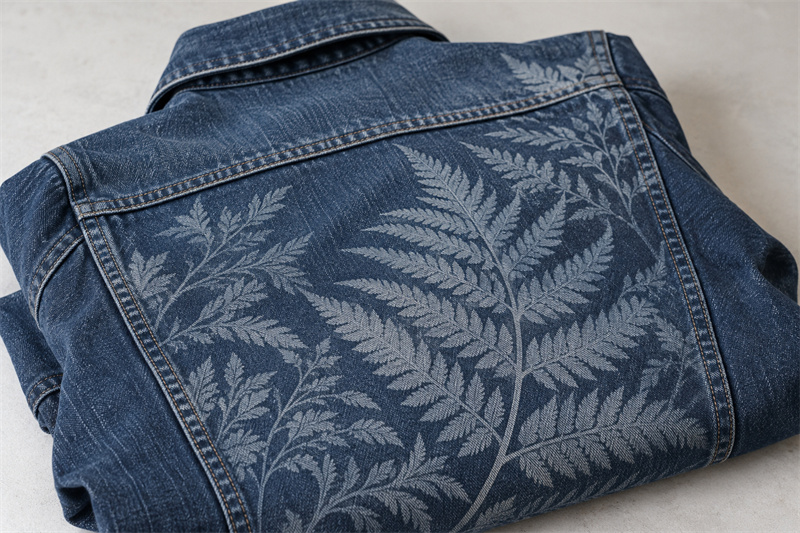
CO2 laser engraving machines for textiles create patterns by changing the surface appearance or texture of compatible fabrics. Applications include faded denim designs, decorative felt accessories, and personalized textile products.
Successful fabric engraving requires more than a detailed image. Fabric composition, dye, surface flatness, laser settings, and material durability all influence the finished result.
This guide explains the difference between textile engraving and cutting, explores practical applications, and outlines how to evaluate a CO2 laser machine for fabric processing.
What Is CO2 Laser Engraving on Fabric?
CO2 laser engraving uses controlled laser energy to modify the surface of a textile according to a digital design. Depending on the material, the process may create a lighter pattern, a tonal change, or a textured effect.
Unlike printing, laser engraving does not deposit colored ink. Unlike embroidery, it does not add thread.
The appearance comes from the fabric’s response to laser energy, so the same artwork can look different on different colors, fiber blends, and fabric finishes.
The objective is to create a visible design while retaining the material properties required for its intended use.
Laser engraving modifies the surface. Laser cutting separates material or creates openings.
Engraving is used for faded graphics, decorative motifs, and surface patterns. Cutting is used for outlines, appliqué pieces, and decorative perforations.
A suitable CO2 laser system may perform both operations, but each requires its own process settings.
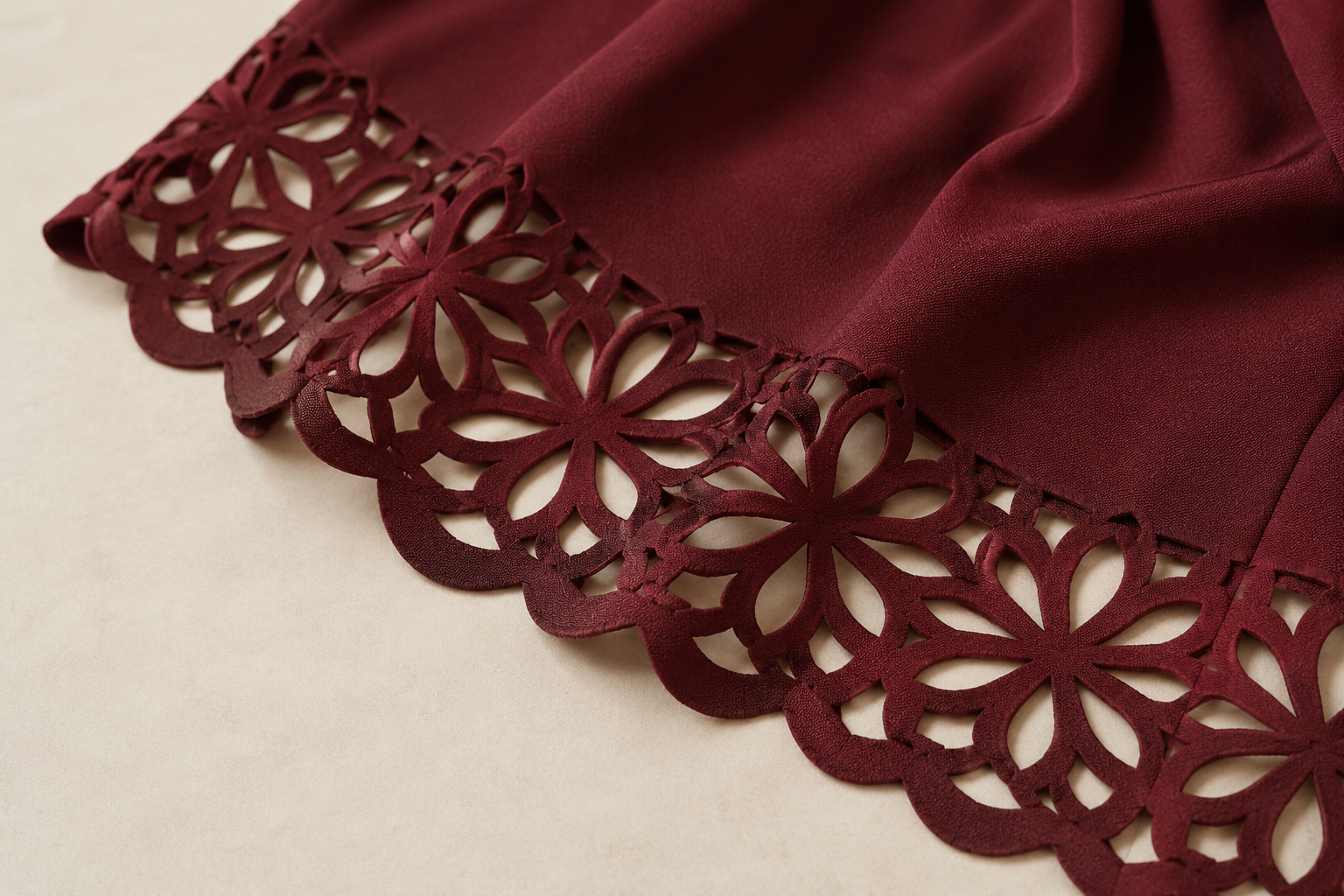
For example, a botanical pattern on denim can be created through surface engraving. A floral opening in a garment panel is a cutting application. Defining the intended result helps avoid confusing these two processes when preparing artwork or requesting samples.
Which Fabrics Can Be Processed?
Denim and Cotton
Suitable dark denim and cotton fabrics can develop lighter patterns during laser engraving. Results depend on the dye, weave, fiber blend, and treatment applied to the fabric.
Test the exact production material, especially stretch denim or fabrics with special coatings.
Felt and Fleece
Selected felt and fleece materials can produce visible surface effects. Fiber composition and thickness affect the result, and some products may respond unevenly or melt excessively.
Choose materials with documented composition and confirm suitability through testing.
Polyester and Other Synthetic Fabrics
Compatible polyester textiles can be laser cut, with heat helping fuse the cut edges and reduce fraying.
However, successful cutting does not automatically mean successful engraving. Thin synthetic fabrics may melt or develop holes before a useful surface pattern appears.
Blended, Coated, and Treated Textiles
Blend percentages, backing layers, adhesives, coatings, and finishes can change both processing behavior and emissions.
Confirm the complete material construction before testing. Do not laser process PVC-containing textiles or materials with unidentified coatings.
Practical Applications of CO2 Textile Laser Processing
Denim Engraving and Garment Personalization
Denim engraving can produce botanical graphics, geometric patterns, and faded decorative effects on suitable garment panels.
Designers should evaluate the pattern at its final size. Fine lines that look clear on a screen may disappear into the fabric weave.
For finished garments, seams, pockets, folds, and hardware can interfere with positioning. Prepare the garment so the processing area remains flat and clear of the moving head.
Check strength and appearance after washing, rather than approving production from the initial visual result alone.
Decorative Fabric Cutting and Appliqué
CO2 laser cutting can create repeated openings, shaped garment panels, and appliqué components from compatible fabrics.
Designs need sufficient material between openings to withstand handling and sewing. Very narrow connections can tear or distort even when the cutting process appears clean.
For synthetic textiles, inspect the edge for excessive melting or hardness. For natural fabrics, assess discoloration and any additional edge finishing required.
Approve the finished component through its intended assembly process, including sewing or bonding where applicable.
Felt Accessories and Textile Decoration
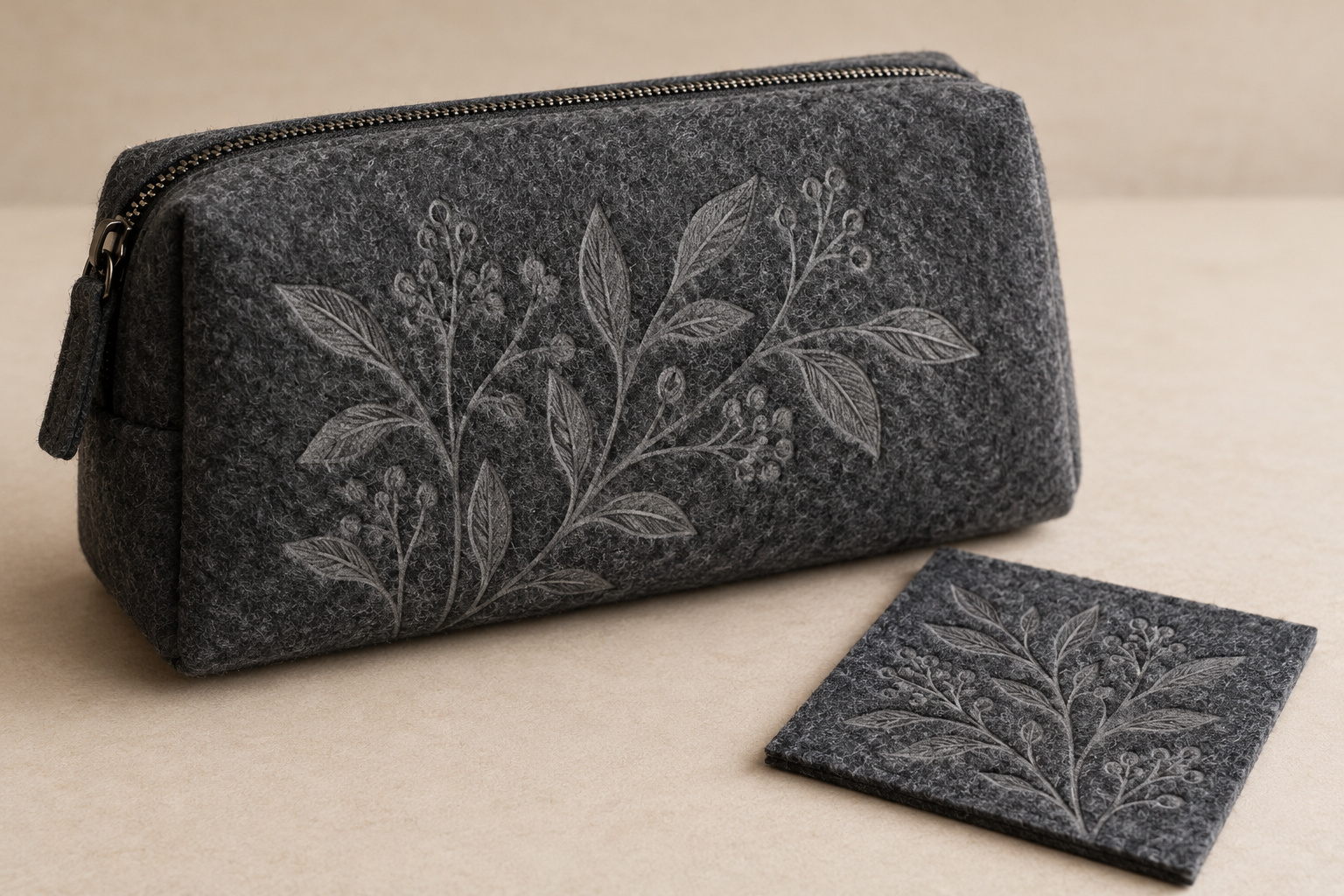
Suitable felt can be used for engraved pouch panels, decorative inserts, organizers, and craft accessories.
A practical workflow is to process a flat panel before assembling the finished product. This makes positioning easier and helps keep the working surface consistent.
Choose artwork with enough spacing and contrast to remain visible within the felt texture.
Evaluate surface feel, flexibility, and resistance to rubbing, as well as the appearance of the design.
What Affects Textile Engraving Precision?
Material Consistency
Fabric batches can differ in color, thickness, fiber content, and finish.
Record the supplier and material specification with each approved job. Retest when the material changes, even if the product name remains the same.
Surface Flatness and Positioning
Wrinkles, folds, and uneven layers change the distance between the fabric and the optics.
Use a suitable workholding method that keeps the material flat without stretching it out of shape. For repeated jobs, a positioning template can help maintain consistent placement.
Power, Speed, and Focus
These settings control how energy reaches the material.
More power does not necessarily create a better pattern. Excessive exposure can weaken fibers, cause scorching, or cut through the textile.
Use the equipment manufacturer’s guidance to develop a test matrix for the exact fabric and machine configuration.
Artwork and Engraving Resolution
A higher image resolution does not automatically improve fabric engraving. Dense processing can add heat without producing visible detail.
Adjust line thickness, spacing, contrast, and resolution to suit the weave and texture of the material.
Extraction and Equipment Condition
Suitable extraction helps remove processing fumes and residue. Clean optics and a maintained motion system support consistent operation.
Follow the machine manufacturer’s cleaning, extraction, and operating instructions.
A Practical Workflow for Consistent Results
1. Identify the material. Confirm fiber composition, backing, coatings, and suitability for laser processing.
2. Prepare the artwork. Separate surface graphics from cutting outlines and check the design at its intended size.
3. Make a small test matrix. Compare controlled settings on a representative sample.
4. Inspect the result. Check contrast, texture, edge condition, flexibility, and signs of damage.
5. Test for real use. Wash, rub, flex, or assemble the sample according to the product’s application.
6. Record the approved process. Save the material specification, artwork version, positioning method, and machine settings.
This approach creates a repeatable production reference instead of relying on visual guesswork.
Begin with your normal products: fabric type, panel size, artwork coverage, batch quantity, and whether you need engraving, cutting, or both.
Evaluate working area, material support, positioning, extraction, software compatibility, and service support.
If processing roll material or printed textiles, ask whether the proposed configuration supports the feeding and registration functions you need. These capabilities should be confirmed rather than assumed.
Request samples using your own fabrics and artwork. Compare the complete production time, including preparation, positioning, processing, cleaning, and inspection.
Machine selection should be based on acceptable finished products, not laser power alone.
Frequently Asked Questions
Can a CO2 Laser Engrave Every Fabric?
No. Suitability depends on fiber composition, dye, thickness, coatings, and the desired effect. Some fabrics cut well but do not produce useful engraved patterns.
Does Textile Laser Engraving Add Color?
No. It changes the existing material’s appearance or texture. It does not provide the full-color capability of printing.
Will the Design Remain Unchanged After Washing?
That must be tested. Appearance and strength after laundering depend on the fabric and processing conditions.
Are There Universal Settings for Fabric Engraving?
No. Settings must be developed for the exact material, artwork, and machine configuration.
Discuss Your Textile Application with Eastrise
Share your fabric specifications, sample artwork, processing dimensions, and output requirements with Eastrise to discuss a suitable CO2 laser configuration.
Ask for representative samples and assess design clarity, material durability, processing time, and repeatability before approving production.


 English



