Fiber Laser Tube Cutting Machine for Round, Square and Rectangular Tubes
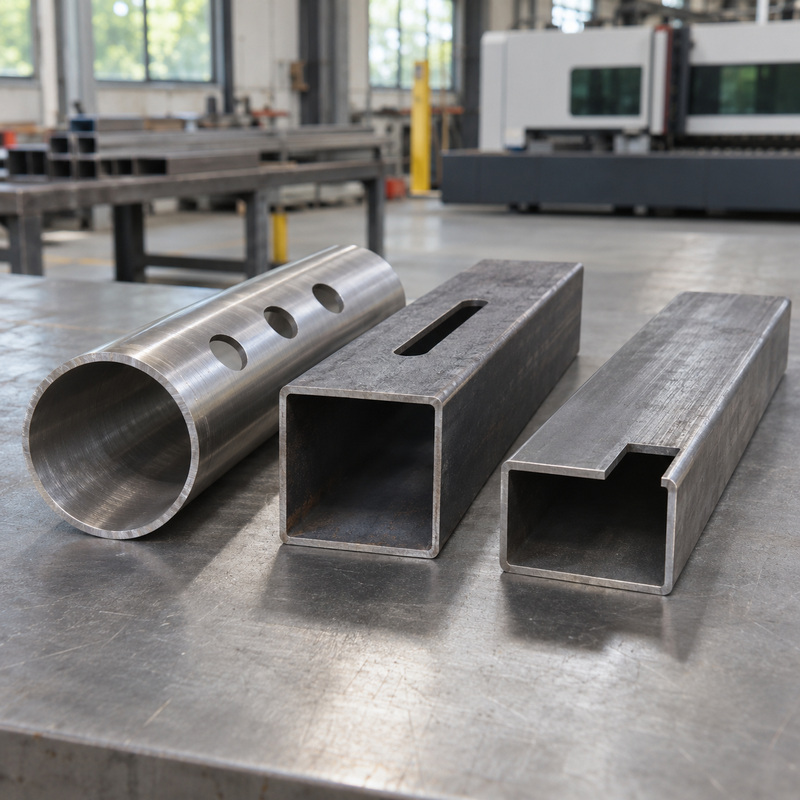
A fiber laser tube cutting machine uses a focused laser beam and CNC-controlled tube movement to cut metal tubing into programmed shapes. Depending on the machine configuration, it can combine cutting to length, hole cutting, slotting and end notching in one workflow.
For manufacturers producing furniture frames, handrails, fitness equipment and machinery components, the value comes from making parts that fit together consistently. The right machine must match your tube dimensions, material, finished-part requirements and production volume.
The process begins with a part drawing or compatible CAD model. Programming software converts the design into cutting paths and arranges parts along the available tube length.
Chucks hold and rotate the tube while the machine controls its position relative to the cutting head. The focused laser melts the metal along the programmed path, and assist gas helps remove molten material from the cut. Loading, supporting and unloading arrangements depend on the selected model.
A typical workflow includes loading the tube, checking alignment, selecting a validated cutting program, processing the features and inspecting the finished part. Cutting several features in one setup can reduce repeated handling and separate drilling or notching operations.
Round, Square and Rectangular Tube Cutting
Round Tubes
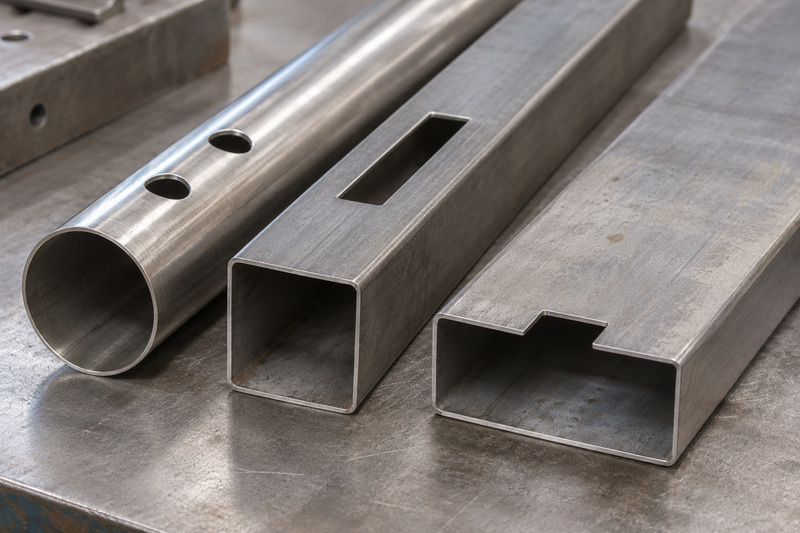
Round tubes are used in handrails, furniture, fitness equipment and fabricated assemblies. Suitable tube laser systems can produce cut ends, holes, slots and intersecting end profiles. Tube diameter, straightness and rotational alignment affect how accurately features are positioned around the circumference.
Square Tubes
Square tubes are common in frames, racks and equipment supports. Laser-cut holes and locating slots can help position components during assembly. Rounded corners and variations in the actual tube section must be considered when programming features close to the corners.
Rectangular Tubes
Rectangular tubes are used in machine bases, transport frames and structural assemblies. Their unequal sides make clamping, support and cutting-head clearance important. Confirm the permitted section dimensions and rotational clearance rather than relying only on a quoted round-tube diameter.
Carbon Steel and Stainless Steel Tube Applications
Carbon steel tubing is widely used for painted frames, equipment bases and general fabrication. Process selection should consider wall thickness, edge condition and the preparation required before welding or coating.
Stainless steel tubing is used in visible furniture, handrails, equipment frames and decorative assemblies. Nitrogen assist gas is commonly selected when limiting edge oxidation matters. Final appearance also depends on material condition, cutting parameters and subsequent finishing.
Material compatibility and cutting capacity vary by machine. Confirm the material grade and wall thickness with the supplier using representative samples.
Applications in Metal Fabrication
Metal Furniture and Display Frames
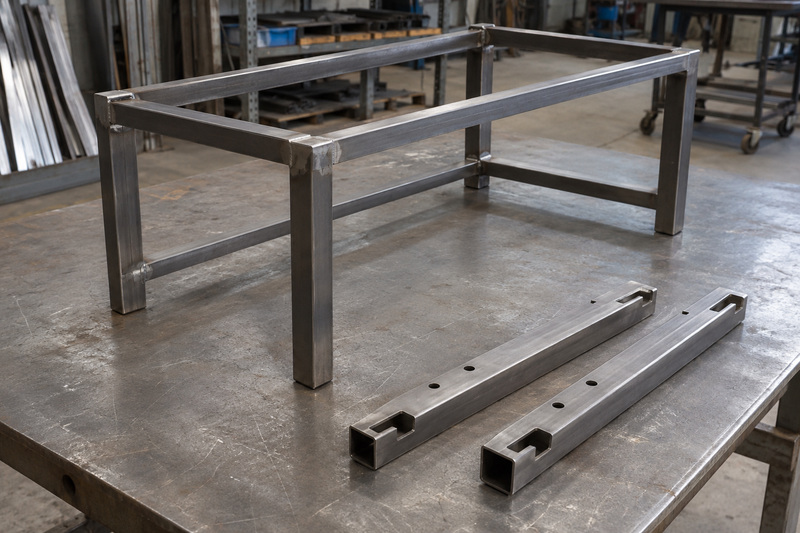
Tube lasers can prepare chair frames, table supports, shelving components and display structures. Repeated holes and locating features can simplify alignment before welding, provided the joint design and tube tolerances are suitable.
Fitness Equipment and Handrails
Round and square tube components often require repeated holes, slots and shaped ends. Combining these features within one cutting program can reduce transfers between workstations.
Machinery Frames and Equipment Supports
Rectangular tube members can incorporate connection holes and assembly features. Check the completed assembly requirements: an accurately positioned cut does not by itself guarantee the strength or alignment of a welded structure.
What Affects Tube Laser Cutting Quality?
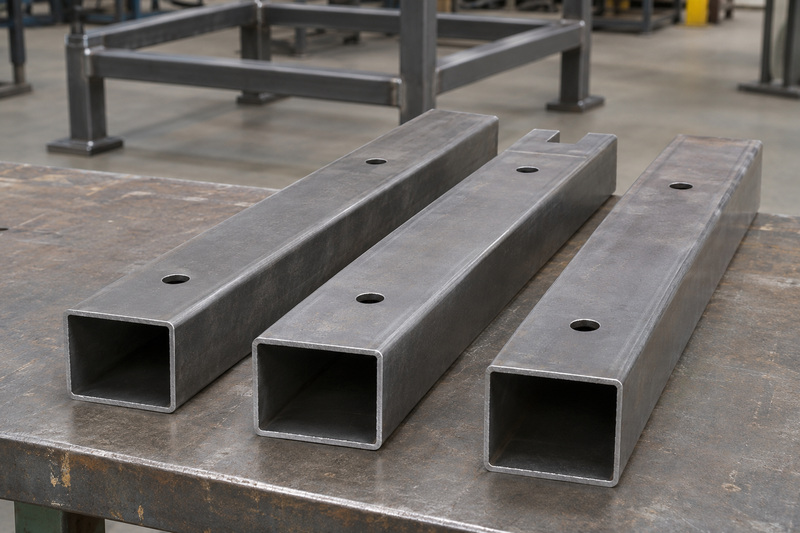
Raw tube quality: Bow, twist, out-of-round sections and wall-thickness variation influence the cutting result. Compensation features can help on suitably equipped machines, but their capability must be verified.
Clamping and support: Incorrect chuck settings or insufficient support can allow movement or deflection. Long or heavy tubes require support arrangements suited to their size and weight.
Cutting parameters: Power, speed, focus position, nozzle condition and assist-gas delivery must work together. Use the manufacturer's process data as a starting point and validate it on the actual material.
Internal contamination: Molten particles can collect inside the tube or adhere to the opposite inner wall. Discuss internal spatter requirements and available protection or extraction options before ordering.
Inspection: Check part length, feature location, cut-edge condition and assembly fit. Do not assume that axis positioning accuracy equals the tolerance of every finished part.
Define the tube range. List material grades, section shapes, dimensions, wall thicknesses, stock lengths and weight per metre.
Define finished-part requirements. Specify hole locations, end profiles, tolerances, appearance and any internal cleanliness requirements.
Check the cutting-head capability. Bevel cutting requires a suitable configuration; it is not a standard feature on every tube laser.
Match handling to production. Compare loading, support and unloading arrangements against batch size, part length and available floor space.
Evaluate useful material yield. Ask how chuck position, part geometry and the cutting sequence affect the remaining tube tail.
Request a representative trial. Compare accepted parts, total cycle time, handling needs and operating costs using your own drawings.
Choose by the cost and quality of accepted finished parts, not by laser power alone. Include assist gas, consumables, maintenance, labour and any required finishing in the comparison.
Frequently Asked Questions
Can one machine cut both round and square tubes?
Yes, many tube laser systems support both. The exact section range depends on the chuck, supports, software and machine clearance.
Can a tube laser cut holes and slots?
Yes, these are common operations on suitable systems. Achievable feature size and quality depend on wall thickness, geometry, material and process settings.
Does higher power always mean better cutting quality?
No. Higher power can expand capacity or improve speed in suitable applications, but quality also depends on motion control, support, optics, gas delivery and validated settings.
Will every part be ready for welding immediately?
No. Inspect edge condition, joint fit and cleanliness against your welding requirements. Some applications require deburring, oxide removal or other preparation.
What information should I send when requesting a quotation?
Provide representative drawings, material grades, tube dimensions, wall thicknesses, stock lengths, finished-part lengths, required tolerances and expected production volume.
Discuss Your Tube Cutting Requirements with Eastrise
Share your tube specifications and representative part drawings with Eastrise to discuss a suitable machine configuration. Confirm the proposed equipment through sample cutting and a clear acceptance checklist covering dimensions, edge quality, assembly fit and production requirements.


 English



