What Is a CO2 Laser Cutting Machine? How It Works, Uses & Benefits
A CO2 laser cutting machine is a computer-controlled device that uses a focused carbon dioxide laser beam to cut, engrave, or mark materials with high precision. It is widely used for processing non-metallic materials such as acrylic, wood, plywood, MDF, leather, fabric, and paper.
Unlike traditional cutting tools, a CO2 laser cutter processes materials without direct mechanical contact. This allows manufacturers to create intricate designs, detailed engravings, and complex shapes with minimal tooling requirements.
CO2 laser cutting machines are commonly used in advertising, woodworking, packaging, textile manufacturing, handicrafts, and customized product production.
In this guide, we explain how CO2 laser cutting technology works, its main components, suitable materials, industrial applications, advantages, limitations, and how to choose the right machine for your business.
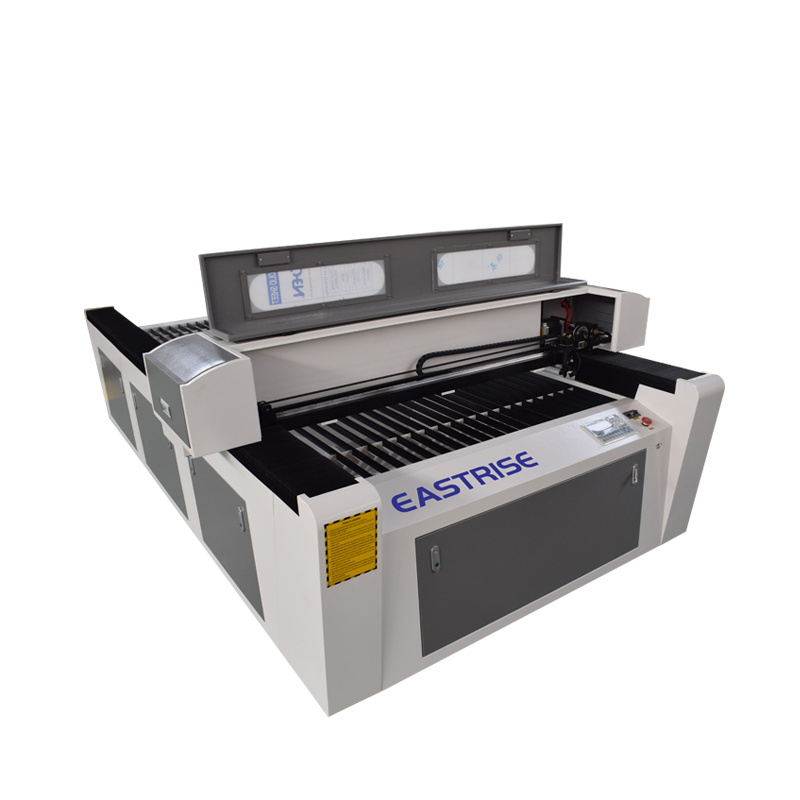
1. How Does a CO2 Laser Cutting Machine Work?
A CO2 laser cutting machine works by generating a concentrated laser beam that heats, melts, burns, or vaporizes material along a programmed cutting path.
The process combines laser technology with a computer numerical control (CNC) system to achieve accurate and repeatable results.
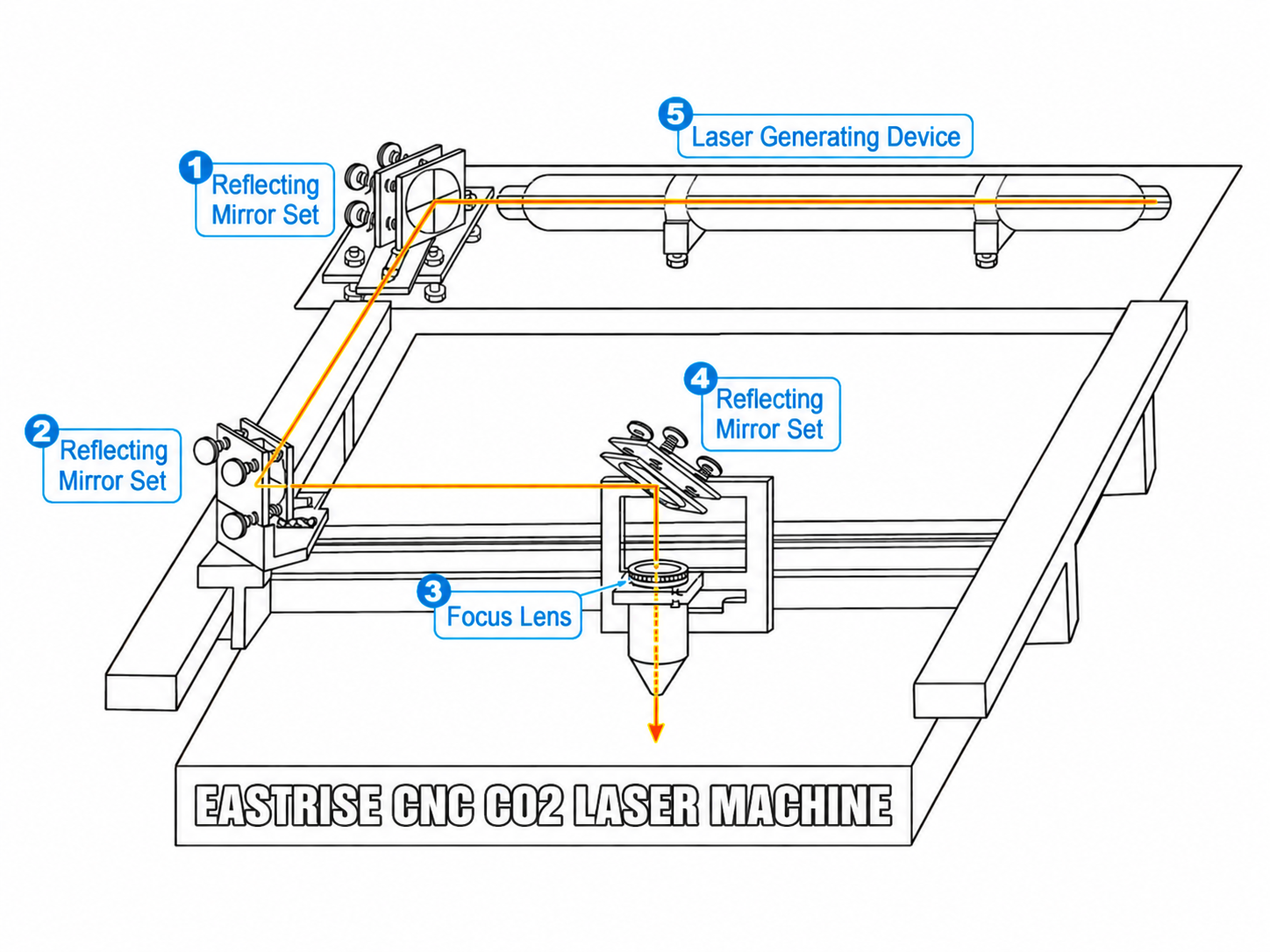
Step 1: Laser Beam Generation
The laser source contains a gas mixture that typically includes carbon dioxide, nitrogen, and helium.
When electrical energy excites the gas mixture, the laser produces infrared radiation, commonly at a wavelength of approximately 10.6 micrometers.
This wavelength is absorbed effectively by many non-metallic materials, making CO2 lasers particularly suitable for cutting and engraving wood, acrylic, leather, and fabrics.
Step 2: Laser Beam Delivery
In many conventional CO2 laser cutting machines, mirrors direct the laser beam from the laser tube toward the cutting head.
The focusing lens concentrates the beam into a small spot, creating sufficient energy density to process the material.
Proper optical alignment and focusing are essential for maintaining cutting quality.
Step 3: Material Cutting
When the focused laser beam reaches the material surface, the material absorbs the energy and heats rapidly.
Depending on the material, the cutting process may involve melting, vaporization, or controlled combustion.
An air-assist system helps remove debris and gases from the cutting area and can improve cutting performance.
Step 4: CNC Motion Control
The CNC controller coordinates the movement of the laser head according to the imported design.
Operators can adjust laser power, cutting speed, acceleration, and other parameters according to material properties.
This process allows manufacturers to produce detailed patterns and repeatable components with relatively little manual intervention.
2. What Are the Main Components of a CO2 Laser Cutting Machine?
Understanding the machine's main components helps buyers compare different models and evaluate equipment quality.
| Component | Main Function |
| CO2 Laser Tube | Generates the laser beam |
| Laser Power Supply | Supplies electrical energy to the laser tube |
| Mirrors and Focusing Lens | Direct and focus the laser beam |
| Laser Cutting Head | Delivers the focused beam to the workpiece |
| CNC Controller | Controls cutting paths and processing parameters |
| Motion System | Moves the laser head accurately |
| Cooling System | Maintains suitable laser operating temperatures |
| Air-Assist System | Helps remove debris from the cutting area |
| Exhaust System | Extracts smoke and processing fumes |
| Machine Frame and Worktable | Support the material and machine components |
CO2 Laser Tube
The laser tube is one of the most important components of the machine.
Common commercial systems use glass CO2 laser tubes, while certain specialized machines use RF-excited metal laser sources.
The laser tube's rated output, beam characteristics, cooling requirements, and expected service life influence machine performance and maintenance costs.
CNC Control System
The controller converts design information into machine movements and laser commands.
Depending on the controller, operators may use software such as RDWorks or compatible versions of LightBurn.
Before purchasing a machine, verify that its control system supports your preferred design files and software.
Cooling System
CO2 laser tubes generate heat during operation.
A suitable cooling system helps maintain stable laser performance and prevents excessive operating temperatures.
Higher-power or heavily utilized machines may require an industrial water chiller.
Exhaust and Air Assistance
Laser cutting can generate smoke, particles, and potentially hazardous gases.
Effective extraction, appropriate filtration, and safe ventilation are essential.
Air assistance can also help reduce debris accumulation and improve cutting consistency.
3. What Materials Can a CO2 Laser Cutting Machine Cut?
CO2 laser cutting machines are particularly effective for processing many non-metallic materials.
However, material compatibility depends on chemical composition, thickness, laser power, and processing conditions.
| Material | Cutting | Engraving | Typical Applications |
| Acrylic | Yes | Yes | Signs, displays, decorations |
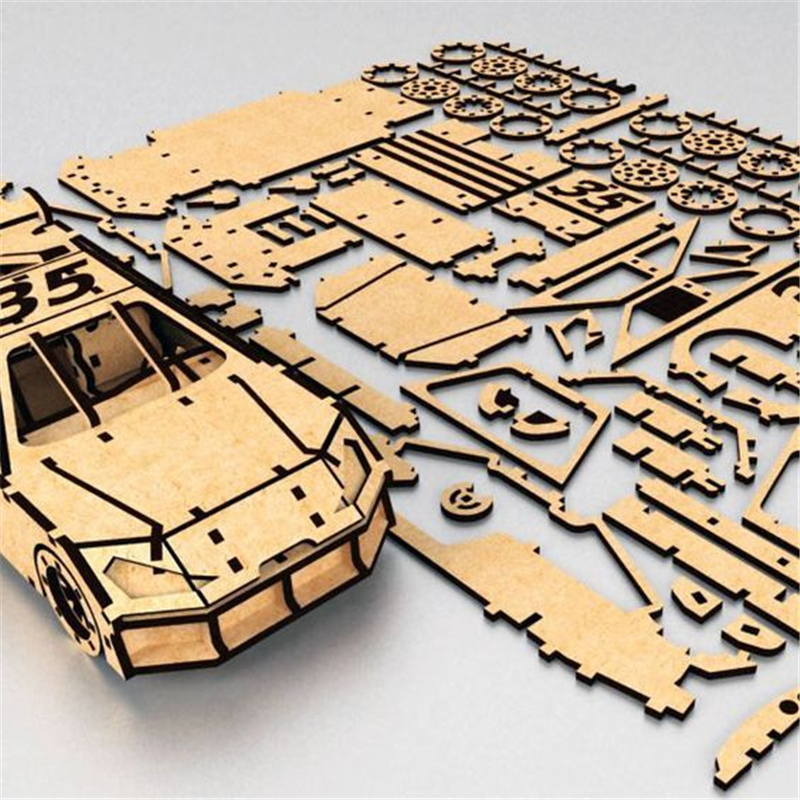
| Solid Wood | Yes | Yes | Crafts, models, wooden signs |
| Plywood | Yes, if suitable | Yes | Decorative panels, packaging |
| MDF | Yes, with appropriate extraction | Yes | Models, decorative components |
| Leather | Material-dependent | Material-dependent | Bags, wallets, accessories |
| Fabric | Material-dependent | Material-dependent | Garments, patches, textiles |
| Paper and Cardboard | Yes | Yes | Packaging, invitations, models |
| Glass | Generally not conventional through-cutting | Yes | Glassware, gifts, awards |
| Stone and Ceramic | Generally not conventional through-cutting | Surface marking possible | Decorative engraving |
| PVC and Vinyl | No | No | Not recommended for laser processing |
3.1 Acrylic Laser Cutting
Acrylic is one of the most widely used materials for CO2 laser cutting.
With the correct settings and suitable cast or extruded acrylic, a CO2 laser cutter can produce detailed shapes and smooth edges.
Common applications include:
CO2 laser cutting is particularly useful for businesses producing customized acrylic products in different shapes and quantities.
3.2 Wood and Plywood Cutting
CO2 laser machines are widely used for wood engraving and cutting.
They can produce intricate designs without requiring a physical cutting tool to follow every contour.
Typical applications include wooden decorations, craft products, model making, signage, and personalized gifts.
However, cutting performance depends on wood species, moisture content, thickness, and the type of adhesive used in plywood.
3.3 MDF Laser Cutting
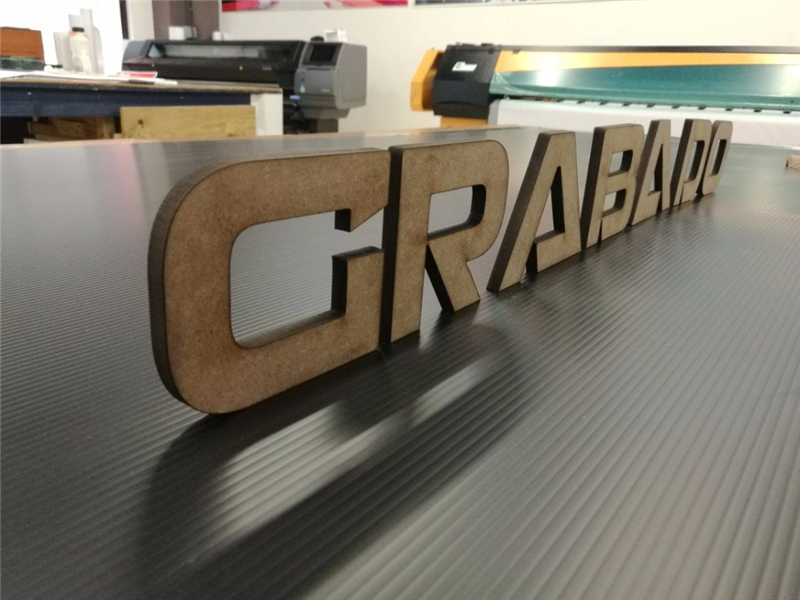
MDF is frequently used for decorative panels, craft products, and model components.
A CO2 laser cutter can process suitable MDF materials, but cutting may generate substantial smoke and residues.
Appropriate extraction and filtration are especially important.
3.4 Leather and Fabric Cutting
CO2 laser machines are also used in the textile and leather industries.
They can cut complex patterns for accessories, garments, and decorative components.
However, manufacturers must confirm that the material, coating, and adhesive composition is safe for laser processing.
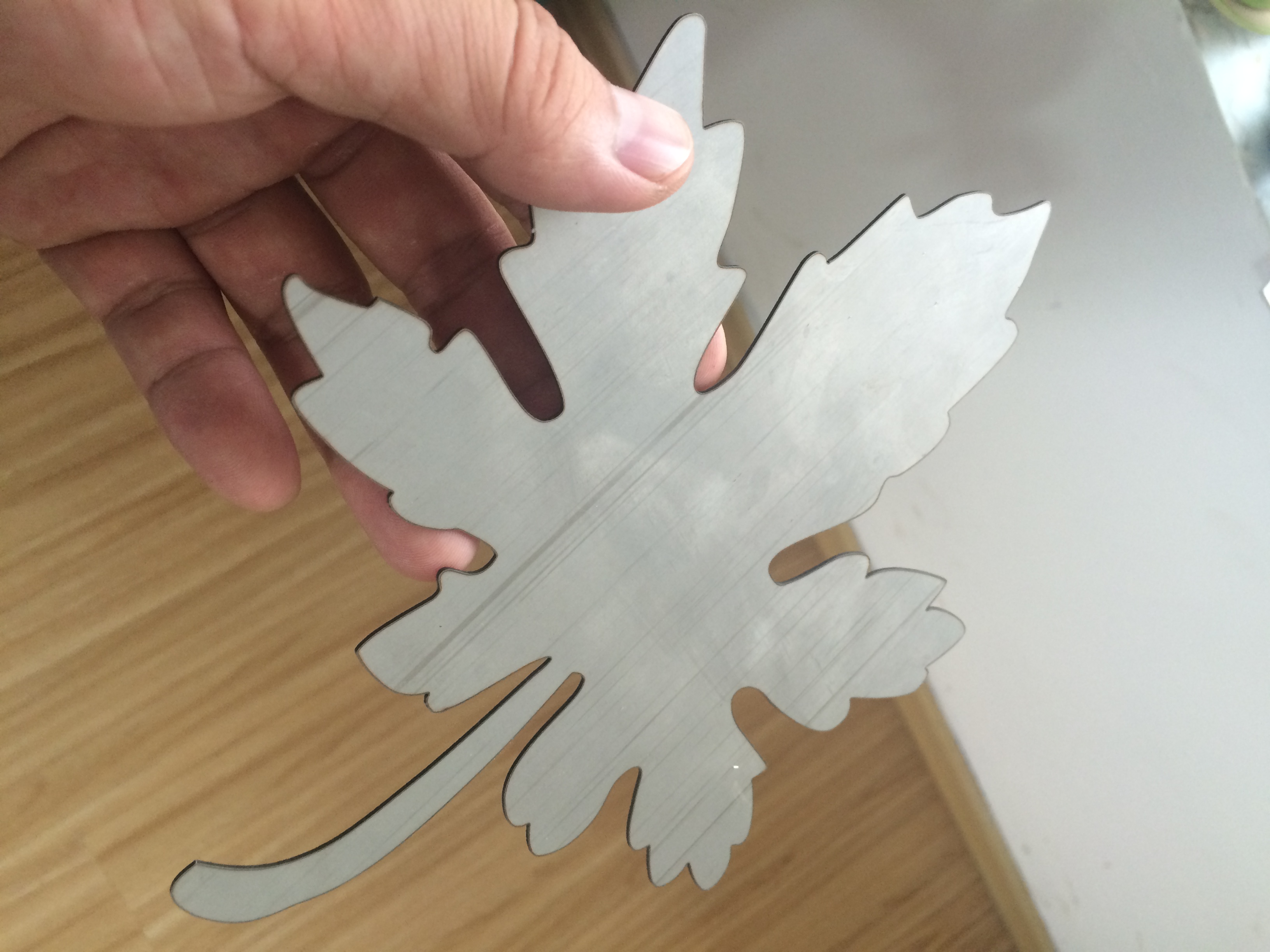
3.5 Can a CO2 Laser Cutting Machine Cut Metal?
This is a common question among buyers.
Most conventional glass-tube CO2 laser cutting machines are designed primarily for non-metallic materials.
Although specialized industrial CO2 laser systems can cut certain metals, standard CO2 laser engraving and cutting machines should not be assumed to have this capability.
For industrial cutting of stainless steel, carbon steel, or aluminum sheets, a fiber laser cutting machine is generally a more suitable choice.
Some specialized mixed-material laser machines offer limited metal-cutting capability, but their actual performance must be verified through manufacturer specifications and cutting tests.
Safety note: PVC, vinyl, and other chlorine-containing materials should not be processed with a CO2 laser because they can release hazardous and corrosive gases. Always verify the material's composition before cutting.
4. What Are the Main Applications of CO2 Laser Cutting Machines?
CO2 laser cutting technology is used across multiple manufacturing and creative industries.
Advertising and Sign Making
CO2 laser cutters are widely used for producing acrylic letters, illuminated signs, display stands, decorative panels, and promotional products.
The ability to cut complex shapes makes these machines particularly useful for customized signage production.
Woodworking and Furniture Decoration
In woodworking, CO2 laser machines can produce decorative wooden components, engraved panels, ornaments, and customized designs.
For thick solid-wood cutting, large furniture components, or heavy material removal, a CNC router may be more suitable.
Arts, Crafts, and Personalized Gifts
CO2 laser engraving machines can produce customized products such as wooden gifts, engraved plaques, leather accessories, and decorative items.
Their flexibility makes them useful for small businesses offering personalized products.
Textile and Leather Manufacturing
Laser cutting can produce complex fabric patterns and leather components without traditional cutting dies.
Applications include garment accessories, decorative patches, fashion products, and customized textile designs.
Packaging and Model Making
CO2 laser cutters can cut paper, cardboard, and suitable thin sheet materials for packaging prototypes, architectural models, and product displays.
They are especially useful when designs change frequently or production volumes are relatively small.
5. What Are the Advantages of CO2 Laser Cutting Machines?
CO2 laser cutting machines offer several advantages for businesses processing suitable materials.
High Precision
The focused laser beam allows manufacturers to create intricate shapes, fine details, and narrow cutting paths.
Actual precision depends on the machine structure, motion system, optics, and processing conditions.
Non-Contact Processing
Unlike conventional cutting tools, the laser beam does not mechanically press against the material.
This can reduce mechanical deformation and eliminate the need for some traditional cutting tools.
Flexible Design Capabilities
CO2 laser cutters can process complex shapes and customized designs from digital files.
Manufacturers can switch between different patterns without producing new cutting dies.
Cutting and Engraving Functions
Many CO2 laser machines support both cutting and engraving.
This allows businesses to produce multiple types of products using one machine.
Repeatable Production
With appropriate machine calibration and stable processing parameters, CNC-controlled laser systems can reproduce the same designs consistently.
Reduced Tooling Requirements
Laser cutting generally does not require a dedicated mechanical cutting tool for each new shape.
This can make the technology attractive for customized orders and short production runs.
6. What Are the Limitations of CO2 Laser Cutting Machines?
Although CO2 laser cutting offers many benefits, it is not suitable for every application.
Material restrictions: Certain plastics, coatings, and composite materials are unsafe or unsuitable for laser processing.
Thickness limitations: Cutting capacity depends on laser power, material properties, optics, and required edge quality.
Heat-affected edges: Some materials may show darkening, melting, or charring along the cut.
Ventilation requirements: Laser processing can generate smoke, particles, and hazardous fumes.
Maintenance requirements: Laser tubes, mirrors, lenses, cooling systems, and motion components require regular inspection and maintenance.
Metal-cutting limitations: Standard commercial CO2 laser engraving and cutting machines are generally not intended for industrial sheet-metal cutting.
Understanding these limitations helps buyers choose equipment suited to their actual production needs.
7. How to Choose the Right CO2 Laser Cutting Machine
Selecting the right machine requires more than comparing laser power.
Buyers should evaluate the materials, working area, production volume, control system, and long-term operating requirements.
7.1 Choose the Right Laser Power
CO2 laser cutting machines are available in different power configurations.
| Laser Power | Typical Applications | Suitable Buyers |
| 40W–60W | Engraving and cutting thin suitable materials | Hobbyists, small workshops |
| 80W–100W | Commercial engraving, light-to-medium cutting | Small businesses |
| 130W–150W | Acrylic, wood, plywood, advertising applications | Commercial manufacturers |
| 180W–300W | More demanding cutting applications | Industrial users |
These are general application categories, not guaranteed cutting capabilities.
Actual material thickness and cutting speed must be confirmed through testing.
7.2 Select the Appropriate Working Area
Common working areas include:
600 × 400 mm
900 × 600 mm
1300 × 900 mm
1300 × 2500 mm
1600 × 3000 mm
A compact machine may be sufficient for engraving small gifts, while a large-format machine may be necessary for cutting full-size acrylic or plywood sheets.
7.3 Evaluate the Control System
A suitable control system should support your preferred design workflow.
Check file compatibility, cutting and engraving functions, software licensing, and technical support.
7.4 Check Machine Construction
A stable machine frame, reliable guide rails, appropriate transmission components, and properly configured motion control contribute to cutting consistency.
Machine construction is especially important for larger working areas.
7.5 Confirm Safety and Support
Before purchasing, evaluate machine guarding, laser enclosure, interlocks, emergency stops, extraction requirements, and applicable safety documentation.
Also confirm the availability of spare parts, technical assistance, and warranty support.
8. CO2 Laser Cutting Machine vs. Fiber Laser Cutting Machine
CO2 and fiber laser cutting machines use different laser technologies and are commonly selected for different applications.
| Feature | CO2 Laser Cutting Machine | Fiber Laser Cutting Machine |
| Common Applications | Non-metallic materials | Industrial metal cutting |
| Typical Materials | Acrylic, wood, leather, fabric | Carbon steel, stainless steel, aluminum |
| Laser Technology | CO2 gas laser | Fiber laser |
| Common Wavelength | Approximately 10.6 μm | Approximately 1.06–1.08 μm |
| Main Advantage | Versatile non-metal processing | Efficient industrial metal cutting |
| Typical Buyers | Sign makers, woodworkers, craft manufacturers | Metal fabrication businesses |
For a business producing acrylic signs, wooden decorations, or leather products, a CO2 laser cutter is often an appropriate solution.
For a metal fabrication company processing steel and aluminum sheets, a fiber laser cutting machine is usually the better choice.
9. How Much Does a CO2 Laser Cutting Machine Cost?
CO2 laser cutting machine prices vary depending on laser power, working area, component quality, and additional equipment.
Compact commercial systems may cost a few thousand US dollars, while large-format and customized industrial machines can cost significantly more.
Other expenses may include:
Water chiller
Exhaust and filtration equipment
Replacement laser tubes
Mirrors and focusing lenses
Shipping and import costs
Installation and operator training
Buyers should compare complete machine configurations rather than focusing only on the advertised price.
For a more detailed price comparison, read our guide: How Much Does a CO2 Laser Machine Cost?
10. Why Choose Eastrise CNC for CO2 Laser Cutting Equipment?
Eastrise CNC is a China-based supplier of CNC machinery and laser processing equipment.
Our product categories include CO2 laser engraving machines, mixed laser cutting machines, and other CNC solutions for manufacturing applications.
When choosing a CO2 laser cutting machine, customers should consider the materials they plan to process, their required working area, laser power, and production capacity.
Eastrise CNC can help buyers explore machine options based on these application requirements.
Whether you need equipment for acrylic signage, woodworking, engraving, or customized production, selecting a suitable machine configuration is essential.
Explore our CO2 Laser Machine products or contact us for more information.
Website: https://www.eastrisecnc.com/
Email: info@eastrisecnc.com
11. Frequently Asked Questions About CO2 Laser Cutting Machines
What is a CO2 laser cutting machine used for?
A CO2 laser cutting machine is used to cut and engrave suitable materials such as acrylic, wood, plywood, leather, fabric, and paper. Common applications include signage, woodworking, crafts, packaging, and customized manufacturing.
What is the difference between a CO2 laser cutter and a laser engraver?
A CO2 laser cutter is configured to cut through suitable materials, while a laser engraver is primarily used to create designs or markings on material surfaces. Many CO2 laser machines support both functions.
Can a CO2 laser cutting machine cut acrylic?
Yes. CO2 laser cutting machines are widely used to cut acrylic sheets for signs, displays, decorations, and other commercial products. Cutting capability depends on machine power, material thickness, and process settings.
Can a CO2 laser cut wood?
Yes. CO2 laser cutters can cut and engrave many types of wood and plywood. Cutting performance depends on wood thickness, species, moisture content, and adhesives.
Can a CO2 laser cutting machine cut stainless steel?
Standard commercial glass-tube CO2 laser cutters are generally not designed for stainless steel cutting. Specialized industrial CO2 systems can process some metals, but fiber laser cutting machines are usually preferred for industrial sheet-metal applications.
What laser power is best for acrylic cutting?
The appropriate laser power depends on acrylic thickness, required cutting speed, edge quality, and production volume. Commercial machines commonly use power levels such as 80W, 100W, 130W, or 150W. Sample cutting tests are recommended.
What software is used for CO2 laser cutting machines?
Software compatibility depends on the CNC controller. Some machines support RDWorks or LightBurn, while design files may be created using CAD or vector graphics software.
How long does a CO2 laser tube last?
Laser tube lifespan depends on the tube manufacturer, operating power, cooling conditions, and maintenance. Buyers should verify the manufacturer's rated service life and warranty.
Is a CO2 laser cutting machine suitable for a small business?
Yes. CO2 laser machines are commonly used by small businesses producing customized gifts, acrylic signs, wooden decorations, leather accessories, and other personalized products.
What should I consider before buying a CO2 laser cutting machine?
Consider the material type, maximum thickness, working area, laser power, control system, safety features, extraction requirements, maintenance costs, and supplier support.
Conclusion
A CO2 laser cutting machine is a versatile CNC-controlled tool for cutting and engraving suitable non-metallic materials with precision and flexibility.
It is widely used in advertising, woodworking, textile manufacturing, packaging, and customized product production.
By understanding how CO2 laser technology works, what materials it can process, and which machine specifications matter most, buyers can make more informed purchasing decisions.
If you are looking for a CO2 laser cutting or engraving machine for your business, contact Eastrise CNC to discuss your materials, working area, and production requirements.
Our team can help you explore suitable machine configurations and request a quotation for your application.


 English


