CNC Wood Lathe Machine: Applications, Benefits & Buying Guide
The CNC wood lathe machine has become an essential piece of equipment in modern woodworking, particularly for manufacturers producing wooden stair balusters, table legs, chair legs, bed posts, and decorative wooden columns.
Compared with traditional manual woodturning, a CNC wood turning lathe uses computer-controlled technology to produce accurate shapes, consistent profiles, and repeatable results.
For furniture manufacturers, staircase producers, and woodworking factories, an automatic CNC wood lathe can help improve production efficiency, reduce dependence on manual turning skills, and support both customized and batch production.
In this article, we will explore the working principles, main applications, advantages, and important factors to consider when choosing a CNC wood lathe machine.
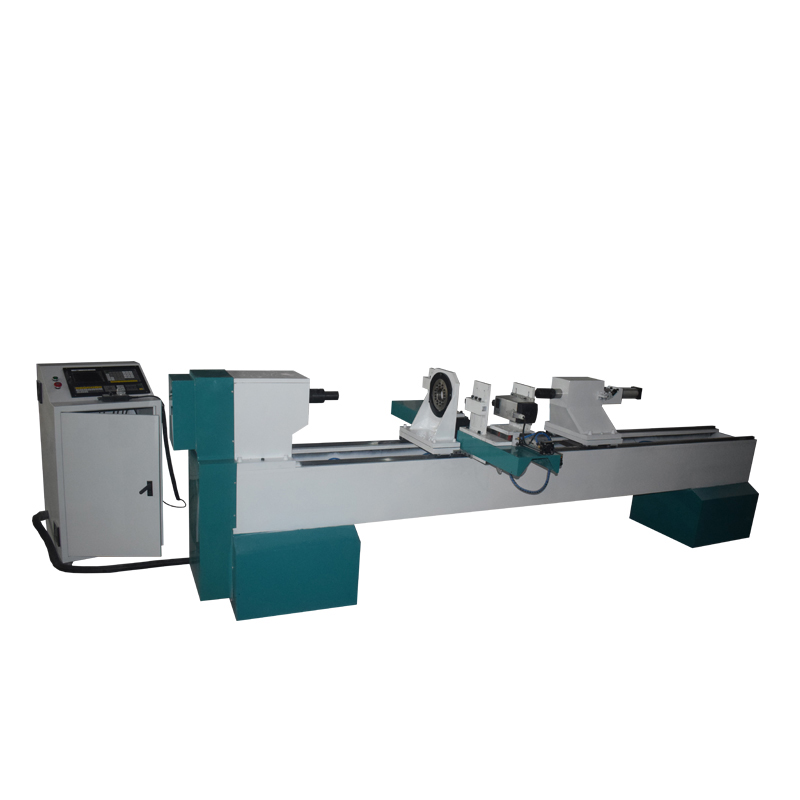
1. What Is a CNC Wood Lathe Machine?
A CNC wood lathe machine is a computer-controlled woodworking machine designed to shape wooden workpieces by rotating them against cutting tools.
Unlike conventional manual wood lathes, CNC wood turning machines use programmed tool movements to create specific shapes and profiles automatically.
The machine typically holds a wooden workpiece between a headstock and tailstock or uses another suitable workholding arrangement. As the wood rotates, cutting tools remove material according to the programmed design.
Depending on the machine configuration, a CNC wood lathe can produce straight, tapered, curved, and decorative profiles.
Common applications include:
Some CNC wood lathes can also be equipped with additional milling, carving, or sanding functions to expand their processing capabilities.
2. Main Applications of CNC Wood Lathe Machines
One of the greatest advantages of a CNC wood lathe is its ability to manufacture a wide range of decorative and functional wooden components.
2.1 Wooden Stair Balusters
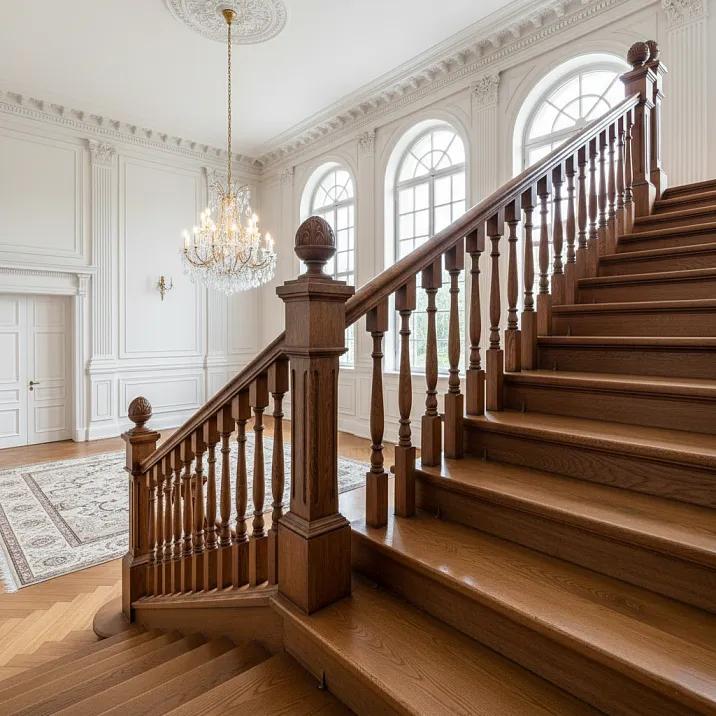
Wooden stair balusters are among the most common products manufactured using CNC wood turning machines.
These components are widely used in residential staircases, villas, hotels, and commercial buildings.
A CNC wood lathe can produce different baluster profiles, including traditional decorative shapes and modern minimalist designs.
For staircase manufacturers, CNC turning offers several advantages:
Consistent dimensions across multiple balusters
Repeatable decorative profiles
Reduced manual turning requirements
Efficient production of matching components
Flexibility to produce different designs
With suitable programming and tooling, manufacturers can switch between different baluster styles to meet customer requirements.
2.2 Wooden Table Legs
A CNC wood lathe for table legs is particularly useful for furniture manufacturers producing dining tables, coffee tables, desks, and other wooden furniture.
Table legs often require smooth curves, decorative contours, and consistent dimensions.
A CNC wood turning machine can manufacture a variety of designs, including:
Traditional turned table legs
Round and tapered furniture legs
Decorative spindle-style legs
Classical furniture components
Customized wooden table supports
By using CNC technology, furniture manufacturers can maintain consistent designs across production batches.
2.3 Wooden Chair Legs
Chair manufacturers often need to produce large quantities of wooden legs with matching dimensions and profiles.
A CNC wood lathe can help automate the turning of suitable chair-leg designs, improving repeatability and reducing manual machining time.
For manufacturers producing dining chairs, wooden stools, and traditional furniture, CNC turning can be an efficient production method.
However, curved or non-rotational chair-leg designs may require additional CNC milling or other woodworking processes.
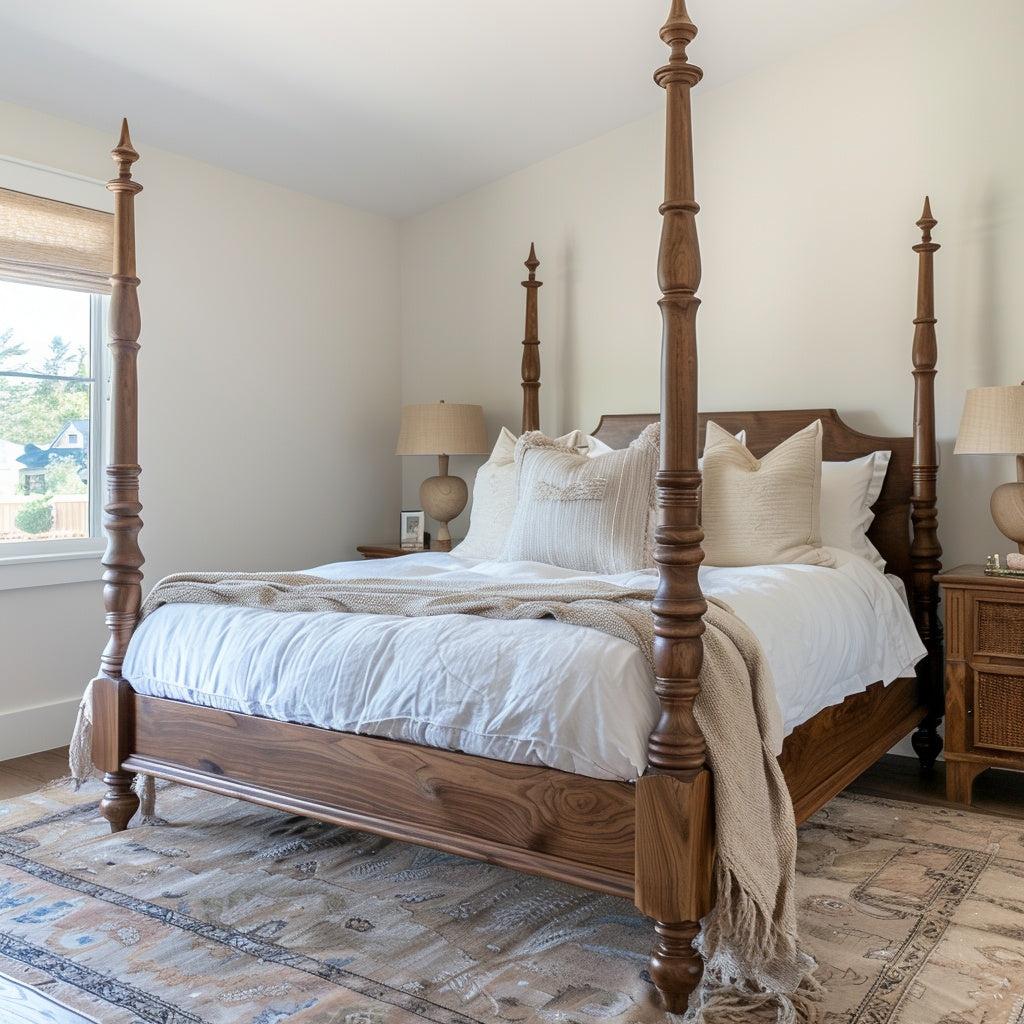
2.4 Wooden Bed Posts
Decorative wooden bed posts are commonly found in traditional and luxury bedroom furniture.
These components may feature tapered sections, rounded details, and ornamental turning profiles.
A CNC wood turning lathe allows manufacturers to reproduce matching bed posts with consistent shapes and dimensions.
This is especially useful for furniture factories manufacturing multiple identical bed frames.
2.5 Decorative Wooden Columns
Decorative wooden columns are widely used in interior decoration, staircase construction, and classical furniture design.
A CNC wood lathe can manufacture turned wooden columns with symmetrical profiles, such as rounded sections, grooves, and decorative contours.
Common applications include:
Decorative staircase columns
Wooden furniture pillars
Interior architectural posts
Traditional wooden columns
Customized ornamental components
For more complex three-dimensional carvings or non-rotational details, additional milling or carving equipment may be required.
3. Key Advantages of CNC Wood Lathe Machines
3.1 High Precision and Repeatability
One of the main benefits of CNC wood turning technology is its ability to reproduce programmed profiles consistently.
Once a design is prepared and the machining parameters are properly configured, the machine can manufacture multiple workpieces with similar dimensions and shapes.
This is particularly important for staircase and furniture manufacturers, where matching components are essential.
Actual machining accuracy depends on machine rigidity, tool condition, material properties, and processing parameters.
3.2 Improved Production Efficiency
Traditional woodturning requires an experienced operator to manually control cutting tools.
A CNC wood lathe automates much of the turning process, allowing operators to focus on material preparation, machine setup, inspection, and production management.
For repetitive production tasks, this can improve manufacturing efficiency and reduce manual machining time.
Actual output depends on the complexity of the workpiece, cutting conditions, machine configuration, and loading method.
3.3 Reduced Dependence on Manual Turning Skills
Producing complex wooden profiles manually requires considerable experience.
With CNC technology, machining movements are controlled by a programmed system.
Although trained operators are still necessary for setup, programming, maintenance, and quality control, the machine reduces the need for continuous manual tool manipulation.
This makes CNC wood turning particularly attractive for factories seeking more standardized production processes.
3.4 Flexible Customization
Modern furniture and interior decoration markets increasingly demand customized products.
A CNC wood lathe allows manufacturers to produce different profiles by modifying machining programs and selecting appropriate cutting tools.
This flexibility is useful for businesses handling both standardized production orders and customized projects.
3.5 Consistent Quality for Batch Production
When producing hundreds of staircase balusters or furniture legs, maintaining consistent product dimensions is essential.
CNC wood turning machines help reduce variations caused by manual tool movements.
With proper workholding, tooling, and quality control, manufacturers can achieve more consistent results across production batches.
4. CNC Wood Lathe vs. Traditional Wood Lathe
Both CNC and traditional wood lathes are used to produce turned wooden components, but they differ in operation and production suitability.
Traditional Wood Lathe
Requires manual control of cutting tools
Relies heavily on operator experience
Suitable for handcrafted and artistic woodturning
Offers flexibility for one-off creative work
May require more manual effort for repetitive production
CNC Wood Lathe Machine
Uses programmed cutting movements
Supports repeatable production
Suitable for furniture and staircase component manufacturing
Reduces continuous manual turning operations
Allows programmed designs to be reused for future orders
For factories manufacturing large quantities of identical wooden components, CNC wood turning machines can offer significant operational advantages.
However, the best choice depends on production volume, design complexity, investment budget, and operator requirements.
5. How to Choose the Right CNC Wood Lathe Machine
Choosing a suitable CNC wood lathe requires careful consideration of the products you intend to manufacture.
5.1 Maximum Working Length
The maximum turning length determines the longest wooden workpiece the machine can accommodate.
For example, manufacturers producing long staircase columns or bed posts may require a larger machine than those producing short furniture legs.
Before selecting a machine, determine the maximum length of your finished products and the dimensions of the raw wooden blanks.
5.2 Maximum Turning Diameter
The maximum turning diameter determines the largest workpiece diameter that can be processed within the machine's specified operating limits.
This parameter is particularly important when producing large decorative columns or thick furniture legs.
Customers should confirm both the maximum raw-material dimensions and the finished component requirements.
5.3 Number of Spindles
Different CNC wood lathe machines may feature single-spindle or multi-spindle configurations.
A single-spindle machine generally processes one workpiece at a time.
Certain multi-spindle configurations can process multiple workpieces simultaneously, which may improve productivity for repetitive manufacturing.
However, the number of spindles should not be confused with the number of cutting axes or tool positions.
The appropriate configuration depends on production volume, workpiece dimensions, and machine design.
5.4 Cutting Tools and Additional Functions
Different workpiece designs require different machining capabilities.
Some CNC wood lathes are designed primarily for turning rotational profiles, while others may offer additional functions such as milling, carving, or sanding.
Before purchasing, customers should confirm whether the machine can produce their required shapes.
5.5 CNC Control System
A reliable CNC control system is important for stable and efficient operation.
When evaluating a wood turning machine, consider:
Ease of programming
Supported machining functions
Program storage and reuse
Operator interface
Available technical support
Customers should also confirm how their existing drawings or design files can be converted into compatible machining programs.
5.6 Machine Structure and Stability
A rigid machine structure helps support consistent cutting performance.
When selecting a CNC wood lathe, evaluate the machine frame, workholding system, motion components, and overall mechanical design.
Machine stability becomes especially important when turning long or relatively large wooden components.
6. What Materials Can a CNC Wood Lathe Process?
CNC wood lathe machines can process many types of suitable wood, depending on the machine configuration and cutting tools.
Common materials include:
Material hardness, moisture content, grain direction, and workpiece quality can influence cutting performance and surface finish.
For best results, manufacturers should select suitable tooling and machining parameters for each material.
Wood dust extraction and appropriate machine guarding are also important for safe operation.
7. How Can a CNC Wood Lathe Improve Furniture Production?
For furniture manufacturers, production consistency and efficiency are important factors affecting competitiveness.
A CNC wood turning machine can help streamline the manufacturing process for components such as table legs, chair legs, and decorative posts.
Instead of manually reproducing each shape, manufacturers can use stored CNC programs to produce repeated profiles.
This offers several practical benefits:
Faster changeovers between previously programmed designs
More consistent dimensions
Reduced repetitive manual turning work
Improved production planning
Greater flexibility for customized orders
For businesses producing standardized wooden components in large quantities, CNC wood turning can become an important part of an efficient manufacturing workflow.
8. Why Choose Eastrise CNC?
At Eastrise CNC, we understand that different woodworking businesses have different manufacturing requirements.
Whether you produce wooden stair balusters, furniture legs, decorative columns, or customized wooden components, selecting the right CNC wood lathe machine is essential.
Our team can help you evaluate suitable machine options according to your workpiece dimensions, materials, product designs, and production requirements.
Before recommending a configuration, we encourage customers to provide information such as:
Photos or drawings of the finished wooden products
Maximum workpiece length and diameter
Type of wood being processed
Expected daily production quantity
Required turning, milling, or other machining functions
With this information, we can better understand your manufacturing needs and discuss suitable equipment configurations.
9. Frequently Asked Questions About CNC Wood Lathe Machines
Q1: What products can a CNC wood lathe make?
A CNC wood lathe is commonly used to manufacture wooden stair balusters, table legs, chair legs, bed posts, newel posts, and decorative wooden columns.
Additional applications depend on the machine's structure and available functions.
Q2: Can a CNC wood lathe produce customized designs?
Yes. CNC wood lathes can produce different turning profiles using suitable machining programs and cutting tools.
However, complex non-rotational shapes may require additional milling or carving functions.
Q3: Is a CNC wood lathe suitable for mass production?
Yes. CNC wood turning machines are particularly useful for repetitive manufacturing because they can reproduce programmed profiles consistently.
Production capacity depends on workpiece dimensions, design complexity, and machine configuration.
Q4: Can a CNC wood lathe process hardwood?
Many CNC wood lathes can process hardwoods such as oak, beech, and maple when equipped with appropriate tooling and machining parameters.
The machine's capabilities should be confirmed for the intended material and workpiece dimensions.
Q5: What information should I provide when requesting a quotation?
To receive a suitable machine recommendation, provide the maximum workpiece length, diameter, wood type, finished product photos or drawings, and expected production volume.
These details help determine the appropriate CNC wood lathe configuration.
Conclusion
A CNC wood lathe machine is a practical solution for manufacturers producing wooden stair balusters, furniture legs, decorative columns, and other turned wooden components.
By combining computer-controlled machining with repeatable production processes, CNC wood turning technology can help improve manufacturing efficiency, consistency, and flexibility.
Whether you operate a furniture factory, staircase manufacturing business, or woodworking workshop, choosing the right CNC wood lathe can support your long-term production needs.
Looking for a CNC wood lathe machine for your woodworking business?
Contact Eastrise CNC to discuss your application, workpiece dimensions, and production requirements.
Eastrise CNC
Website: https://www.eastrisecnc.com/
Email: info@eastrisecnc.com
Send us your wooden product drawings or sample photos, and our team will help you explore a suitable CNC wood turning solution.


 English


