CNC Wood Turning Lathes for Sofa Table Legs: Precision, Design and Production
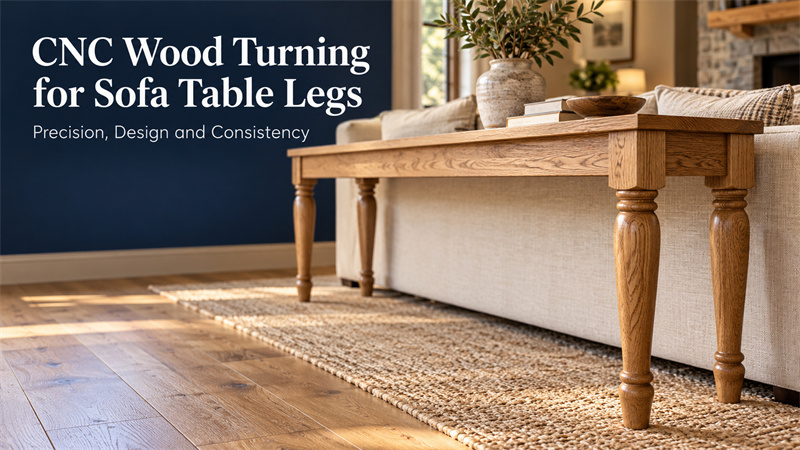
A CNC wood turning lathe shapes rotating wooden blanks with computer-controlled cutting tools. For sofa table legs, it can help manufacturers reproduce approved profiles, control important dimensions, and organize repeat production.
Consistent machining supports furniture assembly, but table sturdiness depends on the complete design. Wood quality, moisture condition, leg proportions, joints, aprons, and assembly accuracy all contribute to the performance of the finished table.
This guide explains how CNC wood turning fits into sofa table leg production and what manufacturers should evaluate before choosing equipment.
The process begins with a prepared wooden blank mounted securely in the machine. As the blank rotates, cutting tools move along a programmed path to remove material and create the required profile.
A typical production sequence includes blank preparation, setup, rough turning, finish turning, inspection, and surface preparation.
Depending on the design, manufacturers may preserve a square mounting section while turning the lower portion of the leg. Features such as mortises, mounting holes, flutes, or carved details may require additional equipment or suitable machine attachments.
Machine configuration determines which operations can be completed in one setup.
How CNC Turning Supports Sofa Table Quality
Consistent Leg Profiles
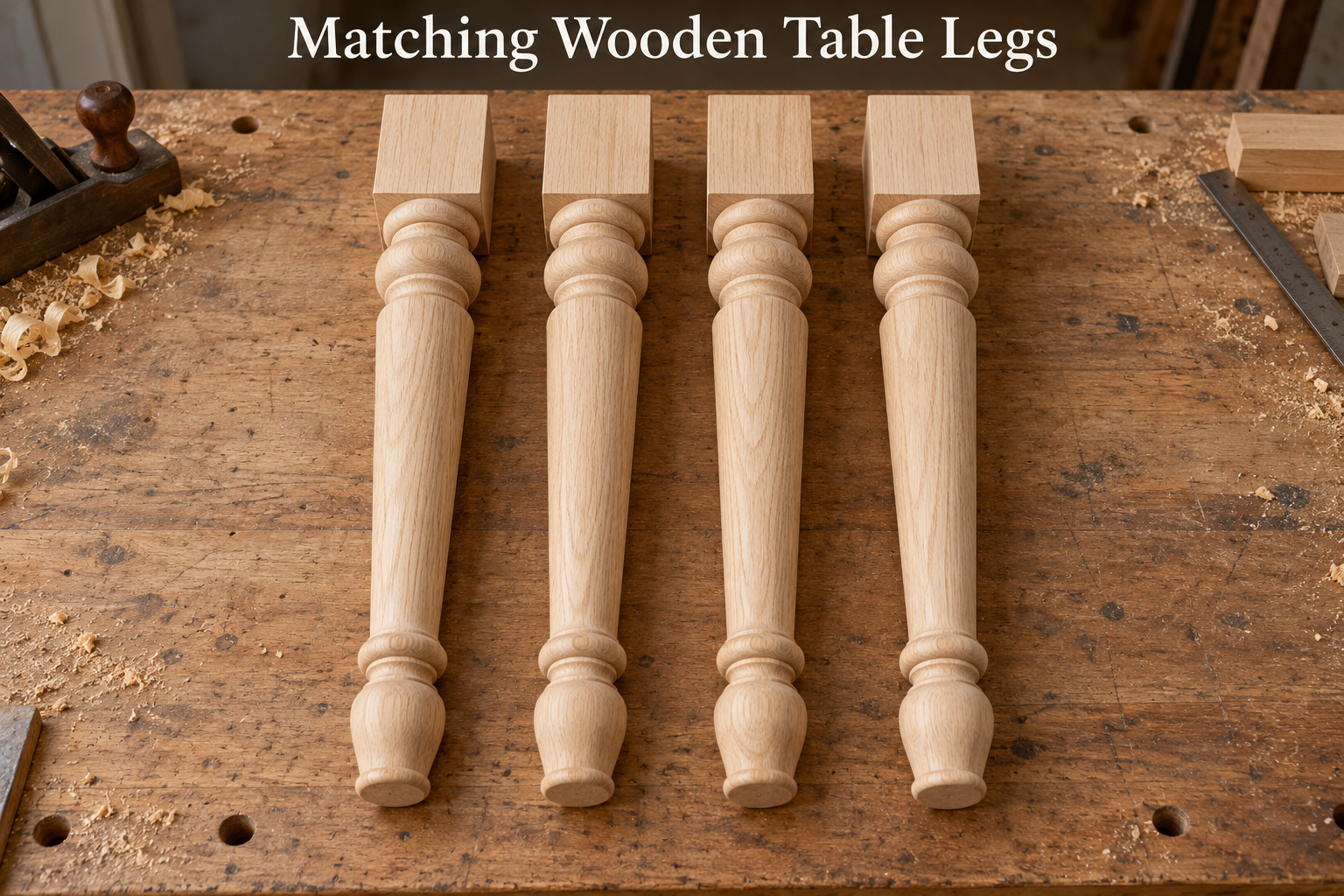
A saved program allows manufacturers to reproduce the same approved shape across a furniture set.
Consistent profiles help maintain visual balance between legs and simplify repeat orders. Actual results depend on tool condition, setup, machine calibration, and the behavior of the wood.
Controlled Assembly Dimensions
Overall length, mounting-section dimensions, and other assembly references influence how the legs fit into the table structure.
CNC machining can help control programmed dimensions, but finished leg length and joint fit still require inspection. Trimming, sanding, or later machining can affect the final result.
Repeatable Design Changes
Manufacturers can adjust digital profiles to develop different heights, tapers, and decorative proportions.
This can support product families and customized orders. Each revised design should be checked for machining feasibility, appearance, and structural suitability before production.
What Makes a Sofa Table Sturdy?
Suitable Wood and Sound Blanks
Hardwoods such as oak, maple, beech, and cherry are commonly considered for furniture legs. Selection should account for the species, grade, grain direction, intended finish, and service conditions.
Species alone does not guarantee strength. Knots, checks, poor grain orientation, and other defects can weaken a component.
Inspect blanks before machining and reject material that does not meet the furniture design requirements.
Appropriate Moisture Condition
Wood exchanges moisture with its surroundings and can change dimension as conditions vary.
Use material conditioned for the intended production and service environment. CNC turning does not prevent later movement caused by unsuitable moisture conditions.
Adequate Leg Proportions
A decorative profile should retain enough material in important areas. Very narrow sections, sharp transitions, or deep grooves may need particular evaluation.
Assess the smallest diameter and the areas around mounting features as part of the complete furniture design.
Reliable Connections
The connections between the legs, aprons, stretchers, and tabletop influence stability.
Joint dimensions, fasteners, adhesive selection, and assembly procedures should suit the design. A precisely turned leg cannot compensate for an unsuitable connection.

Sofa Table Leg Designs for CNC Turning
Tapered Legs
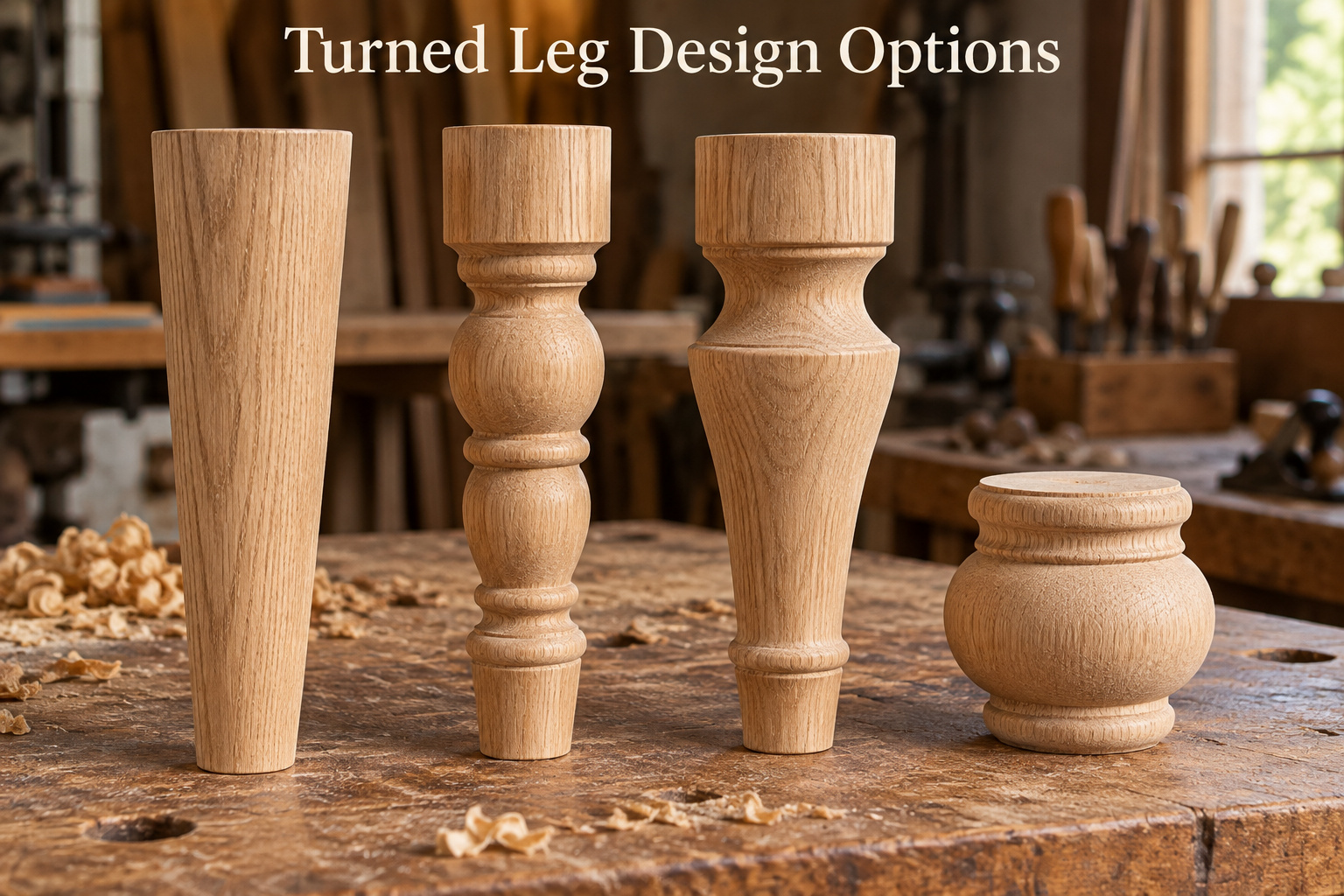
Rotationally symmetrical tapered legs offer a clean appearance for contemporary console and sofa tables.
The taper should be coordinated with the mounting section and required finished length.
Beaded and Coved Legs
Beads, coves, and rounded transitions can create traditional furniture profiles.
Tool access and profile spacing affect how these details can be machined and sanded.
Legs with Square Mounting Blocks
A square upper section can provide surfaces for apron connections, while the lower section carries the turned profile.
The machine setup must accommodate the blank size, interrupted cutting conditions, and transition between square and round sections.
Short Furniture Feet
Short turned feet may be used for related products such as cabinets, upholstered furniture, or low tables.
They require their own mounting design and production settings, even when they share decorative features with longer legs.
Fluting, spiral details, and non-rotational carving require suitable additional capabilities.
Production Benefits to Evaluate
Reusable Programs
Approved programs can support repeat orders and reduce repeated layout work.
Maintain clear records of the profile version, blank dimensions, tooling, and inspection requirements.
Potential for More Predictable Workflow
Programmed cutting can make the machining stage more consistent.
However, output also depends on loading, tool changes, sanding, inspection, and material handling. Compare complete cycle time, rather than cutting time alone.
Opportunities to Improve Material Yield
Suitable blank sizing and controlled machining may reduce avoidable waste.
Turning still removes material, so yield depends on the relationship between the blank and finished profile. Include rejected blanks and rework when assessing material use.
Check Working Capacity
Confirm that the machine accommodates your blank length, maximum section size, finished diameter, and workholding requirements.
Long or slender legs may need additional support. Ask how the proposed setup controls vibration during machining.
Match Features to Required Operations
List the tasks needed for your finished component: turning, drilling, milling, sanding, or other work.
Automatic feeding, multiple tools, sanding units, and milling attachments are configuration-dependent. Confirm which functions are included in the quotation.
Assess Programming and Changeovers
Evaluate how profiles are created, edited, stored, and recalled. Check the time needed to change tools, adjust workholding, and switch between leg designs.
A practical demonstration should include a normal product changeover.
Plan Extraction, Access and Maintenance
Provide appropriate chip and dust extraction, machine guarding, and space for loading and inspection.
Include routine maintenance, cutting-tool replacement, operator training, and technical support in the equipment assessment.
Request a Representative Turning Test
Supply a dimensioned drawing and blanks representative of your production material.
Check overall length, critical diameters, profile transitions, surface condition, and setup time. Evaluate the amount of sanding and additional machining needed before assembly.
Quality Checks Before Furniture Assembly
Inspect the first completed parts against the drawing before releasing a batch.
Check matching legs for consistent finished length and profile. Review mounting sections, cracks, tear-out, and other defects that could affect appearance or assembly.
After sanding and finishing, confirm that critical dimensions remain acceptable. Evaluate the assembled table for rocking, connection movement, and the performance requirements of its intended use.
Furniture performance should be verified on the assembled product.
Frequently Asked Questions
Yes. A suitable machine can reproduce a programmed profile. Results still depend on material consistency, tooling, setup, and inspection.
Does CNC turning automatically make table legs stronger?
No. CNC turning controls shape and dimensions. Strength also depends on wood quality, grain, moisture condition, component proportions, and connections.
Can a standard CNC wood lathe carve any pattern?
No. Basic turning produces profiles around the rotation axis. Other decorative features require appropriate attachments, controlled axes, or separate machining.
Will the legs be ready for assembly immediately after turning?
That depends on the design and required finish. Sanding, trimming, drilling, joint machining, or finishing may still be needed.
What information should I send for a machine recommendation?
Provide the leg drawing, wood species, blank dimensions, finished dimensions, required operations, daily production target, and surface-quality expectations.
Discuss Your Table Leg Production with EASTRISE
To discuss a CNC wood turning lathe for sofa table legs, share your drawings, material details, blank sizes, and production requirements with EASTRISE.
Request a sample turning assessment to evaluate dimensional results, surface quality, tooling, and complete processing time before selecting a machine configuration.


 English



