How to Make Wooden Table Legs with a CNC Wood Lathe: Complete Manufacturing Guide
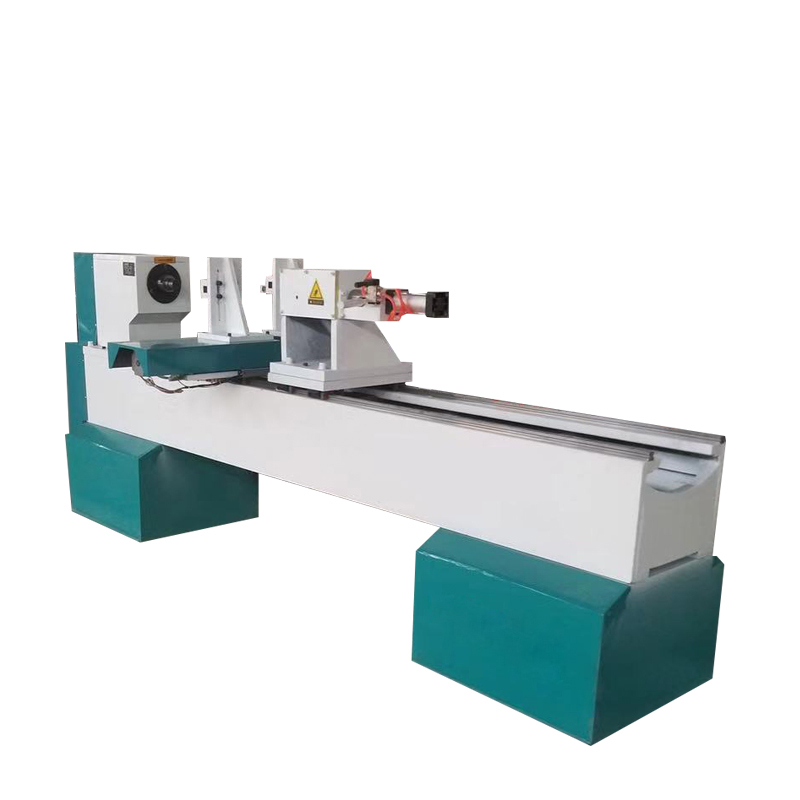
Wooden table legs play an important role in furniture design, providing both structural support and decorative appeal. From traditional dining tables to modern furniture collections, precisely shaped wooden legs can significantly enhance the appearance and value of finished products.
A CNC wood lathe machine is an efficient solution for manufacturing round, tapered, curved, and decorative wooden table legs with consistent dimensions and repeatable designs.
Unlike manual woodturning, CNC wood lathes use computer-controlled movements to shape wooden workpieces according to programmed profiles. This technology helps furniture manufacturers improve production consistency, reduce repetitive manual work, and produce detailed turning designs.
In this guide, EASTRISE CNC explains how CNC wood turning works, the steps involved in manufacturing wooden table legs, suitable wood materials, machine advantages, and important factors to consider when selecting equipment.
1. What Is a CNC Wood Lathe Machine?
A CNC wood lathe is a computer-controlled woodworking machine designed to shape rotating wooden workpieces using cutting tools.
The wooden blank rotates around its longitudinal axis while the cutting tools move along programmed paths to remove material and create the desired profile.
CNC wood lathes are commonly used to manufacture:
Wooden dining table legs
Chair legs
Staircase balusters
Wooden columns
Bed posts
Decorative furniture components
Wooden handrail components
Cylindrical wooden products
Depending on the machine configuration, CNC wood lathes may include multiple cutting tools, automatic feeding systems, and additional machining functions.
For furniture manufacturers, CNC wood turning technology is particularly useful when producing large quantities of identical wooden components.
2. Why Use a CNC Wood Lathe for Table Leg Manufacturing?
High Dimensional Consistency
One of the biggest advantages of CNC wood turning is repeatability.
Once the cutting program is correctly configured, the machine can reproduce the same table leg profile across multiple workpieces.
This is especially important when manufacturing furniture sets that require matching components.
Improved Production Efficiency
Compared with manual turning, CNC wood lathes can reduce the amount of hands-on cutting work required for repetitive production.
The actual production time depends on wood hardness, leg dimensions, profile complexity, cutting parameters, and machine configuration.
Complex Decorative Designs
CNC wood turning machines can produce many decorative profiles, including:
However, non-rotational features such as cabriole legs, square sections, or intricate side carvings may require additional machining equipment or specialized machine functions.
Reduced Dependence on Manual Turning Skills
CNC automation reduces the need for continuous manual tool control.
Nevertheless, operators still require training in programming, workpiece clamping, cutting tool selection, and machine safety.
Flexible Product Customization
Manufacturers can adjust the CNC program to produce different table leg dimensions and decorative profiles.
This makes CNC wood lathes suitable for both standardized production and customized furniture orders.
3. What Types of Wooden Table Legs Can a CNC Wood Lathe Produce?
Different furniture styles require different leg designs.
Traditional Turned Table Legs
Traditional wooden table legs often feature rounded sections, beads, coves, and decorative curves.
CNC wood lathes can reproduce these rotational profiles consistently.
Tapered Wooden Table Legs
Tapered legs gradually decrease in diameter along their length.
They are commonly used in contemporary and mid-century furniture designs.
Farmhouse-Style Table Legs
Farmhouse furniture often uses substantial wooden legs with decorative turned profiles.
A CNC wood lathe can help produce matching legs for dining tables and kitchen furniture.
Decorative Spindle Legs
Spindle-style legs feature repeated rounded and narrow sections.
These designs are suitable for selected tables, chairs, and decorative furniture products.
Custom Furniture Components
Manufacturers can develop unique rotational profiles based on customer drawings and design requirements.
Before production, the design must be checked for compatibility with the machine's available axes, cutting tools, and workpiece dimensions.
4. What Wood Materials Are Suitable for CNC Table Leg Turning?
Wood selection directly influences the finished appearance, cutting performance, and durability of wooden table legs.
Oak
Oak is a popular hardwood for dining tables because of its strength and distinctive grain.
It is suitable for many traditional and modern furniture designs.
Beech
Beech has a relatively fine and uniform texture, making it suitable for detailed turning and furniture components.
Maple
Maple is valued for its hardness and smooth appearance.
Proper cutting tools and machining parameters are important to minimize burning and surface defects.
Walnut
Walnut is commonly used in premium furniture because of its rich color and attractive grain patterns.
Pine
Pine is a softer wood that is generally easier to machine, although its softness and grain characteristics may affect the finished surface.
Rubberwood
Rubberwood is frequently used in furniture manufacturing and can be suitable for CNC turning when properly dried and prepared.
Wood Selection Comparison
| Wood Type | Main Characteristics | Typical Application |
| Oak | Strong, distinctive grain | Dining tables |
| Beech | Uniform texture, good machinability | Furniture legs |
| Maple | Hard, smooth appearance | Premium furniture |
| Walnut | Attractive color and grain | Decorative furniture |
| Pine | Softwood, relatively easy to machine | Light furniture |
| Rubberwood | Common furniture hardwood | Mass-produced components |
Wood blanks should be properly dried, free from serious defects, and suitable for the intended furniture application.
5. How to Make Wooden Table Legs with a CNC Wood Lathe
Manufacturing wooden table legs involves several important steps.
Step 1: Design the Table Leg Profile
Start by preparing the required dimensions and decorative profile.
Important measurements include:
The profile can be created using suitable CAD or CNC programming software.
The design must be converted into a machining program compatible with the machine's controller.
Step 2: Select and Prepare the Wood Blank
Choose a suitable hardwood or softwood according to the finished furniture design.
Cut the wood blank to the required length while allowing sufficient material for machining and workholding.
Inspect the blank for cracks, loose knots, severe warping, or other defects.
Step 3: Secure the Workpiece
Position the wood blank between the machine's workholding components, commonly the headstock and tailstock.
Make sure the workpiece is correctly centered and securely clamped.
Incorrect clamping can cause vibration, poor surface quality, or dangerous workpiece movement.
Step 4: Set the Cutting Parameters
Configure the machine according to the material and desired profile.
Typical settings include:
The appropriate parameters depend on the wood species, workpiece diameter, cutting tool, and machine specifications.
Step 5: Perform Rough Turning
Rough turning removes excess material from the wooden blank.
The goal is to create an approximate shape while leaving enough material for finishing.
Step 6: Perform Finish Turning
During finish turning, the machine follows the programmed profile more precisely.
This stage produces the decorative curves, beads, tapers, and other rotational details.
Sharp tools and suitable cutting parameters help improve surface quality.
Step 7: Sand and Finish the Table Leg
After machining, the workpiece may require sanding to remove minor tool marks.
Depending on the final product, finishing options may include:
Step 8: Inspect the Finished Product
Check the finished table leg for dimensional accuracy, surface quality, symmetry, and visible defects.
For furniture production, all matching legs should be inspected for consistency before assembly.
6. CNC Wood Lathe vs. Traditional Wood Lathe
Both CNC and manual wood lathes can produce attractive wooden furniture components.
However, their advantages differ.
| Feature | CNC Wood Lathe | Traditional Wood Lathe |
| Control | Computer-controlled | Manual |
| Repeatability | High with correct setup | Depends on operator |
| Production efficiency | Well suited to repetitive work | Depends on skill and design |
| Complex profiles | Repeatable programmed profiles | Flexible artistic control |
| Operator skills | Programming and setup | Manual turning skills |
| Initial investment | Generally higher | Generally lower |
| Best applications | Batch furniture production | Custom and artistic turning |
For businesses manufacturing identical table legs in batches, CNC wood lathes can offer significant production advantages.
Traditional lathes remain valuable for artistic woodturning, prototyping, and one-of-a-kind pieces.
7. Common Problems in CNC Wood Turning and How to Solve Them
Rough Surface Finish
Possible causes include dull cutting tools, unsuitable feed rates, poor grain characteristics, or vibration.
Solutions include inspecting tool sharpness, adjusting machining parameters, and improving workpiece stability.
Excessive Vibration
Vibration can result from poor clamping, an unbalanced workpiece, excessive spindle speed, or unsuitable cutting conditions.
Operators should inspect the workholding system and select appropriate operating parameters.
Wood Splitting
Splitting may occur because of existing cracks, excessive cutting forces, or unsuitable wood moisture conditions.
Using properly prepared wood blanks and appropriate cutting parameters can reduce the risk.
Inconsistent Dimensions
Dimensional variation may result from incorrect programming, loose workholding, tool wear, or machine calibration issues.
Regular inspection and maintenance help maintain consistent production quality.
8. Applications of CNC Wood Lathe Machines in Furniture Manufacturing
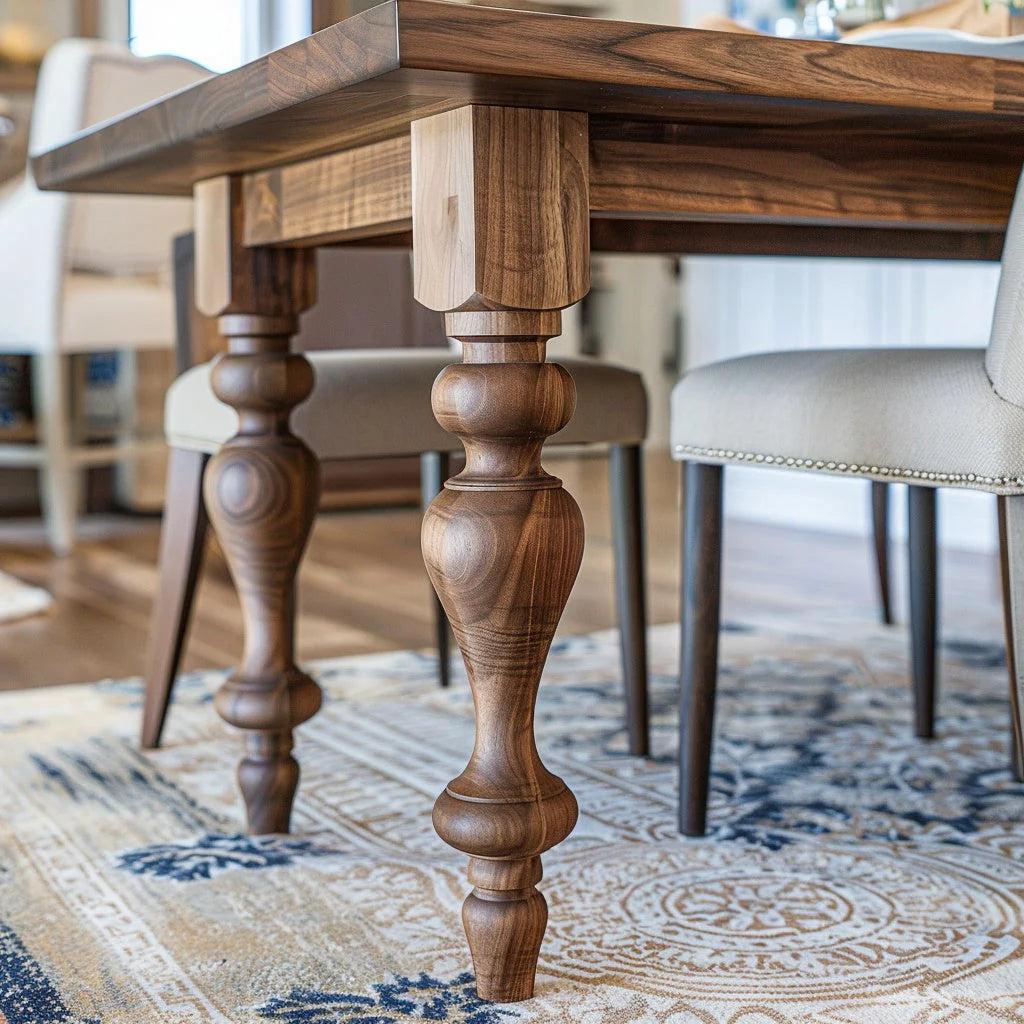
Dining Table Manufacturing
CNC wood lathes are widely suitable for producing decorative and tapered wooden dining table legs.
Chair Manufacturing
The machines can produce suitable round and decorative chair legs, depending on the design.
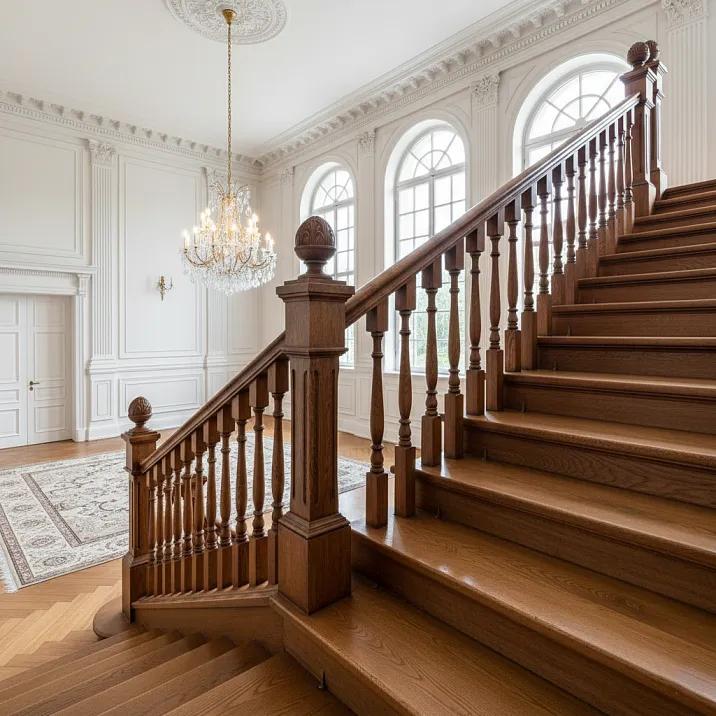
Staircase Baluster Production
CNC wood lathes can manufacture decorative wooden staircase balusters with repeatable profiles.
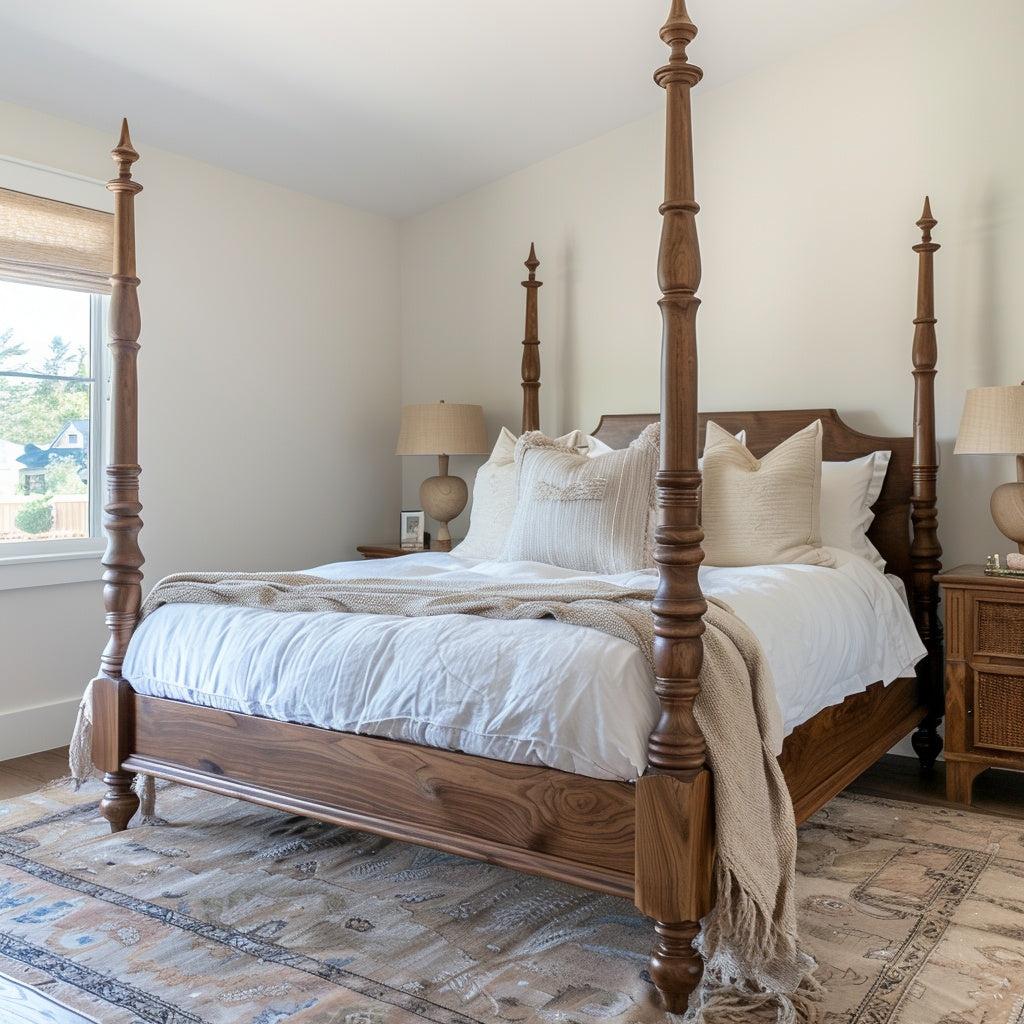
Bed and Furniture Post Manufacturing
Bed posts, furniture columns, and decorative supports are common applications.
Custom Woodworking Workshops
Small and medium-sized woodworking businesses can use CNC wood lathes to manufacture customized rotational components.
9. How to Choose the Right CNC Wood Lathe Machine
Before purchasing a CNC wood lathe, furniture manufacturers should evaluate several important factors.
Maximum Working Length
The machine must accommodate the longest table leg or wooden component you intend to produce.
Maximum Turning Diameter
Check the machine's supported workpiece diameter and available clearance.
Number of Cutting Tools
Different tool configurations can influence machining flexibility and production efficiency.
Machine Structure
A rigid machine frame and stable workholding system are important for consistent turning performance.
Control System
Choose a control system compatible with your programming requirements and operator experience.
Production Capacity
Consider whether the machine will be used for occasional custom orders or continuous batch production.
Technical Support
Evaluate the supplier's training, spare parts availability, maintenance support, and troubleshooting assistance.
10. Is a CNC Wood Lathe a Good Investment for Furniture Manufacturers?
A CNC wood lathe can be a valuable investment for furniture factories and woodworking workshops producing repeatable turned components.
Potential benefits include:
Improved dimensional consistency
Reduced repetitive manual cutting
More efficient batch production
Flexible design changes
Lower rework rates when processes are properly controlled
However, profitability depends on production volume, labor costs, material utilization, machine investment, and maintenance requirements.
Manufacturers should calculate their expected cost per finished table leg before purchasing equipment.
11. Frequently Asked Questions
Can a CNC wood lathe make dining table legs?
Yes. CNC wood lathes can manufacture round, tapered, and decorative wooden table legs with rotationally symmetrical profiles.
What is the best wood for turned table legs?
Oak, beech, maple, walnut, and rubberwood are common choices. The best material depends on the desired appearance, strength, budget, and machining requirements.
Can a CNC wood lathe make square table legs?
A standard turning-only CNC wood lathe is designed mainly for rotational profiles. Square legs and non-round features generally require additional milling functions or separate woodworking equipment.
Can CNC wood lathes produce identical table legs?
Yes. CNC machines can reproduce programmed profiles with good consistency when properly maintained and operated.
Is CNC wood turning faster than manual turning?
For repetitive production, CNC turning can reduce manual cutting time and improve consistency. Actual production speed depends on the component and machine configuration.
Does a CNC wood lathe require CAD software?
Many workflows use CAD or specialized CNC programming software. The exact requirements depend on the controller and supported programming methods.
Can a CNC wood lathe make staircase balusters?
Yes. Staircase balusters are among the common applications of CNC wood turning machines.
12. Why Choose EASTRISE CNC?
EASTRISE CNC provides CNC machinery solutions for woodworking and industrial manufacturing applications.
For furniture manufacturers looking to improve wooden table leg production, selecting the right CNC wood lathe is essential.
When evaluating equipment, customers should consider workpiece dimensions, required profiles, production capacity, machine configuration, and technical support.
Our team can help discuss your woodworking requirements and suitable machine options.
Conclusion
A CNC wood lathe machine offers an efficient and repeatable solution for manufacturing wooden dining table legs, chair legs, staircase balusters, and decorative furniture components.
By combining computer-controlled machining with appropriate woodworking techniques, manufacturers can produce consistent profiles while improving production efficiency.
Choosing suitable wood materials, preparing accurate machining programs, and selecting the right machine configuration are essential for successful results.
Contact EASTRISE CNC to discuss your wooden table leg manufacturing requirements and explore suitable CNC wood turning solutions.
Website: https://www.eastrisecnc.com


 English


