Plasma Cutting Aluminum: Applications, Cut Quality and Machine Selection
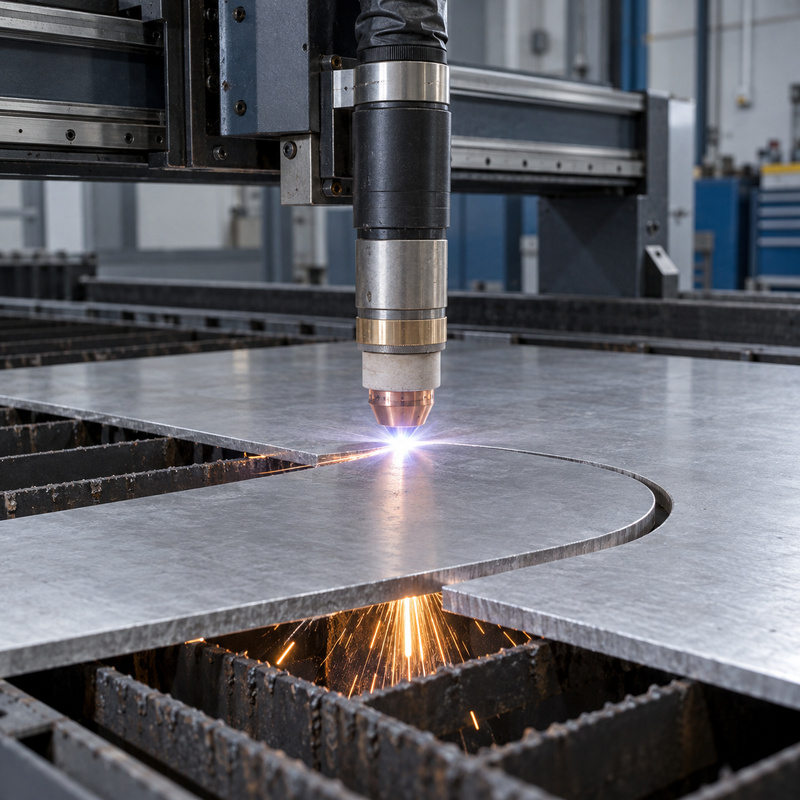
Yes, a plasma cutting machine can cut aluminum. Aluminum conducts electricity, making it suitable for a plasma arc cutting process. With an appropriate power source, torch and operating conditions, CNC plasma equipment can produce profiles and openings in aluminum sheet and plate.
Practical applications include mounting plates, equipment panels and blanks for further fabrication. The achievable thickness, dimensional results and edge condition depend on the complete cutting system.
Successful aluminum plasma cutting starts with matching the equipment and process to the actual part requirements.
A plasma torch creates a concentrated arc of electrically conductive, ionized gas. The arc melts the metal locally, while the gas stream removes molten material from the cut.
On a CNC plasma cutting machine, the motion system guides the torch along a programmed contour. The cutting program defines the shape, while the plasma settings and torch control influence the result.
Cutting produces a shaped blank; it does not necessarily complete every manufacturing operation. Deburring, drilling, machining, bending or welding may follow.
Does Aluminum’s High Reflectivity Affect Plasma Cutting?
Aluminum is reflective, which is an important consideration in laser processing. Plasma cutting uses a different energy source.
A plasma cutter uses an electrical arc rather than a laser beam, so laser back-reflection is not the governing issue.
However, aluminum still requires its own cutting process. Its thermal conductivity and melting behavior influence how heat spreads and how the cut edge forms.
Use the manufacturer’s aluminum cutting data rather than transferring settings directly from carbon steel.
Why Consider CNC Plasma Cutting for Aluminum?
Flexible Profiles from Digital Drawings
CNC plasma cutting can produce external shapes, broad slots and internal openings from a programmed path.
This flexibility is useful for workshops handling different part designs. Feature size and tolerance must still remain within the demonstrated capability of the system.
A Practical Route to Fabrication Blanks
For parts that will undergo additional operations, plasma cutting can provide the initial outline and suitable openings.
Evaluate the blank against the next manufacturing step. A part intended for welding may have different edge requirements from a visible panel or a precision mounting component.
Opportunities for Efficient Batch Production
Approved cutting programs can be reused for repeat orders. Nesting can arrange multiple components within a sheet.
The production benefit depends on loading, cutting, part removal and cleanup together. Compare the complete job rather than cutting speed alone.
Aluminum Plasma Cutting Applications
Aluminum Mounting Plates and Bracket Blanks
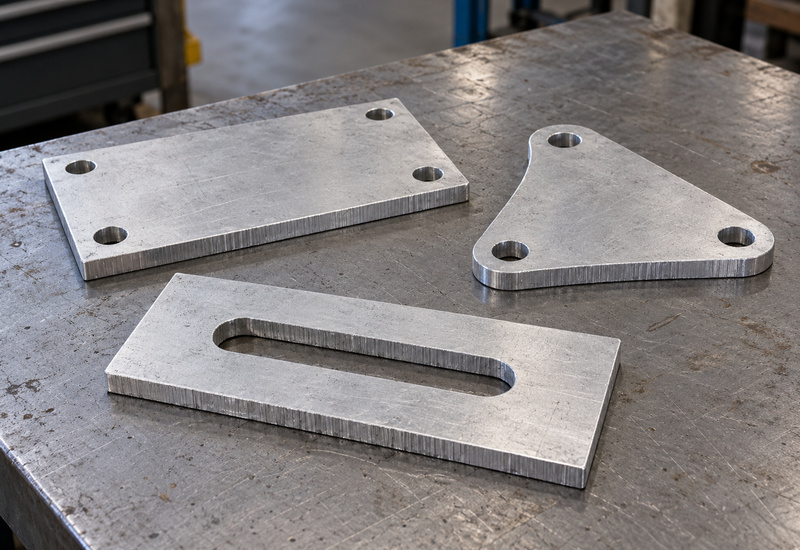
Mounting plates can combine straight edges, curved corners and fastening features. Plasma cutting is worth evaluating when the required geometry and tolerances suit the process.
For precision holes, allow for a secondary operation where necessary. Bracket blanks that require bending must also be prepared for a separate forming step.
Confirm hole size, edge condition and dimensional fit before approving production.
Access Panels and Equipment Covers
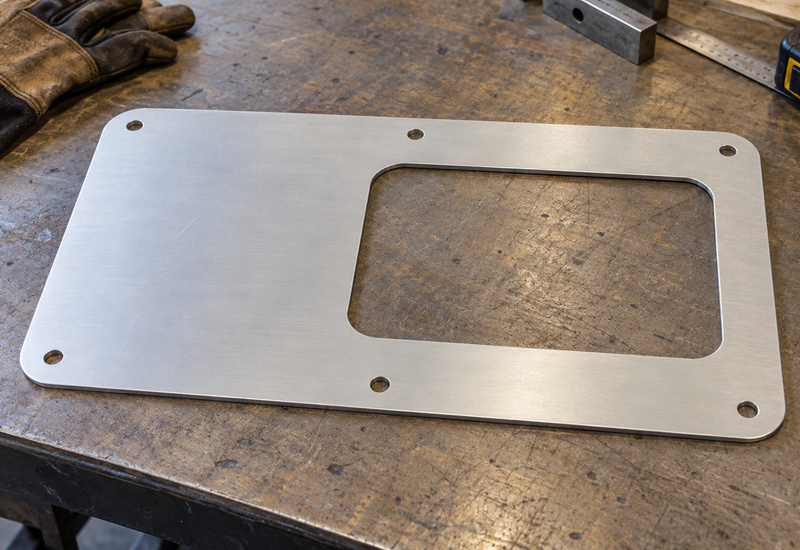
Flat access panel blanks may include an outside contour, a large opening and mounting holes.
Inspect panel flatness, the condition of exposed edges and the fit of any components installed afterward. Surface appearance may also matter when the panel remains visible.
Specify finishing requirements before cutting so that cleanup time is included in the production plan.
Boat and Marine Fabrication Blanks
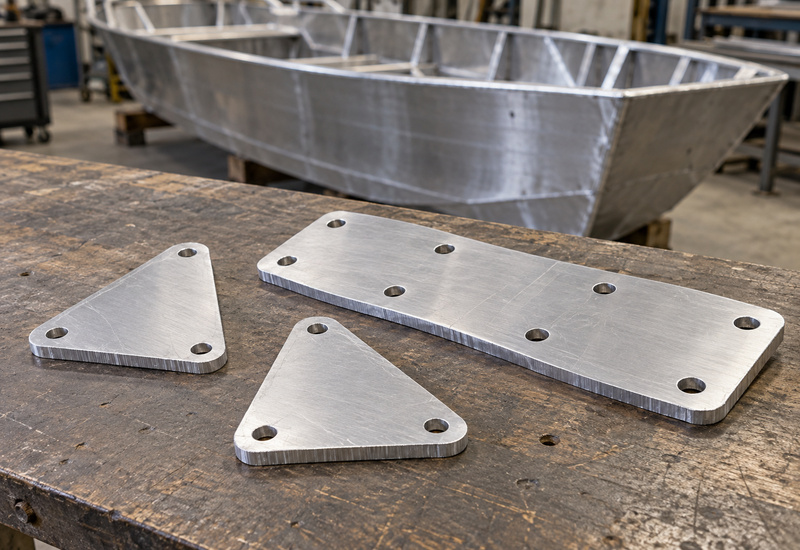
Aluminum gussets, support plates and other profile blanks can be evaluated for marine fabrication workflows.
Suitability depends on the alloy, design, joining procedure and service requirements. A cut blank is only one part of the completed assembly.
Marine or load-bearing components require the applicable design and fabrication checks; a clean-looking cut is not proof of structural suitability.
Choosing Gas for Aluminum Plasma Cutting
Gas selection depends on the plasma system. Air plasma equipment and multi-gas industrial equipment have different capabilities.
Suitable air plasma systems can cut aluminum using clean, dry compressed air. Multi-gas systems may offer nitrogen-based or other manufacturer-approved processes.
Do not change gases simply because another machine uses them. The power source, torch, consumables and gas controls must support the selected process.
Gas choice can influence oxidation, edge appearance and preparation before welding. Oxygen plasma, commonly associated with mild steel cutting, should not be assumed suitable for aluminum.
How to Evaluate Cut Quality
Start with representative parts made from your actual alloy and thickness. Inspect the result against a written specification.
Useful checks include:
Dimensions: Does the outline match the drawing?
Edge angularity: Is the cut face acceptable through the plate thickness?
Dross and burrs: How much cleanup is required?
Surface condition: Is the edge suitable for coating or joining?
Flatness: Has distortion affected assembly?
Holes and slots: Do they meet the required fit?
Some applications need secondary machining even when the external profile is acceptable. Identify those operations during the sample trial.
Water Tables Require Special Consideration
Aluminum cutting on or under water can generate hydrogen. If hydrogen becomes trapped and accumulates, it can create an explosion hazard.
Do not cut aluminum on a water table unless the table manufacturer confirms a suitable arrangement that prevents hydrogen accumulation.
The extraction and other cutting-system components must also be appropriate for aluminum processing. Aluminum-lithium alloys must not be cut in the presence of water.
Define the Material and Part
Provide the aluminum alloy, thickness range, sheet size and representative drawings. Include required tolerances and subsequent operations.
Confirm the Power Source and Torch
Request aluminum-specific capability information for the quoted configuration. Distinguish production cutting and piercing capacity from maximum separation capability.
Request Sample Cutting
Ask for samples using the proposed power source, gas process and torch setup. Record the conditions and inspect the parts against your acceptance criteria.
Compare Total Production Cost
Include consumables, compressed air or gases, electricity, handling, edge preparation and rejected parts.
Cost per acceptable finished component provides a more useful comparison than amperage alone.
Frequently Asked Questions
Yes, suitable air plasma systems can cut aluminum. Follow the operating data for the exact system and material thickness.
What thickness of aluminum can be cut?
There is no universal limit. Confirm the power source’s aluminum cutting and piercing ratings, then validate the required quality on samples.
Will plasma cutting leave a perfectly smooth edge?
Not in every application. Edge roughness, angularity and dross depend on the equipment and process. Finishing may be necessary.
Can aluminum be welded immediately after plasma cutting?
The cut edge may require preparation. Follow the welding procedure and inspect for contamination or surface conditions that could affect the joint.
Is plasma always better than laser or waterjet cutting?
No. The preferred method depends on thickness, geometry, tolerance, thermal effects and complete production cost.
Discuss Your Aluminum Cutting Requirements with Eastrise CNC
Share your aluminum alloy, thickness range, part drawings, quality requirements and target output with Eastrise CNC.
Request confirmation of a suitable plasma configuration and sample cutting availability. Use representative results to assess whether the proposed system meets your fabrication needs.


 English



