Efficient Carbon Steel Cutting on CNC Plasma Tables: Settings and Best Practices
Efficient carbon steel cutting on a CNC plasma table depends on matching the plasma process to the steel grade, plate thickness, part geometry, and required finish. Correct current, gas supply, cutting speed, torch height, and consumables help reduce avoidable rework and keep production consistent.
A CNC plasma cutting machine uses an ionized gas jet to melt conductive metal and eject molten material from the kerf. The table guides the torch along programmed paths, allowing fabricators to produce profiles, blanks, and suitable holes from carbon steel sheets and plates.
The goal is not simply the fastest torch movement. A productive process delivers acceptable parts with manageable setup time, consumable use, cleanup, and material waste.
Carbon steel is widely used for fabricated structures and machinery components. CNC plasma tables provide a flexible method of cutting these parts from digital files without making a dedicated cutting die for each outline.
Programmed motion supports recurring designs and nested sheet layouts. However, finished quality depends on the complete system: plasma source, torch, motion platform, height control, software, material condition, and operator setup.
Most conventional mild-steel cut charts apply to specified material conditions. Medium- and high-carbon grades may require additional evaluation of heat-affected edges, weldability, and downstream processing. Confirm the actual grade instead of treating all carbon steels as interchangeable.
What Affects Carbon Steel Plasma Cutting Efficiency?
Material Grade and Thickness
Confirm the steel specification and measured thickness before selecting a process. Mill scale, coatings, rust, and plate flatness can influence cutting behavior. Use representative production material for trials.
Distinguish recommended cutting capacity, mechanized piercing capacity, and maximum severance capacity. A system’s ability to separate a thick plate does not establish acceptable production speed, edge quality, or piercing capability at that thickness.
Current and Consumable Selection
Use the amperage and consumable set specified for the selected process. More current is not automatically better for thin plate or small features. Worn nozzles, electrodes, or shields can cause inconsistent edges and increase cleanup.
Inspect consumables according to the equipment manual and investigate abnormal wear. Record part life alongside cutting results to understand cost per acceptable component.
Cutting Speed and Torch Height
Travel speed affects penetration, edge angle, and dross. Both excessive and insufficient speed can produce undesirable results. Begin with the manufacturer’s material-specific cut chart and adjust through controlled trials.
Set pierce height, pierce delay, and cut height as separate parameters. Compatible automatic torch height control helps maintain the required stand-off, but it must work correctly with the machine’s motion and small-feature settings.
Air and Oxygen Plasma Cutting for Carbon Steel
Air plasma is a practical choice for many fabrication shops when the system is designed for it. Its air supply must meet the manufacturer’s requirements for cleanliness, dryness, pressure, and flow under operating conditions.
Industrial oxygen plasma processes can provide strong mild-steel cutting performance on compatible equipment. The plasma and shield gases must match the torch, power source, consumables, and approved cutting chart.
Do not substitute oxygen into a system designed only for air plasma. Select the complete approved process rather than choosing a gas independently of the equipment.
How to Set Up a Repeatable Carbon Steel Cutting Process
1. Check the Table and Workpiece
Inspect slats, support conditions, work-lead connection, and machine movement. Position the plate securely and confirm adequate clearance. Use the approved fume-control arrangement for the installation.
2. Prepare the Cutting Program
Check drawing scale, kerf compensation, lead-ins, lead-outs, and part spacing. Plan internal features and external contours so components remain supported during cutting. Review the sequence for heat accumulation and tip-up risks.
3. Load the Correct Cut-Chart Settings
Select the chart for the actual power source, torch, consumables, gas process, material, and thickness. Verify units before entering current, speed, height, and timing values.
4. Make and Inspect a Test Part
Include representative straight cuts, corners, and holes. Check dimensions, dross, edge angle, and distortion after cooling. If precision holes or mating faces require machining, include those operations in the production plan.
5. Save the Validated Setup
Record material grade, thickness, consumables, process settings, inspection results, and any finishing needed. Change one variable at a time when troubleshooting so the result is easier to interpret.
How to Reduce Dross and Improve Cut Quality
Dross is resolidified metal attached to the cut edge, often along the underside. Speed, height, gas conditions, consumable condition, and material behavior can all contribute to its formation.
Check the approved settings and hardware condition before making large parameter changes. Examine whether a problem affects the entire part, a particular direction, corners, or only later cuts as the plate heats up.
A suitable process may reduce dross, but no generic setting guarantees dross-free cutting on every carbon steel grade and thickness. Judge quality against the drawing and downstream welding, coating, or assembly requirements.
Carbon Steel Plasma Cutting Applications
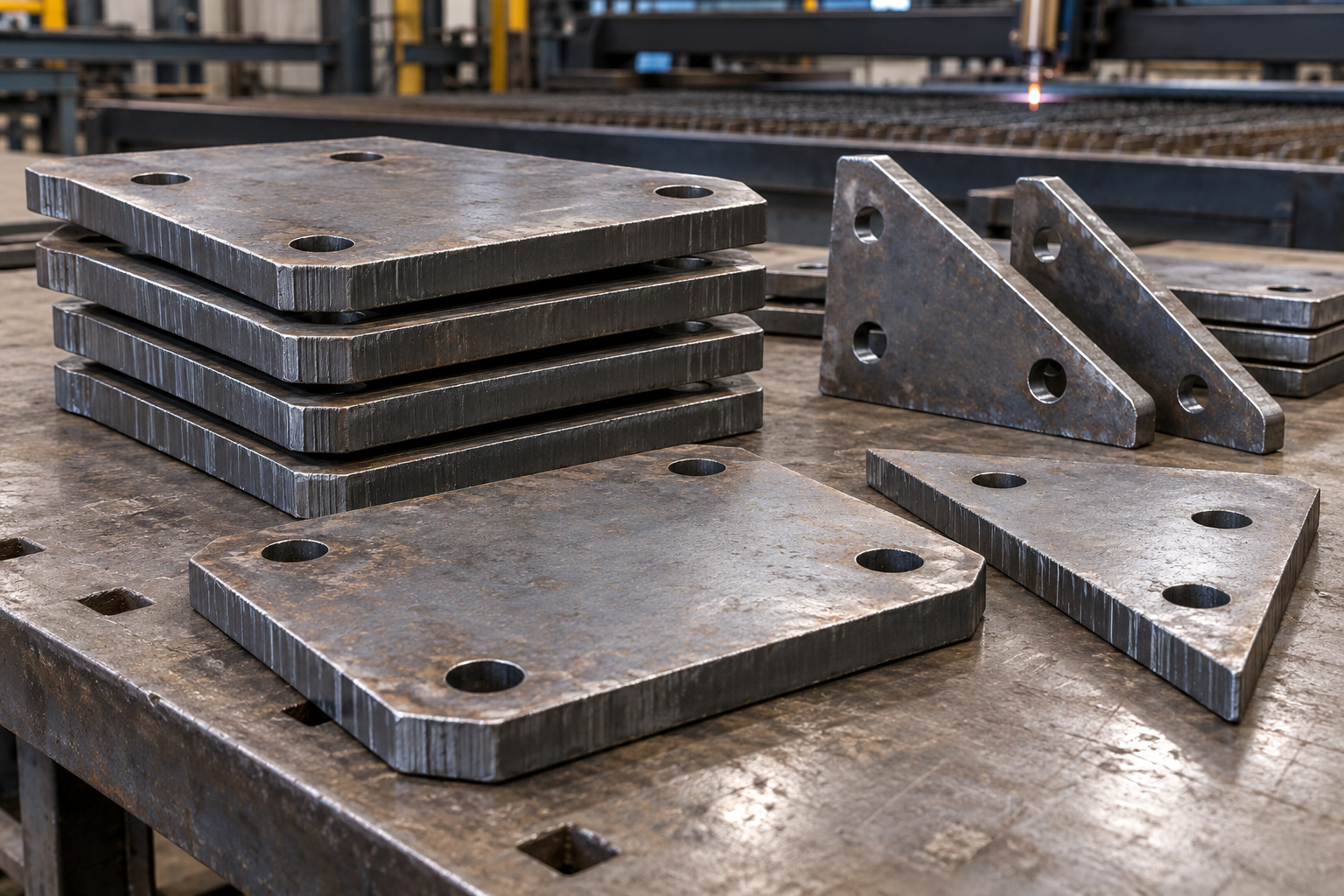
Structural Connection Plates and Gussets
CNC plasma cutting can produce connection-plate blanks, gussets, and reinforcing profiles for fabrication. Hole quality, edge condition, and tolerances must meet the job requirements. Some holes and critical surfaces may need drilling, reaming, or machining after cutting.
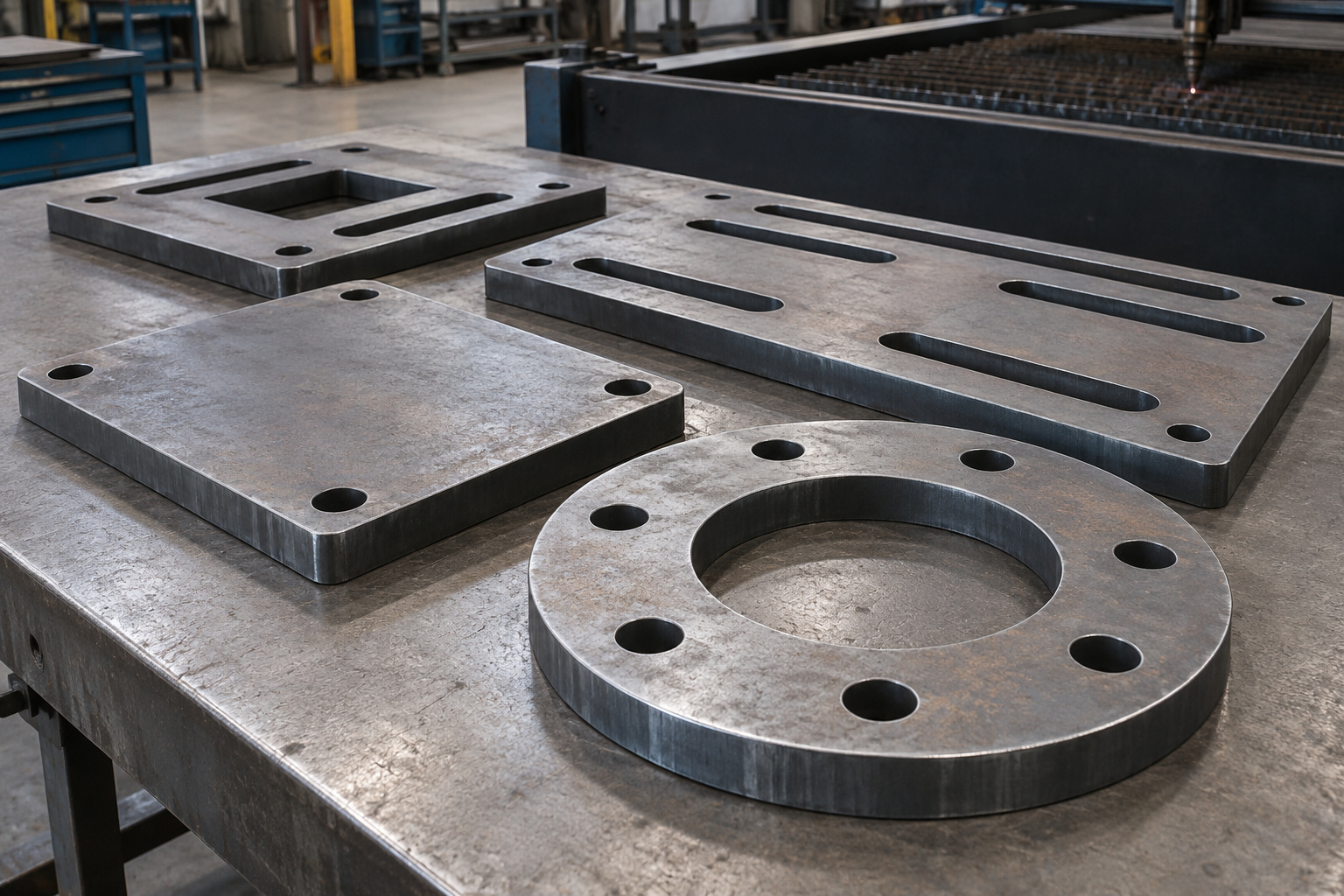
Machinery Mounting Plates and Equipment Parts
Applications include motor-base blanks, equipment panels, flange blanks, and other broad-profile components. Review slots, internal corners, and small features against the selected plasma process. Include deburring and precision finishing in the estimated cycle time where needed.
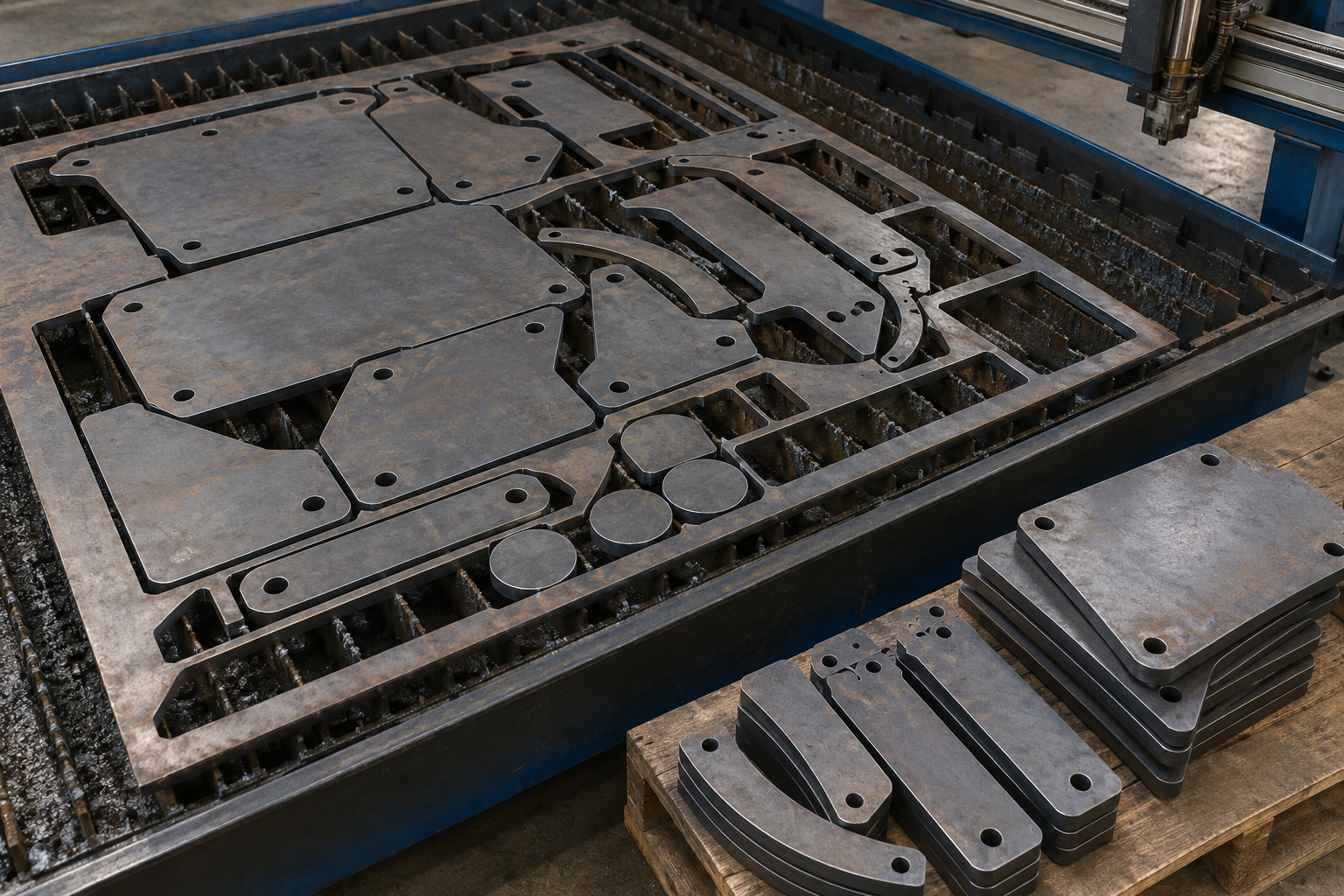
Nested Carbon Steel Plate Production
Nesting arranges multiple parts within the available stock. Consider kerf, lead-ins, thermal effects, part support, and material traceability when evaluating a layout. Common-line cutting and other efficiency features should be used only where supported and validated for the parts.
Measuring Productivity Beyond Cutting Speed
Compare complete-job performance, including programming, loading, piercing, cutting, unloading, cleaning, and inspection. Useful measures include acceptable parts per shift, cleanup time per part, consumable cost, and material yield.
Reducing rework or improving part handling can provide more value than increasing speed at the expense of quality. Track results over representative jobs instead of relying on a single demonstration cut.
How to Choose a CNC Plasma Table for Carbon Steel
Start with your usual steel grades, thickness range, plate sizes, drawings, and required tolerances. Select a power source for normal production needs, then check occasional thicker work separately.
Evaluate table size and loading capacity, mechanized torch compatibility, height control, CAD/CAM workflow, duty cycle, gas or air supply, fume management, and access to consumables and support.
Eastrise offers CNC plasma table configurations for carbon steel and other conductive metals. Ask for sample cuts using your material and drawings, and confirm the quoted power source, included controls, and demonstrated quality before selecting a configuration.
Frequently Asked Questions
Can a CNC plasma table cut carbon steel?
Yes. Carbon steel is electrically conductive and can be plasma cut with a suitable system. Validate the process for the specific grade, thickness, and finished-part requirements.
What is the best speed for carbon steel plasma cutting?
There is no universal speed. Use the cutting chart for the exact system, consumables, gas process, and thickness, then verify it through test cuts.
Should I use air or oxygen for mild steel?
Use the process approved for your equipment. Air plasma supports many fabrication tasks, while compatible industrial oxygen systems can provide benefits for mild-steel edge quality and productivity.
Will a water table prevent distortion?
Not necessarily. A compatible water table can assist with fume and spark management and may affect heat conditions, but it does not guarantee distortion-free parts. Material thickness, geometry, cutting sequence, and setup still matter.
Can plasma-cut parts be welded immediately?
That depends on the grade, cut-edge condition, and applicable welding procedure. Required cleaning, edge preparation, or machining should be established as part of the fabrication process.
Final Thoughts
Efficient carbon steel plasma cutting combines a suitable CNC table with verified process settings, maintained consumables, practical nesting, and consistent inspection. The best setup is the one that produces acceptable parts reliably, with controlled total production cost.
Contact Eastrise with your carbon steel grades, thicknesses, plate sizes, and part drawings to discuss a suitable CNC plasma cutting solution.


 English


