1325 Four-Spindle CNC Router for Cabinet Doors and Furniture Panels
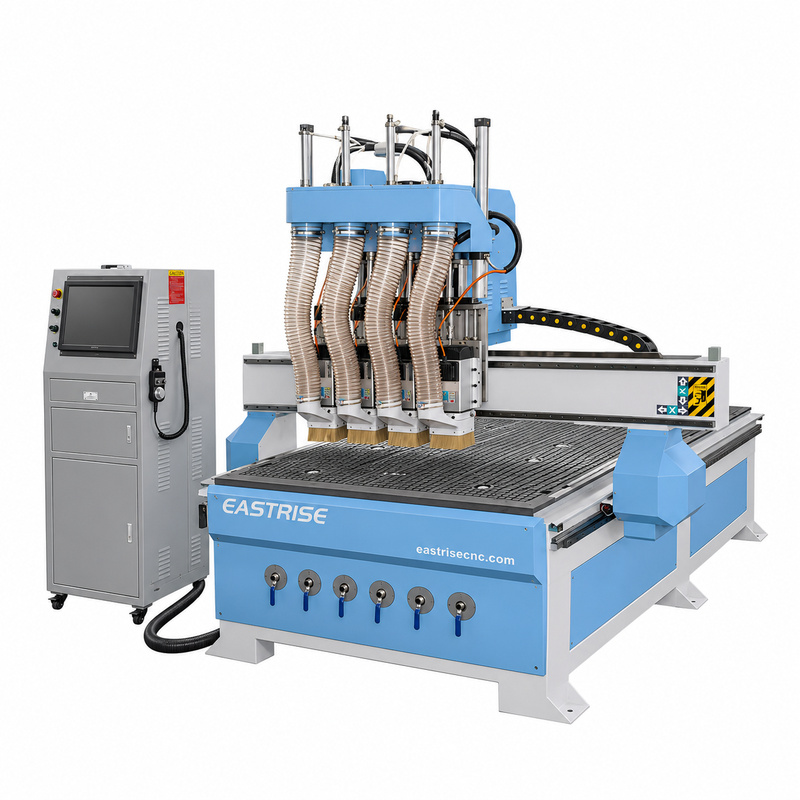
The Eastrise ERM1325A4 is a woodworking CNC router with a 1300 × 2500 mm working area and four spindle stations. It is designed for furniture jobs that require several cutting tools, such as decorative routing, grooving, pocketing and profile cutting.
Each spindle can carry a different cutter. During a programmed job, the machine selects the required station, reducing interruptions for manual bit changes between operations that use those installed tools.
This is a four-spindle process-switching machine. The four heads provide different tool choices; they should not be interpreted as four rotary axes or four independent machines cutting separate parts simultaneously.
How Automatic Spindle Selection Works
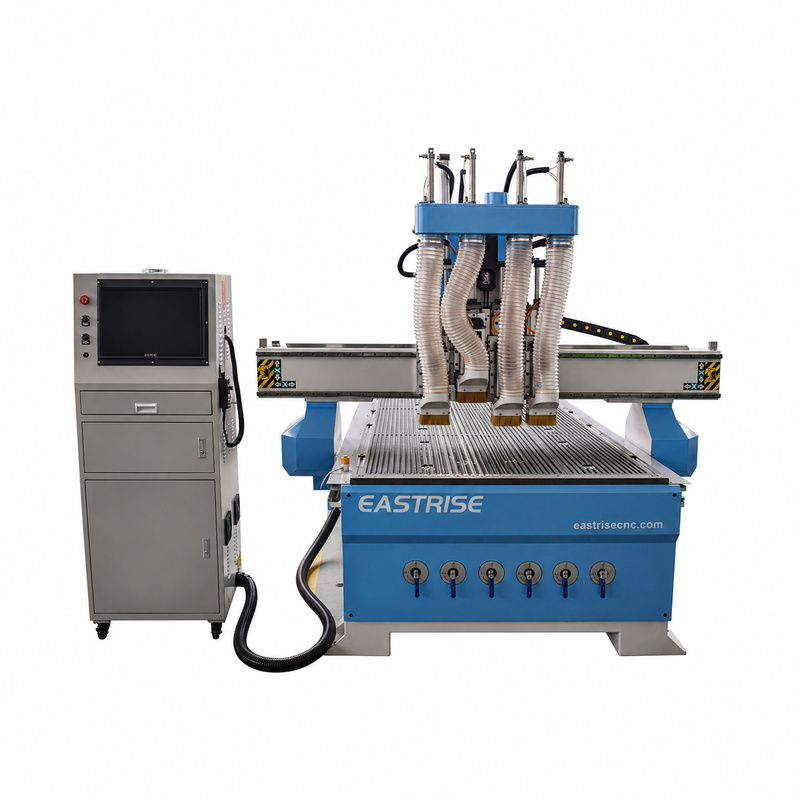
Before production, the operator installs the selected cutters and sets the tool offsets. The controller then calls the appropriate spindle for each operation. Pneumatic cylinders raise and lower the spindle assemblies as required.
For example, a cabinet-door program might use a profile cutter for decoration, a straight cutter for grooves, a suitable cutter for pockets and another tool for outside contours. The actual tool combination follows the design and material, rather than a fixed four-step recipe.
Compared with a magazine-type ATC router, the tool remains in its own spindle instead of being exchanged into one common spindle. If a job needs more tools than the available stations, it may require a manual change or a different machine configuration.
Machine Specifications and Configuration
| Item | Published specification or option |
| Model | ERM1325A4 |
| Working area | 1300 × 2500 mm |
| Spindle stations | Four |
| Listed feeding height | 200 mm; customization available |
| Listed spindle power options | 3 kW / 4.5 kW / 5.5 kW |
| Listed spindle speed range | 6,000–24,000 rpm |
| Listed supply options | 220 V / 380 V |
| Spindle lifting | Pneumatic cylinders |
Confirm the final equipment package in the quotation. Specify the controller, power assigned to each spindle, electrical supply, vacuum system and compressed-air requirements. Feeding height is not the same as available cutting depth after allowing for tooling and fixtures.
MDF Cabinet Doors and Decorative Panels
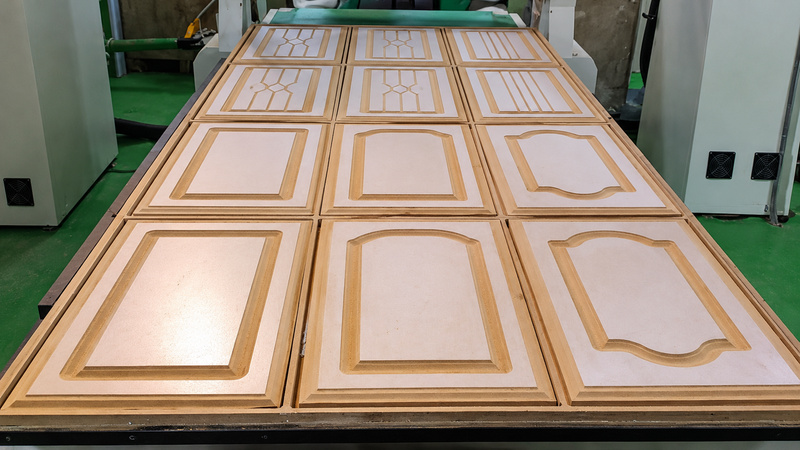
Routed cabinet-door fronts are a useful application for a small, repeatable set of cutters. Potential designs include rectangular borders, arched panel outlines, decorative grooves and recessed details.
Keeping the panel secured while moving between tools can reduce handling between operations. Correct tool offsets are essential where different cutters meet along the same design.
For painted or membrane-pressed MDF fronts, check the routed surface and edge quality against the finishing process. Routing does not replace sanding, surface preparation or pressing.
Furniture Panel Cutting, Grooving and Pocketing
Suitable projects to evaluate include cabinet sides, shelves, partitions and other flat furniture components. Toolpaths can combine outside profiles with accessible grooves and pockets on the upper face.
Prepare the nesting layout around the actual panel size, cutter diameter and holding method. Small parts need particular attention because their hold-down area decreases as surrounding material is cut away.
Horizontal connector holes and edge machining require suitable additional equipment or another setup. Four vertical spindle stations alone do not provide every cabinet-assembly operation.
Workholding and Dust Collection
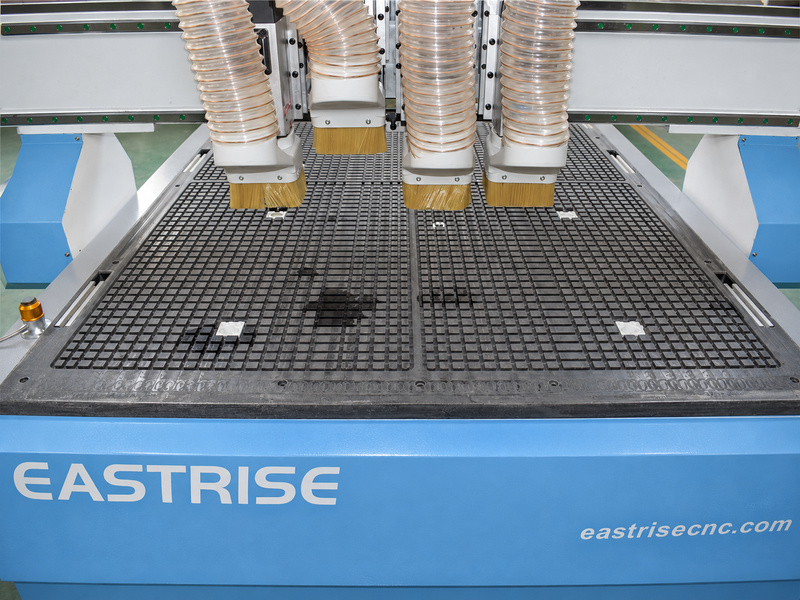
The illustrated machine has a grid-style vacuum table and dust shoes at the spindle stations. Their effectiveness depends on the complete installation and the workpiece.
For vacuum holding, check the spoilboard condition, sealing, active zones and remaining panel area. A powerful pump cannot compensate for every leak or poorly supported small part.
Connect the dust shoes to an appropriately sized extraction system. The hose shown in a product photo is one part of the collection system; confirm the extractor, duct arrangement and connection requirements with the final machine package.
Materials and Cutter Selection
MDF, plywood and solid wood are practical starting points for woodworking sample tests. Select cutters for the board construction, surface finish and operation. Coated panels may need different tooling from plain MDF.
Treat acrylic or other rigid plastics as separate process requirements. Confirm the material grade and test the cutter, chip removal and cutting conditions before planning production.
Is a Four-Spindle Router Right for Your Workshop?
This arrangement is worth evaluating when your regular products use a stable tool set and repeated routing operations. Compare machines using a representative job, including loading, machining, tool selection, cleaning and unloading.
If designs change frequently or need many tools, compare the proposed setup with a magazine-type ATC router. Choose according to the complete production cycle and required operations, rather than spindle count alone.
Frequently Asked Questions
Do all four spindles cut at the same time?
This model is described as automatically selecting different spindle stations for different operations. Do not assume simultaneous four-part machining; confirm any special operating mode separately.
Can it process a standard 4 × 8 ft sheet?
A nominal 1220 × 2440 mm sheet fits within the listed 1300 × 2500 mm area. Confirm usable travel for every spindle, edge clearance and workholding space in the proposed configuration.
Can it drill furniture holes?
Accessible vertical holes can be evaluated with suitable tooling and programming. Horizontal holes and dedicated drilling-bank functions require the appropriate equipment.
What information is needed for a quotation?
Send a drawing or sample design, material type, panel thickness, maximum sheet size, required tools, daily output target and available electrical supply. Include any edge holes or special operations so they can be assessed.
Configure the ERM1325A4 for Your Production
Share a representative cabinet door or furniture panel with Eastrise to review the tool set, workholding, controller and auxiliary equipment. A sample machining test helps establish the required finish and a realistic cycle time before production.


 English



