CNC Stone Cutting and Polishing Machine for Quartz, Granite and Marble Countertops
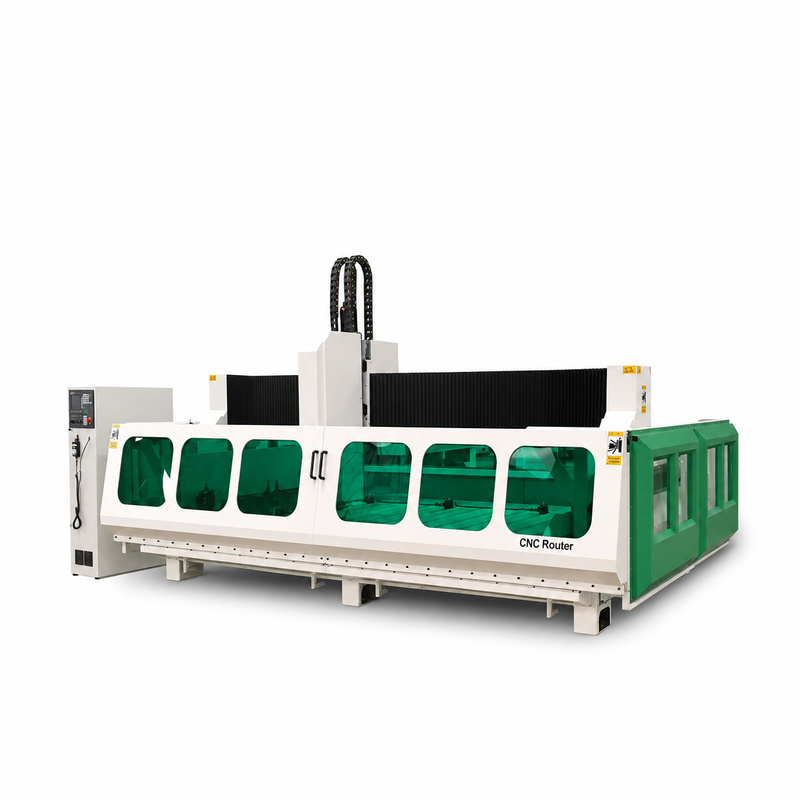
The Eastrise CNC stone cutting and polishing machine is a stone machining center for countertop fabricators, bathroom vanity manufacturers and workshops producing shaped stone components. It supports a programmed sequence of suitable cutting, drilling, edge profiling and polishing operations using the selected tooling package.
Typical projects include sink openings, tap holes, shaped countertop edges and vanity tops made from quartz-based engineered stone, granite or marble. Material type, thickness, edge design and finish must be matched to the machine setup and tools.
For a fabricator, the main benefit is bringing compatible operations into a coordinated workflow. The actual production gain depends on the part design, number of tool stages, loading method and amount of finishing required.
What Does a CNC Stone Machining Center Do?
A CNC stone machining center moves a rotating tool along programmed paths to remove material or finish accessible surfaces. Different tools perform different jobs: a cutter creates an opening, a profiling tool forms an edge, and polishing tools refine the prepared surface.
This distinction matters when comparing equipment. Automatic tool changing does not make every stone operation possible with one tool or one pass. The machine must have the required tool interfaces, working envelope, water delivery and access to the feature.
For production planning, define which operations will take place on this machine and which will remain upstream or downstream, such as slab preparation, special miters, manual finishing or installation work.
Automatic Tool Changing and Process Sequencing
The product is described with automatic tool changing and a linear tool magazine. A suitable program can call the required tools in sequence, reducing interruptions for manual changes between compatible operations.
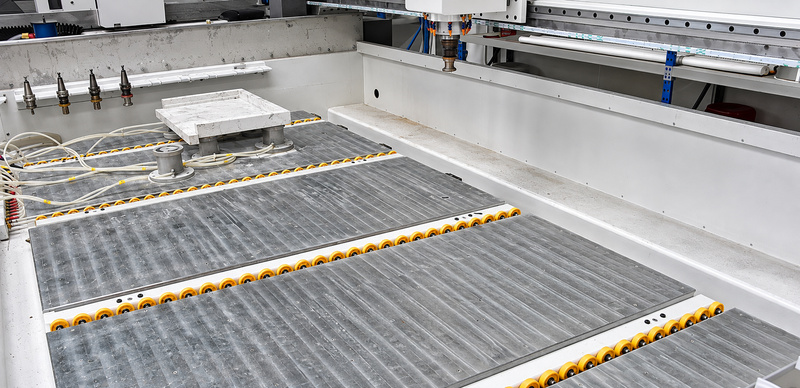
For example, a vanity-top job may involve opening preparation, contour machining, edge shaping and several finishing stages. Each tool needs the correct dimensions, offsets and operating conditions.
Tool magazine capacity must be checked against the complete job. A polishing sequence may occupy several positions, leaving fewer stations for cutting and drilling tools. Confirm the holder interface, tool dimensions and required magazine layout when selecting the package.
Configuration and Technical Reference
| Item | Published reference or item to confirm |
| Published working area | 2800 × 1200 mm |
| Tool changing | Automatic; linear magazine listed |
| Tool-holder interface | BT40 listed |
| Listed spindle speed range | Up to 8,000 rpm |
| Listed electrical supply | 380 V, three-phase |
| Primary application | Stone countertop and vanity-top fabrication |
| Final model designation | Confirm in the quotation and machine drawing |
| Items requiring project review | Stone thickness, load capacity, usable Z clearance, spindle power and tool capacity |
These values describe the published reference configuration, not a universal specification for every order. Confirm the machine model, working envelope, control system, water system, fixtures and complete tool list before purchase.
The usable area also depends on the fixture layout and tool clearance. A countertop that fits within the nominal table dimensions may still need another setup if its edges or underside features are inaccessible.
Sink Cutouts and Tap Holes
Sink openings and tap holes are important features in kitchen and bathroom fabrication. Program their location from the approved sink template and installation drawing, rather than estimating from an image or nominal basin size.
For undermount sinks, the opening edge remains visible and may require shaping and polishing. A top-mounted sink has different fit and finish requirements. Confirm the sink mounting method before preparing the toolpath.
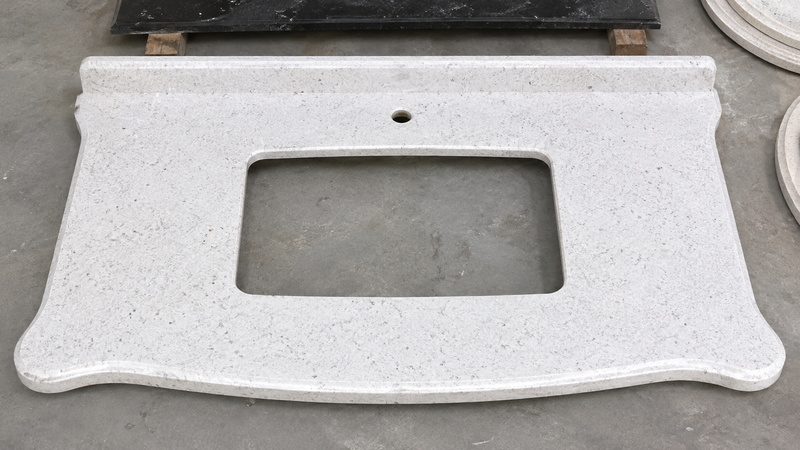
Internal corners retain a radius determined by the cutter and process. Plan the corner geometry, remaining material around the opening and support for the cutout section. Thin bridges and narrow strips should be reviewed before machining to reduce the chance of breakage.
Edge Profiling and Polishing
Countertop edges can range from simple eased profiles to shaped decorative sections. The achievable profile depends on the tooling, slab thickness and access around the component.
Profiling establishes the shape; polishing refines that prepared edge through the appropriate sequence. The sequence must suit the actual stone and desired finish. A tool set intended for one material should not automatically be used with the same settings on another.
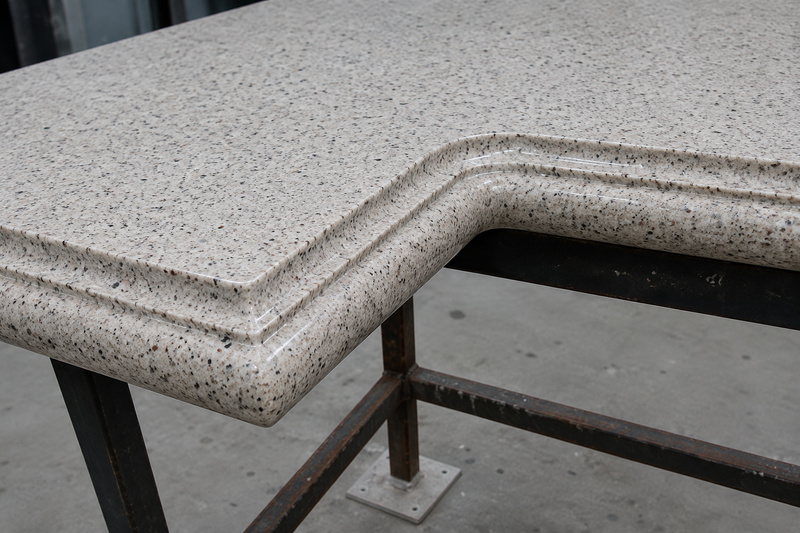
Inspect sample edges for chips, profile transitions, scratches and consistency with the slab face. If the design includes a laminated edge, an inside corner or a special joint, include that detail in the process review.
The polishing function described here concerns accessible, tool-compatible features. Whole-slab face restoration or calibration requires a separate assessment of the equipment and process.
Kitchen Countertops, Vanity Tops and Shaped Components
Potential applications include kitchen worktops, bathroom vanity tops, backsplash components and decorative stone pieces with accessible contours. Repeated designs can reuse approved CAD geometry while allowing for individual dimensions and installation details.
For kitchen tops, review sink openings, tap locations, exposed edges, joints and support around narrow sections. For vanity tops, consider the basin template, wall clearances and the finish required on visible curves.
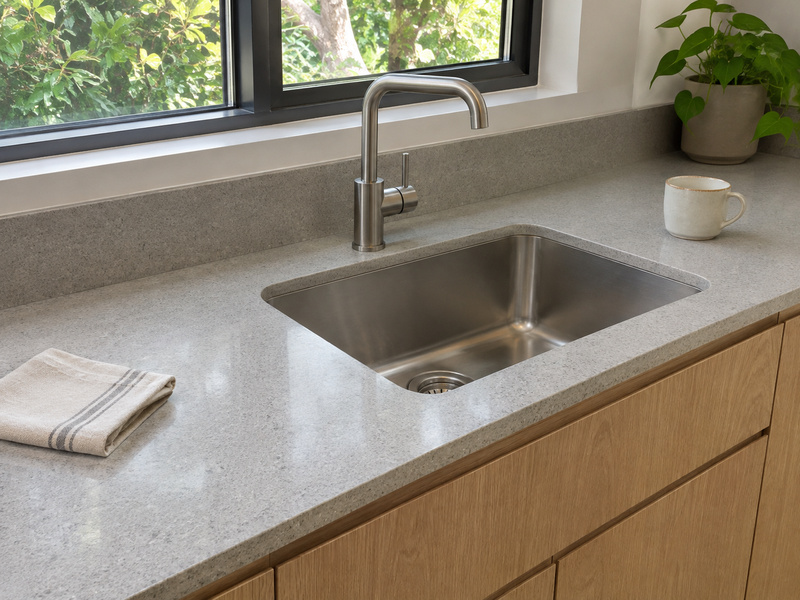
The installed result depends on fabrication and installation together. Accurate site measurements, cabinet support, joint planning and handling remain necessary after CNC machining.
Quartz, Granite and Marble Need Different Process Plans
Quartz-based engineered stone, natural granite and marble differ in composition and machining behavior. Even slabs sold under the same broad material name can vary in structure, reinforcement, fissures and surface treatment.
Select diamond tooling and finishing consumables for the exact material. Establish cutting conditions, water delivery and finishing stages using the tool supplier’s guidance and a representative sample.
Record the successful setup for repeat jobs, but inspect each new slab and material batch. Do not treat one successful sample as proof of identical results across every stone grade.
Workholding, Water Delivery and Slurry Management
Supports and fixtures must hold the component securely while allowing tools to reach the required edges and openings. Plan support for both the finished part and any section being separated.
Maintain the specified water delivery at the tool contact area and provide the required drainage and solids-separation arrangement. Stone slurry should be removed before deposits interfere with fixtures, moving components or water circulation.
Wet machining does not by itself establish that dust exposure is controlled. Stone fabrication can generate respirable crystalline silica. Use suitable engineering controls, assess exposure and manage cleanup without dry sweeping or compressed-air blowdown of stone dust.
A Practical Countertop Production Workflow
Approve the drawing: verify overall dimensions, sink templates, tap holes, corner radii and exposed edges.
Inspect the material: check thickness, surface condition, defects and the proposed part layout.
Plan tools and fixtures: allow for holder clearance, cutout support and access to the edge profile.
Prepare and simulate CAM: use a machine-compatible postprocessor and review approaches, retracts and tool changes.
Set up the machine: establish the work origin, verify tool offsets and check water delivery.
Machine and finish: follow the validated cutting, profiling and polishing sequence.
Inspect the component: measure openings and critical dimensions, examine edge quality and check against the installation drawing.
Cycle time should be evaluated over this complete workflow. Tool changes, polishing passes, handling and inspection all contribute to the time required for a finished component.
Frequently Asked Questions
Can the machine cut and polish in the same program?
Compatible operations can be sequenced with the appropriate tools and setup. Confirm that every stage is supported by the machine configuration, available tool positions and CAM program.
Does it replace a bridge saw?
Not automatically. A bridge saw may handle upstream slab sizing, while a machining center handles openings, profiles and finishing. Compare the actual cutting method and job mix before deciding which equipment is needed.
Can it process every stone thickness?
No universal thickness capacity is stated here. Usable Z clearance, tool reach, holder geometry, material properties and slab support all affect the limit. Submit the actual material and drawing for assessment.
Will every countertop be finished without handwork?
Some components may still require manual finishing, inspection or another setup. The need depends on tool access, profile complexity and the required finish.
What should I provide for a quotation and sample test?
Send the stone type and brand, slab thickness, maximum component dimensions, sink template, edge-profile drawing, required finish and expected production quantity. Include available electrical supply, water arrangements and handling constraints.
Request a Configuration for Your Stone Fabrication Work
Share a representative countertop or vanity-top drawing with Eastrise to review the working envelope, spindle, tool magazine, fixtures and finishing tools. A sample test using the intended stone is the clearest basis for evaluating edge quality, dimensional results and a realistic production cycle.


 English



