1325 ATC CNC Router with Automatic Loading, Unloading and Boring Head
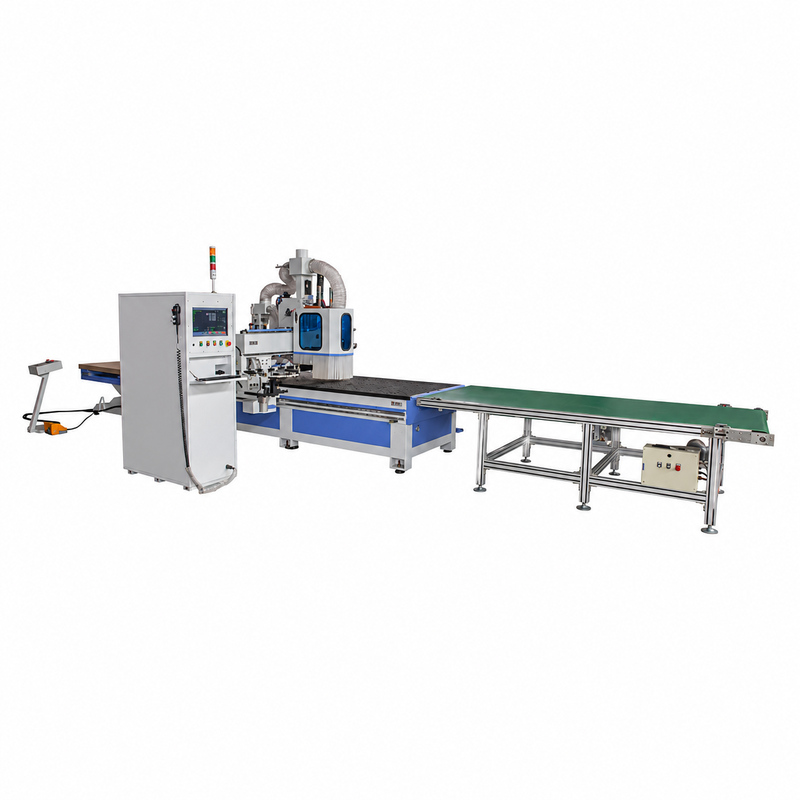
The EASTRISE ERM1325CBL ATC CNC router is a woodworking machining center designed for manufacturers producing cabinet components, wardrobes, office furniture, and other panel-based products. It combines automatic sheet loading and unloading, automatic tool changing, and a dedicated boring head to support multiple machining operations within one production workflow.
With a 1300 × 2500 mm working area, the machine accommodates commonly used 1220 × 2440 mm panels. It is intended for workshops looking to reduce repetitive sheet handling and coordinate cutting, routing, grooving, and drilling more efficiently.
What Does This Automatic Loading and Unloading CNC Router Do?
This machine transfers a sheet from the loading station to the machining table, processes the programmed parts, and moves the completed sheet or nested components toward the unloading conveyor.
The automatic tool changer allows the spindle to switch between compatible cutters during a machining program. The boring head provides dedicated drilling functions for suitable furniture components.
The main benefit is a more connected panel-processing workflow: operators spend less time moving full sheets and manually changing tools between operations.
The machine prepares furniture components for subsequent production stages. Edge banding, surface finishing, hardware installation, and assembly remain separate processes.
Automatic Loading and Unloading System
Lifting Table and Sheet Height Detection
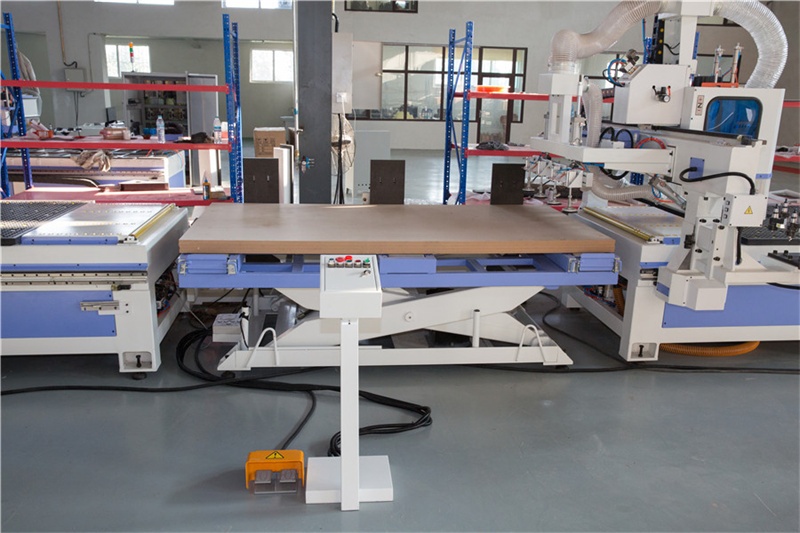
The loading station uses a lifting table to support a stack of panels. Optical sensing helps maintain the pickup height as sheets are removed.
Keeping the next sheet at the required loading height supports a more consistent transfer process and reduces repeated manual positioning of full-size boards.
Vacuum Suction Cup Loading
The suction cup loading mechanism transfers a panel onto the machining table. Reliable pickup depends on the board surface, sheet condition, suction settings, and correct machine adjustment.
Sheet flatness and surface suitability should be checked when planning automatic loading, especially when processing materials with different textures or porosity.
Conveyor Unloading
After machining, the unloading mechanism transfers the processed material toward the conveyor for collection and sorting.
Parts should remain identifiable through the unloading stage so that operators can organize them for edge banding or assembly. Small components may require a suitable machining sequence and additional attention during transfer.
Automatic Tool Changing for Cutting and Routing
The carousel automatic tool changer enables the machine to use different cutters within a programmed job.
Depending on the installed tools and machining requirements, operations can include:
Panel cutting and nesting
Grooving for cabinet backs and other fittings
Pocketing and recess machining
MDF door profiling
Contour routing and trimming
Automatic tool changing is particularly useful when a component requires several cutter types. It reduces interruptions associated with manual tool changes while keeping the machining sequence under CNC control.
Tool magazine capacity, tool holder specification, and the supplied tool package must match the confirmed machine configuration.
Boring Head for Furniture Panel Drilling
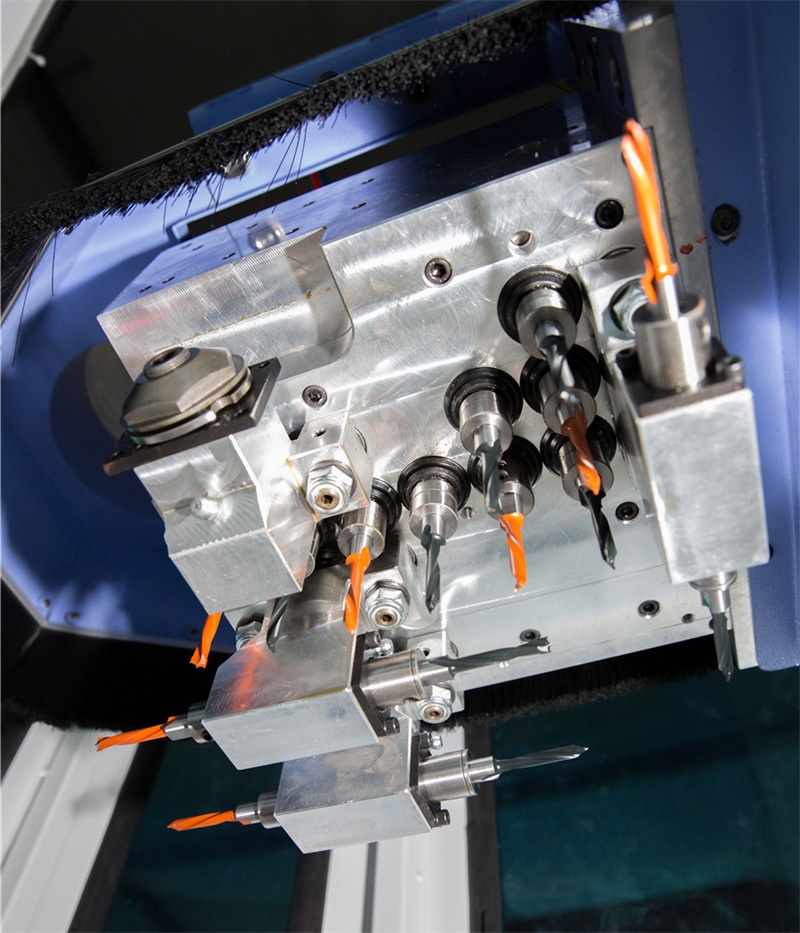
The product configuration lists a Hiteco 7V+2H drilling bank, providing vertical and horizontal drilling capability.
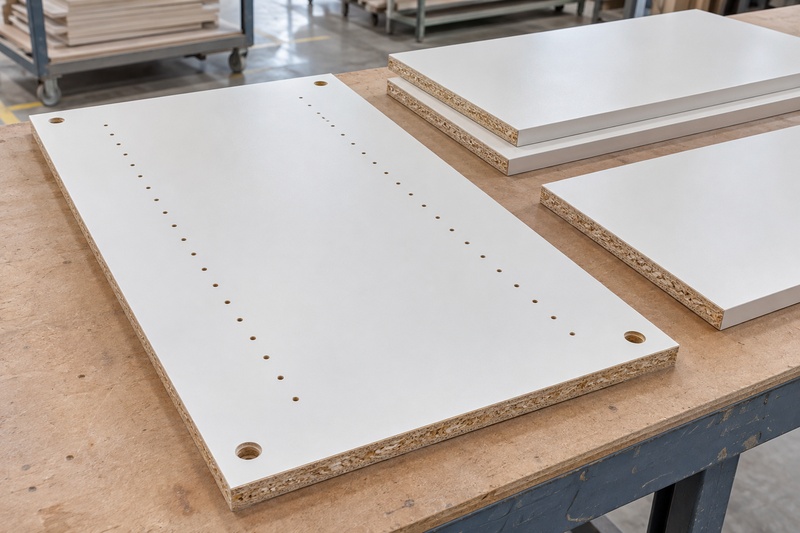
A dedicated boring head can support suitable furniture drilling tasks, such as shelf-pin holes and selected connection holes, subject to the installed drilling arrangement, tool access, and programmed setup.
Horizontal drilling capability does not automatically mean that every edge or every face can be machined in one setup. Hole direction, panel dimensions, working clearance, and the drilling head arrangement should be checked against the actual component drawing.
For cabinet manufacturers, evaluating a representative drilling pattern is a practical way to confirm whether the machine suits their hardware system.
Vacuum Worktable and Stable Panel Positioning
The vacuum worktable holds panels against the machining surface during processing.
Effective workholding depends on more than vacuum pump capacity. Spoilboard condition, vacuum leakage, material porosity, and the size of individual parts also affect holding performance.
For consistent machining:
Keep the table and spoilboard clean.
Maintain an appropriate spoilboard surface.
Check vacuum connections and seals.
Select cutting strategies suited to the size of the parts.
Confirm that small components remain secure as the sheet is divided.
Stable workholding is essential for consistent dimensions and edge quality, particularly when machining small nested parts.
Typical Materials and Applications
This CNC router is primarily intended for suitable wood-based panels, including MDF, plywood, particleboard, and melamine-faced boards, with tooling and cutting conditions selected for each material.
Cabinet and Wardrobe Panels
Typical components include cabinet sides, shelves, partitions, cabinet backs, and wardrobe panels.
Combining cutting, grooving, and suitable drilling operations helps prepare these components for later manufacturing stages. Melamine-faced boards require appropriate tooling and machining settings to control surface chipping.
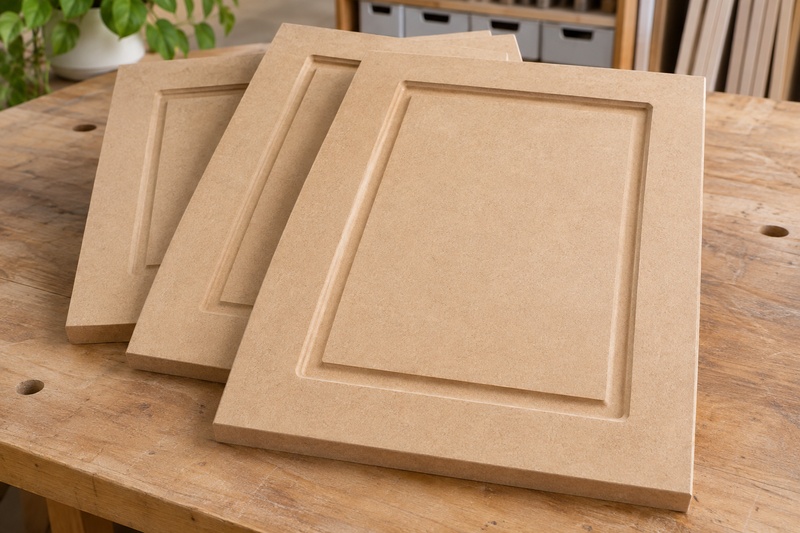
MDF Door Profiling
With suitable routing tools, the machine can produce decorative grooves, recessed profiles, and shaped outlines in MDF door blanks.
The routed MDF component still requires the appropriate finishing process, such as painting or membrane pressing, according to the final door design.
Office and Custom Panel Furniture
Applications can also include desk components, storage units, display furniture, and custom-sized panel parts.
The suitability of a job depends on the component dimensions, material, required finish, tooling, and production sequence.
Technical Specifications
| Item | Listed Specification |
| Model | ERM1325CBL ATC |
| Working area, X × Y × Z | 1300 × 2500 × 200 mm |
| Spindle | 9.0 kW air-cooled spindle |
| Listed spindle speed range | 6,000–24,000 rpm |
| Tool changing system | Carousel automatic tool changer |
| Boring head | Hiteco 7V+2H drilling bank |
| Controller | Syntec 20MA |
| Servo system | Yaskawa 850 W servo motors and drives |
| Listed traveling speed | 70 m/min |
| Listed cutting speed | 25 m/min |
| Power supply | AC 380 V, three-phase, 50 Hz |
| Workholding | Vacuum worktable |
| Material handling | Automatic loading and conveyor unloading |
Specifications are subject to the confirmed quotation and machine configuration. Actual machining speed depends on the material, cutter, depth of cut, part geometry, and required finish. The listed Z working range should not be treated as the maximum machinable panel thickness.
How the Production Workflow Works
Prepare the design and machining program. Define part sizes, hole locations, grooves, tools, and machining sequences using compatible software.
Load the panel stack. Place suitable sheets at the loading station and check the loading settings.
Transfer and position the sheet. The loading system brings the panel to the vacuum table.
Machine the components. The spindle and boring head perform the programmed operations.
Unload the processed material. The unloading system transfers the material toward the conveyor.
Sort and inspect the parts. Check dimensions, hole positions, and edge quality before the next production stage.
Software compatibility and postprocessor support should be confirmed for the intended design-to-machine workflow.
Frequently Asked Questions
What does 1325 mean on this CNC router?
For this model, 1325 refers to the approximately 1300 × 2500 mm X–Y working area. The listed full working range is 1300 × 2500 × 200 mm.
Can it process a 1220 × 2440 mm sheet?
A 1220 × 2440 mm sheet fits within the listed X–Y working area. Loading clearances, positioning requirements, and the usable machining layout should also be checked.
What is the difference between the ATC spindle and the boring head?
The ATC spindle changes between routing and cutting tools. The boring head provides a dedicated drilling arrangement. They perform complementary tasks in panel furniture production.
Does automatic loading and unloading eliminate operator involvement?
Operators are still needed for material preparation, program selection, monitoring, part sorting, inspection, and maintenance. Automation reduces repetitive handling between machining cycles.
How many tools does the machine hold?
The tool magazine capacity depends on the supplied configuration. Confirm the required number of tool positions and tool holder specification before ordering.
What should buyers provide for a suitable quotation?
Provide the board dimensions and materials, typical component drawings, drilling requirements, required output, available workshop space, and electrical supply. These details help determine the appropriate machining and handling configuration.
Configure the Machine for Your Furniture Production
Choose the machine configuration around the parts you actually manufacture. A sample cabinet panel drawing can help clarify the required tools, boring head functions, workholding strategy, and production sequence.
Contact EASTRISE with your panel sizes, machining drawings, and production requirements to discuss a suitable 1325 ATC CNC router with automatic loading, unloading, and boring head.


 English



